
Pitting Edema: Causes, Scale, Treatment, and More

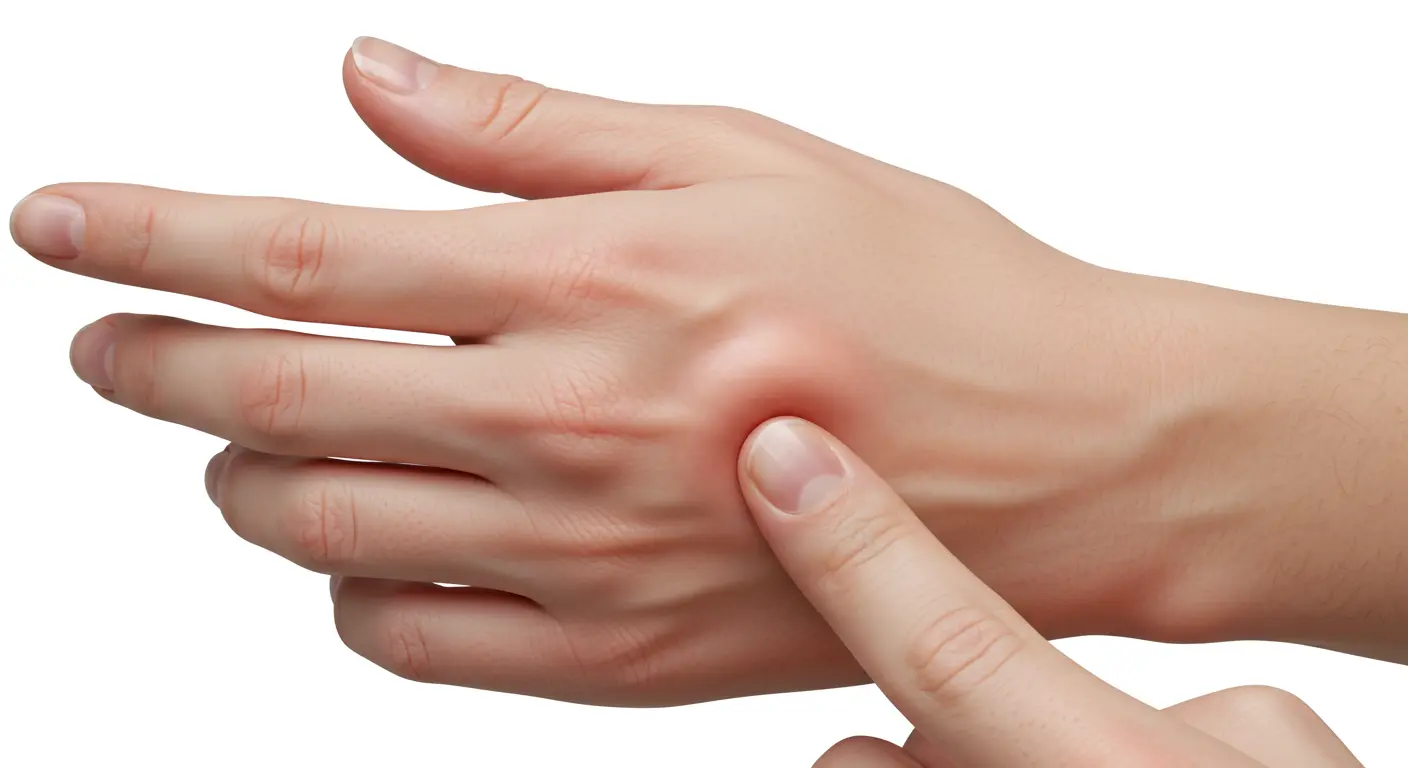
Pitting edema is swelling that occurs in the form of a pit or depression in the skin, caused by an accumulation of fluid in the body, typically in the feet, ankles and/or lower legs. It is a symptom rather than a disease, and may signal underlying problems such as chronic diseases, including congestive heart failure, cirrhosis of the liver, renal failure or venous insufficiency.
Key Points
- Fluid buildup in your tissues that leaves a dent when you press on it.
- Doctors grade it from +1 (mild) to +4 (severe), based on how deep the pit goes and how long it sticks around.
- The usual suspects: heart failure, weak vein valves, kidney trouble, and a handful of common medications.
- Treatment usually means tackling the root cause, plus some combination of diuretics, compression, elevation, and dialing back the salt.
- Sudden swelling, trouble breathing, or one swollen leg? Don’t wait, get medical help.
What Is Pitting Edema?
Swelling which occurs due to the accumulation of an excess of fluid in your tissues, usually located down in your legs, ankles, and feet. The name tells everything: put a finger in the inflamed area and you will leave a hole, a small dent which needs a second to be erased.
It normally presents itself in your extremities and the most prevalent parts are legs and feet, but it can occur in your arms and hands, and frankly, any part of the body under the right conditions. As soon as you release the key, the dent gradually fills in.
One of the things to know: the edema is not a disease in itself. It’s a symptom. It may be pointing to something so easy, such as you have been on your feet too long. In other instances, it is raising a red flag on a chronic problem that has to be addressed.
Causes of Pitting Edema
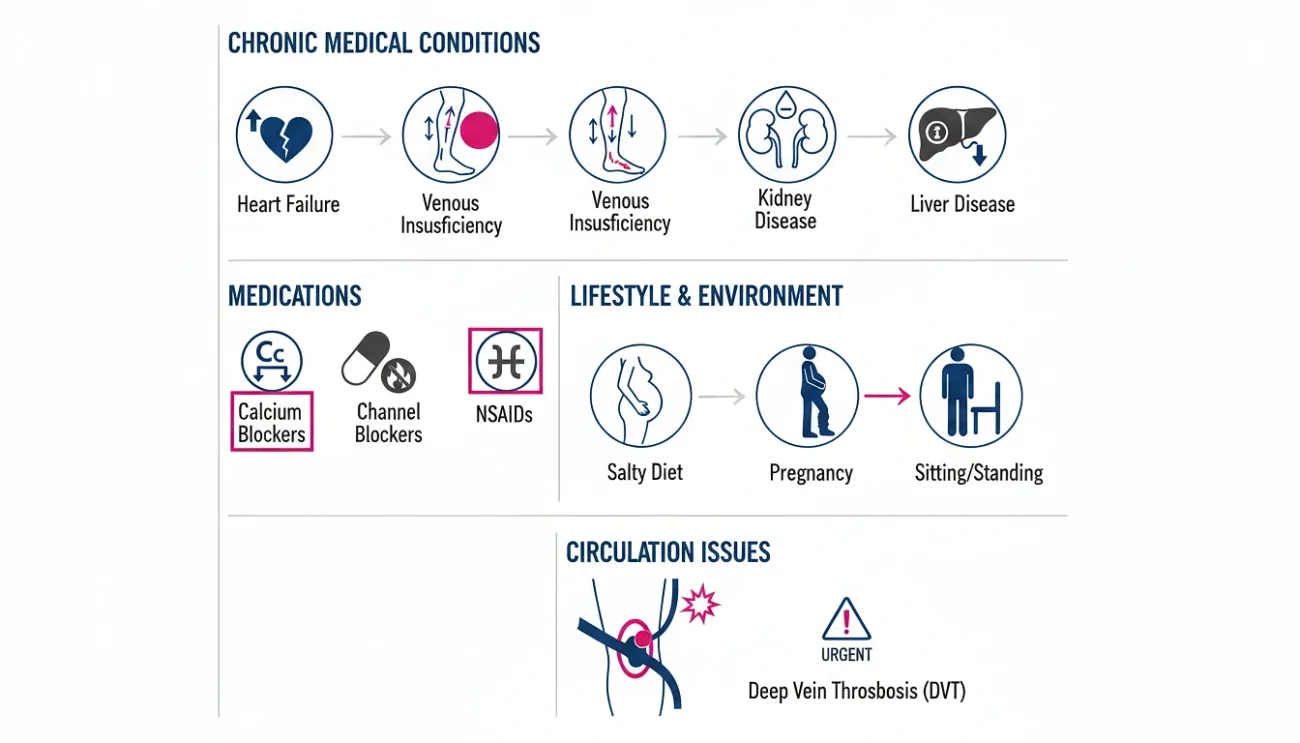
Chronic Medical Conditions
A few long-term health issues are repeat offenders:
- Congestive heart failure (CHF): When the heart isn’t pumping as well as it should, blood backs up in the veins, pressure rises, and fluid gets pushed out into surrounding tissue. The 2022 review article “Edema formation in congestive heart failure and the underlying mechanisms” published in Frontiers in Cardiovascular Medicine breaks it down: a struggling heart pumps less blood, which kicks off a chain reaction in your hormones (RAAS, the sympathetic nervous system, ADH, endothelin-1) that ends with your body holding onto sodium and water, often visible as swelling in the legs.
- Chronic venous insufficiency: The valves in your leg veins are supposed to keep blood flowing upward toward your heart. When they weaken, blood pools in your lower limbs instead.
- Kidney disease: When kidneys aren’t working properly, they can’t clear out excess fluid and sodium the way they should.
- Liver disease (cirrhosis): A damaged liver makes less albumin, the protein that helps keep fluid where it belongs, inside your blood vessels.
- Thyroid conditions: These can throw off your fluid balance.
Medications
You’d be surprised how many everyday prescriptions can leave you swollen:
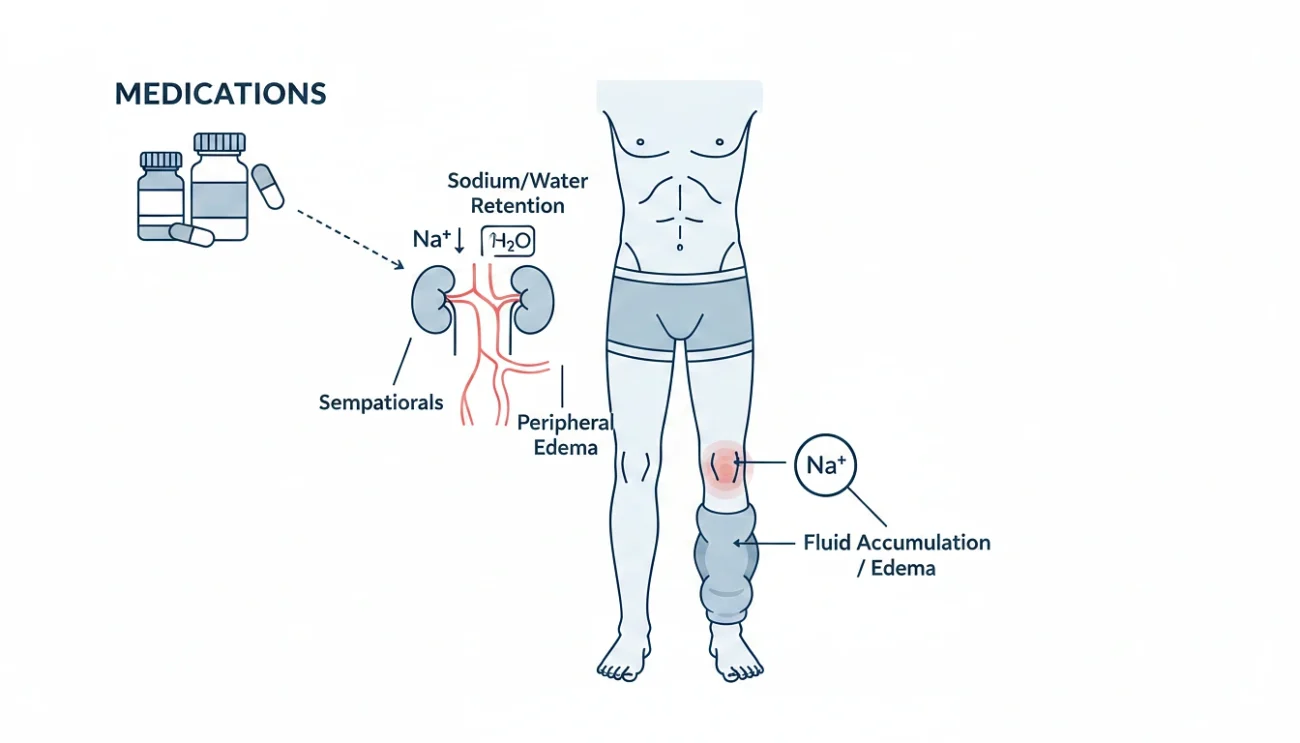
- Calcium channel blockers (especially dihydropyridines like amlodipine): A 2024 review titled “Advances in understanding medication-induced lower limb edema: Review for clinical practice” in the Canadian Journal of General Internal Medicine pulled together findings from 106 studies and found that about 25% of hypertension patients on calcium channel blockers ended up with peripheral edema. Rates vary quite a bit, anywhere from 7% to 33%, and they can climb as high as 80% on high doses taken long-term.
- NSAIDs (like ibuprofen and naproxen): These mess with your kidneys’ ability to manage sodium and water properly.
- Steroids: Corticosteroids are notorious for fluid retention.
- Plus a few others: certain diabetes medications, estrogen-based drugs, and some blood pressure medications
Lifestyle and Environmental Factors
- Salty diet: Eat too much salt, and your body holds onto water to balance things out.
- Pregnancy: Hormones shift, veins get squeezed, and swollen ankles, especially later in pregnancy, become pretty standard.
- Sitting or standing for hours: Gravity does what gravity does. Stay in one position too long and fluid drifts to your lower limbs. Doctors call this dependent edema.
Circulation Issues
- Deep vein thrombosis (DVT): A clot deep in a leg vein can block blood flow and damage valves, leaving one leg swollen. This one is serious, the clot can break free and travel to the lungs, so it needs urgent care.
Pitting Edema Grading Scale (Severity)
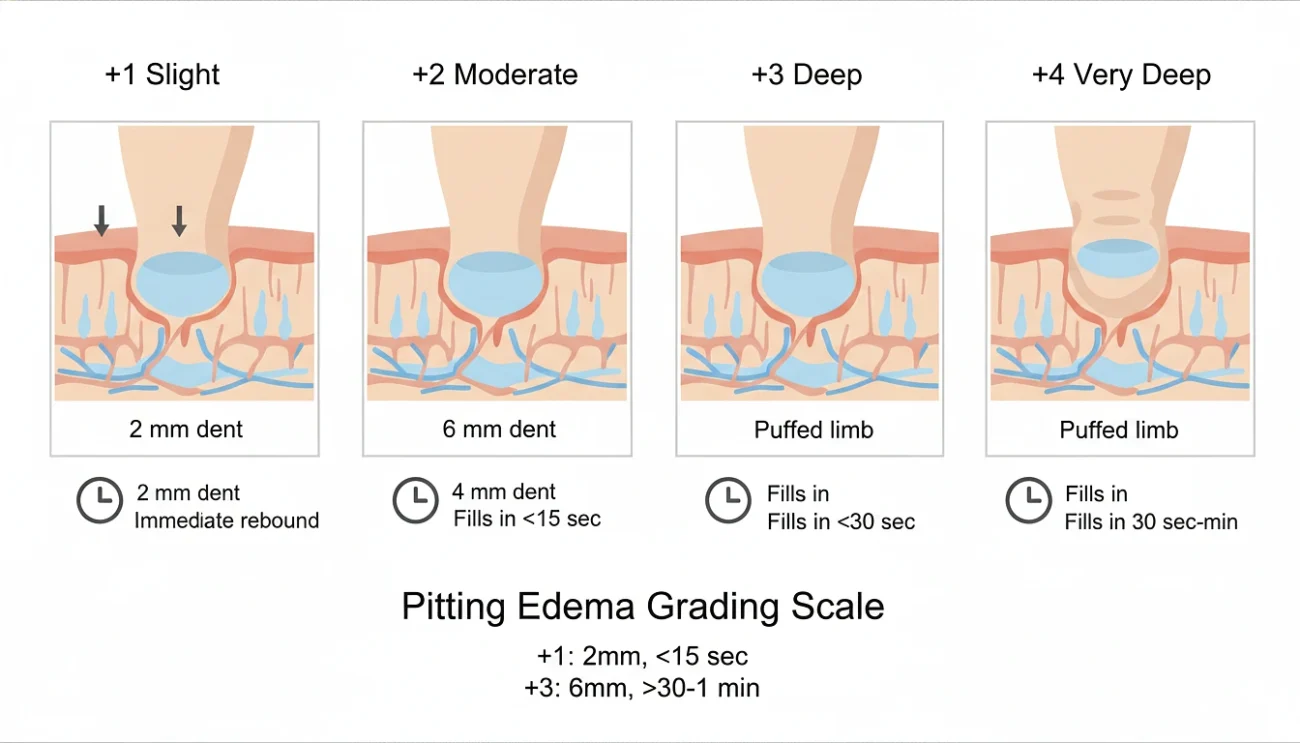
Doctors have a simple scale when determining the severity of the swelling. They apply a finger to the swollen part and hold it there about five seconds and then examine two things: the depth of the dent they make, and the time it takes to fill in.
The scale goes from +1 to +4:
- +1 (Slight): A 2 mm dent that pops back almost right away.
- +2 (Moderate): A 4 mm dent that fills in within 15 seconds or so.
- +3 (Deep): A 6 mm dent, the limb looks puffed up, takes up to 30 seconds to rebound.
- +4 (Very Deep): An 8 mm dent in a noticeably distorted limb, taking 30 seconds to a few minutes to refill.
This grading system helps doctors estimate how much fluid is actually trapped in your tissues, and it gives them something to compare against later to see if treatment is working. It’s a useful tool, though many clinicians admit it’s not the most objective measurement out there. That’s why researchers keep exploring more precise methods, like water displacement tests and ankle measurements.
Treatment and Management
Treatment basically comes down to two things: get rid of the excess fluid, and deal with whatever’s causing it. The right approach depends entirely on what’s driving the swelling.
Diuretics
These are the water pills as you have probably heard. They assist your kidneys to eliminate an extra amount of sodium and water by way of urine. One of them is furosemide (Lasix), which is a drug of choice in cases of heart failure. They are effective, but should be closely watched as they may change your electrolytes and blood pressure.
Compression Therapy
Compression stockings, sleeves, or socks consist of steady, uniform pressure on your limbs, or in other words, pushing the fluid uphill and preventing its stagnation. They are particularly effective with venous insufficiency. One thing to keep in mind: when you have peripheral arterial disease, compression is not typically safe. It is normally recommended by doctors who usually check your circulation, usually by using something referred to as the ankle-brachial index, first.
Elevation
Get those legs up. Raising them above heart level lets gravity work in your favor for once, draining the fluid back toward your core. Even a few short sessions a day, feet up on a pillow or ottoman, can make a real difference for mild swelling.
Lifestyle Changes
The small stuff really does add up:
- Cutting back on salt to ease fluid retention.
- Moving your body, walking, swimming, anything that keeps your circulation going.
- Breaking up long stretches of sitting or standing.
- Keeping your weight in a healthy range to take strain off your veins.
Treating the Underlying Cause
If a medication is the problem, your doctor might tweak the dose or swap it out for something else. If heart, kidney, or liver issues are at the root, managing those conditions properly is what really gets the swelling under control.
When to Seek Immediate Care
Most mild pitting edema either clears up on its own or responds well to basic care. But there are red flags that mean you should call your doctor or head to the ER without waiting:
- Swelling that comes on suddenly or severely with no clear reason.
- Trouble breathing, especially if it gets worse when you lie flat or hits you suddenly. This can be a sign of pulmonary edema, fluid in the lungs, which is life-threatening.
- Only one leg is swollen, particularly if it’s also painful, warm, or red, this could be a blood clot.
- Chest pain or a racing heart along with the swelling.
- Coughing up frothy or pink-tinged mucus.
- During pregnancy: sudden swelling paired with a bad headache, vision changes, or pain in your upper belly, possible signs of preeclampsia.
References:
- Pitting Edema: Causes, Grading & Treatment – Cleveland Clinic – https://my.clevelandclinic.org/health/symptoms/pitting-edema
- Pitting Edema: Causes, Scale, Treatment, and More – Healthline – https://www.healthline.com/health/pitting-edema
- Goyal A, Cusick AS, Bhutta BS. Peripheral Edema. StatPearls. NCBI Bookshelf, 2025
- Abassi Z, Khoury EE, Karram T, Aronson D. “Edema formation in congestive heart failure and the underlying mechanisms.” Frontiers in Cardiovascular Medicine, 2022.
- Oedema Assessment – Physiopedia – https://www.physio-pedia.com/Oedema_Assessment
- Khalil H, et al. “Advances in understanding medication-induced lower limb edema: Review for clinical practice.” Canadian Journal of General Internal Medicine, 2024.
- Edema – Symptoms & Causes – Mayo Clinic – https://www.mayoclinic.org/diseases-conditions/edema/symptoms-causes/syc-20366493
- Pulmonary Edema – Cleveland Clinic – https://my.clevelandclinic.org/health/diseases/24218-pulmonary-edema
- Pulmonary Edema – Symptoms & Causes – Mayo Clinic – https://www.mayoclinic.org/diseases-conditions/pulmonary-edema/symptoms-causes/syc-20377009
- “In brief: Causes and signs of edema.” InformedHealth.org, NCBI Bookshelf, 2022 – https://www.ncbi.nlm.nih.gov/books/NBK279409/