
Alpha Lipoic Acid: Benefits, Uses, Side Effects & Dosage

Alpha-lipoic acid (ALA) is a very potent antioxidant that is naturally produced in all human body cells. Their primary uses are in diabetic nerve pain (peripheral neuropathy), to regulate blood sugar levels, and in combating oxidative stress. The normal clinical dosage is 600 mg a day and the vast majority of people have no problems with it, although some experience minor problems such as nausea, heartburn, or skin rash.
What Is Alpha-Lipoic Acid (ALA)?
ALA is a sulfure aromatic fatty acid which is used by your mitochondria which are the energy factories found in your cells to convert glucose into usable energy. The difference between it and most antioxidants is that it is water-soluble and also fat-soluble meaning that it can go practically anywhere in your body to clean up the free radicals. That is why scientists refer to it as the universal antioxidant at times.
Your body does produce a little ALA on its own and you will find small amounts in foods such as spinach, broccoli and organ meats. The hitch is that the doses administered in clinical research are many, many times more than anything diet can provide and to this extent supplements come in.
Key Uses and Benefits
1. Diabetic Neuropathy (Nerve Pain)
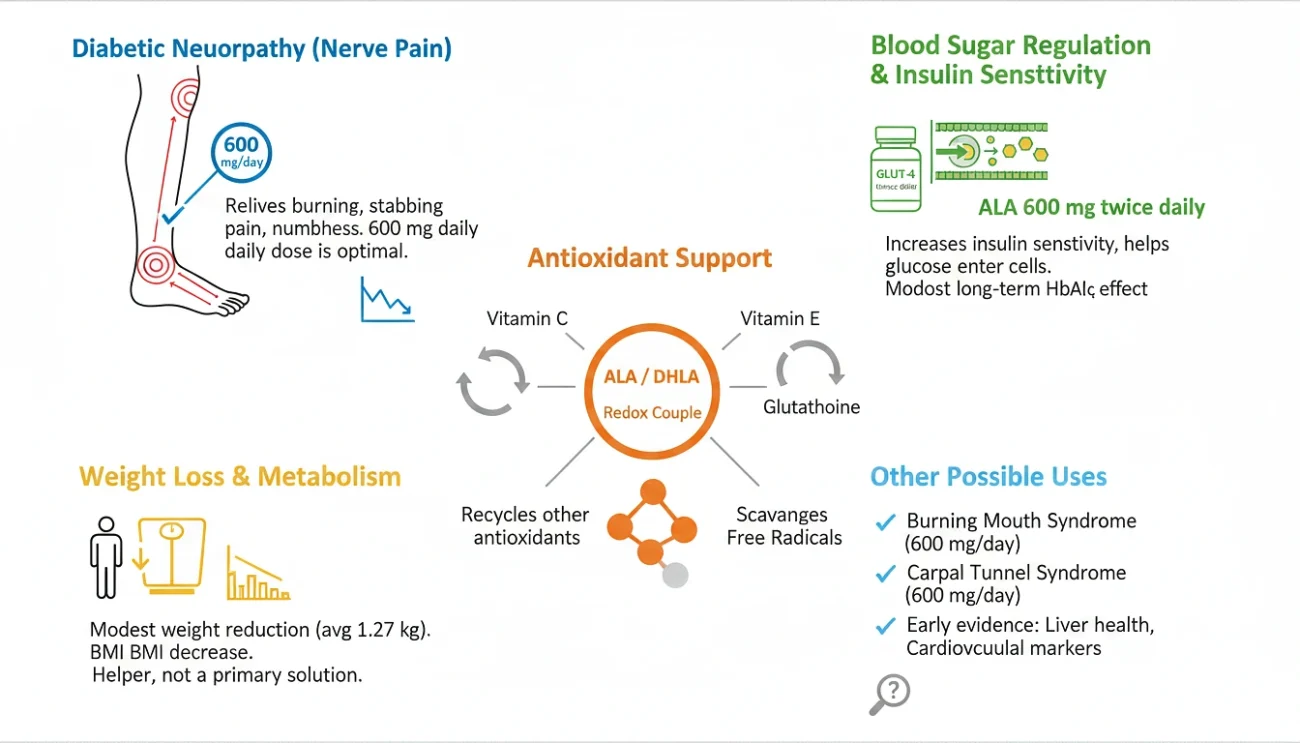
This is hands-down the most studied use of ALA. The SYDNEY 2 trial, titled “Oral Treatment With α-Lipoic Acid Improves Symptomatic Diabetic Polyneuropathy” (Diabetes Care, 2006), put oral ALA to the test in 181 diabetic patients across Russia and Israel. A daily dose of 600 mg eased the burning, stabbing pain, paresthesia, and numbness, and the researchers concluded that 600 mg/day hit the sweet spot between benefit and side effects.
In the same trial, higher doses of 1,200 mg and 1,800 mg didn’t deliver noticeably better symptom relief but did cause more nausea. That’s exactly why 600 mg has stuck around as the go-to dose worldwide.
2. Blood Sugar Regulation and Insulin Sensitivity
A study titled “Improvement of Insulin Sensitivity in Patients With Type 2 Diabetes Mellitus After Oral Administration of Alpha-Lipoic Acid” (Hormone and Metabolic Research, 1999) tested 600 mg twice a day for four weeks and measured insulin sensitivity using the gold-standard hyperinsulinemic euglycemic clamp. Insulin sensitivity went up significantly in the treated group.
The mechanism behind this is pretty interesting. ALA helps recruit GLUT-4 glucose transporters to your cell membranes, basically the same pathway insulin uses to push sugar into cells. The review “α-Lipoic acid as a dietary supplement: Molecular mechanisms and therapeutic potential” (Biochimica et Biophysica Acta, 2009) digs into this in detail.
When it comes to long-term blood sugar control, though, the picture is more modest. The systematic review “Efficacy and safety of oral alpha-lipoic acid supplementation for type 2 diabetes management” (Endocrine Connections, 2022) found that the effects on HbA1c were dose-dependent and pretty modest overall. So think of ALA as a helper, not a replacement for diabetes medication.
3. Antioxidant Support
What makes ALA stand out isn’t just that it neutralizes free radicals, it actually helps regenerate other antioxidants too, including vitamin C, vitamin E, and glutathione. The review “Alpha-Lipoic Acid: Biological Mechanisms and Health Benefits” (Antioxidants, 2024) explains that ALA and its reduced form, dihydrolipoic acid (DHLA), pair up as a redox couple with a standard reduction potential of −0.32 V. Together they scavenge reactive oxygen species and recharge your body’s other antioxidant defenses.
That recycling effect is why some researchers call ALA the “antioxidant of antioxidants.”
4. Weight Loss and Metabolism
The meta-analysis “Alpha-lipoic acid (ALA) as a supplementation for weight loss: results from a meta-analysis of randomized controlled trials” (Obesity Reviews, 2017) pulled together data from 10 randomized, double-blind, placebo-controlled studies. People taking ALA lost about 1.27 kg more on average than those on placebo (95% CI 0.25 to 2.29), along with a small but real BMI drop of 0.43 kg/m². It’s a genuine effect, but ALA is no magic weight-loss pill.
5. Other Possible Uses
- Burning Mouth Syndrome (BMS): The review “The efficacy of alpha-lipoic acid in the management of burning mouth syndrome: An updated systematic review of randomized controlled clinical trials” (Oral Diseases, 2023) looked at nine RCTs and found that six of them reported ALA at 600–800 mg/day worked better than placebo for BMS symptoms.
- Carpal Tunnel Syndrome: The trial “The Use of Alfa-Lipoic Acid-R (ALA-R) in Patients With Mild-Moderate Carpal Tunnel Syndrome” (Acta Bio-Medica, 2020) showed that 600 mg of ALA-R once daily for 60 days led to a clear drop in pain compared to the control group, although other functional measures didn’t shift much.
- Liver health and cardiovascular markers are also being explored, but the evidence here is still early days.
Side Effects of Alpha Lipoic Acid
For most healthy adults, ALA is well tolerated at standard doses. The four-year retrospective study “Safety and Efficacy of Alpha Lipoic Acid During 4 Years of Observation” (Drug Design, Development and Therapy, 2020) tracked 322 patients on doses ranging from 400 to 1,200 mg/day and found no serious adverse events, with side effects holding steady across all dose levels.
Common Side Effects
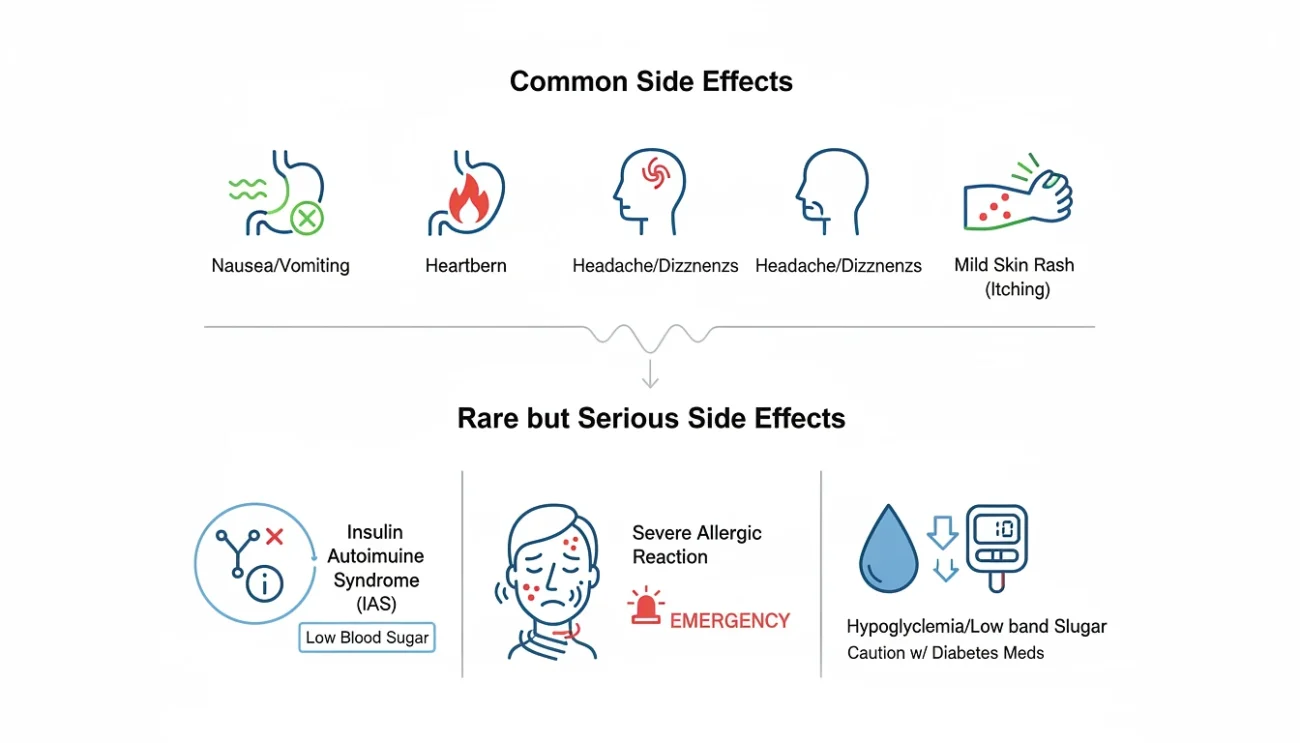
- Nausea
- Vomiting
- Heartburn or stomach upset
- Headache
- Dizziness
- Mild skin rash or itching
Rare but Serious Side Effects
- Insulin Autoimmune Syndrome (IAS): Health Canada’s “Summary Safety Review – Alpha Lipoic Acid – Assessing the Potential Risk of Low Blood Sugar (Hypoglycemic Episodes)” found that in rare cases, ALA can trigger insulin autoimmune syndrome. That’s where your body produces antibodies against its own insulin, leading to recurrent low blood sugar episodes. The risk seems tied to a specific genetic variation, and symptoms cleared up once people stopped taking ALA.
- Severe Allergic Reactions: Hives, swelling of the face or throat, or trouble breathing are emergencies, get medical help right away.
- Hypoglycemia (Low Blood Sugar): ALA lowers blood sugar, so if you’re already on diabetes medication (insulin, metformin, sulfonylureas), keep a close eye on your levels.
Precautions and Drug Interactions
Who Should Be Cautious
- People with diabetes: Talk to your doctor first, you may need to adjust your diabetes medication.
- Thyroid patients: ALA can interfere with thyroid hormone levels, which matters if you’re on something like levothyroxine.
- Pregnant or breastfeeding women: There just isn’t enough safety data to recommend it during pregnancy or breastfeeding.
- People undergoing chemotherapy: ALA’s antioxidant action could theoretically mess with how some chemo drugs work, always run it past your oncologist first.
- Children: Safety in kids hasn’t been established.
Choosing a Quality Supplement
ALA supplements aren’t held to the same regulatory standards as prescription drugs in most countries, so quality can vary a lot. Look for:
- Third-party tested products (USP, NSF, or ConsumerLab certifications).
- A clearly labeled dose (usually 300 mg to 600 mg per capsule).
- The R-ALA form if you can find it, this is the natural, biologically active version, though most clinical trials have used racemic ALA (the standard 50/50 mix).
The dose with the most evidence behind it is 600 mg per day, taken either as a single dose or split into two 300 mg doses with food. Going higher doesn’t add benefit and just raises your risk of side effects.
Disclaimer: This article is for educational purposes only and does not replace professional medical advice. Always consult a qualified healthcare medicines provider before starting any new supplement, especially if you have a chronic condition or take prescription medication.
References
- Ziegler D, et al. “Oral Treatment With α-Lipoic Acid Improves Symptomatic Diabetic Polyneuropathy: The SYDNEY 2 Trial,” Diabetes Care, 2006
- Jacob S, Ruus P, Hermann R, et al. “Improvement of Insulin Sensitivity in Patients With Type 2 Diabetes Mellitus After Oral Administration of Alpha-Lipoic Acid,” Hormone and Metabolic Research, 1999
- Shay KP, Moreau RF, Smith EJ, et al. “Alpha-lipoic acid as a dietary supplement: Molecular mechanisms and therapeutic potential,” Biochimica et Biophysica Acta, 2009
- Hosseini A, et al. “Efficacy and safety of oral alpha-lipoic acid supplementation for type 2 diabetes management: a systematic review and dose–response meta-analysis of randomized trials,” Endocrine Connections, 2022
- Superti F, Russo R. “Alpha-Lipoic Acid: Biological Mechanisms and Health Benefits,” Antioxidants, 2024
- Kuçukgoncu S, Zhou E, Lucas KB, Tek C. “Alpha-lipoic acid (ALA) as a supplementation for weight loss: results from a meta-analysis of randomized controlled trials,” Obesity Reviews, 2017
- Bhatnagar S, et al. “The efficacy of alpha-lipoic acid in the management of burning mouth syndrome: An updated systematic review of randomized controlled clinical trials,” Oral Diseases, 2023
- Pajardi G, et al. “The Use of Alfa-Lipoic Acid-R (ALA-R) in Patients With Mild-Moderate Carpal Tunnel Syndrome: A Randomised Controlled Open Label Prospective Study,” Acta Bio-Medica, 2020
- Derosa G, D’Angelo A, Romano D, Maffioli P. “Safety and Efficacy of Alpha Lipoic Acid During 4 Years of Observation: A Retrospective, Clinical Trial in Healthy Subjects in Primary Prevention,” Drug Design, Development and Therapy, 2020
- Health Canada. “Summary Safety Review – Alpha Lipoic Acid – Assessing the Potential Risk of Low Blood Sugar (Hypoglycemic Episodes)”