
Top Ready-to-Drink Weight Loss Shakes

Key Takeaways
- Top rated RTD weight loss shakes include Premier Protein (30g protein, 160 cal, ~$2/bottle), Fairlife Nutrition Plan (30g protein, 150 cal, lactose-free), OWYN (best plant-based, 20g protein, allergen-free), SlimFast High Protein (most affordable at ~$1.50/bottle), Orgain Clean Protein (USDA Organic, no artificial ingredients), Huel Black Edition RTD (35g protein, full meal replacement), and Slate Milk (lowest calorie at 100–120 cal per can).
- Key factors to look for: aim for 20–30g of protein per serving, under 200 calories for a snack replacement, less than 10g of added sugar, and 3–5g of fibre for sustained fullness. A complete amino acid profile matters look for multi-source plant blends or dairy-based proteins like whey and casein.
- How to use them effectively: RTD shakes support weight loss only when they replace a higher-calorie meal or snack, not when added on top of your normal diet. Research confirms that higher-protein diets increase thermogenesis and satiety, leading to reduced calorie intake at subsequent meals. Cap intake at one to two shakes per day and build the rest of your diet around whole foods.
Grabbing a bottle from the fridge shouldn’t feel like a compromise between convenience and progress. But for anyone trying to lose weight while juggling a schedule that doesn’t allow time for meal prep, ready-to-drink (RTD) shakes have become a genuine lifeline not a gimmick, not a shortcut, but a practical tool that fills a real gap.
The catch? The market is flooded with hundreds of options, and the difference between a shake that actually supports fat loss and one that’s basically flavoured sugar water comes down to a handful of details most people gloss over. This guide breaks down the shakes worth your money, what the research actually says about using them for weight loss, and the red flags that separate marketing noise from nutritional substance.
Why RTD Shakes Work for Weight Loss
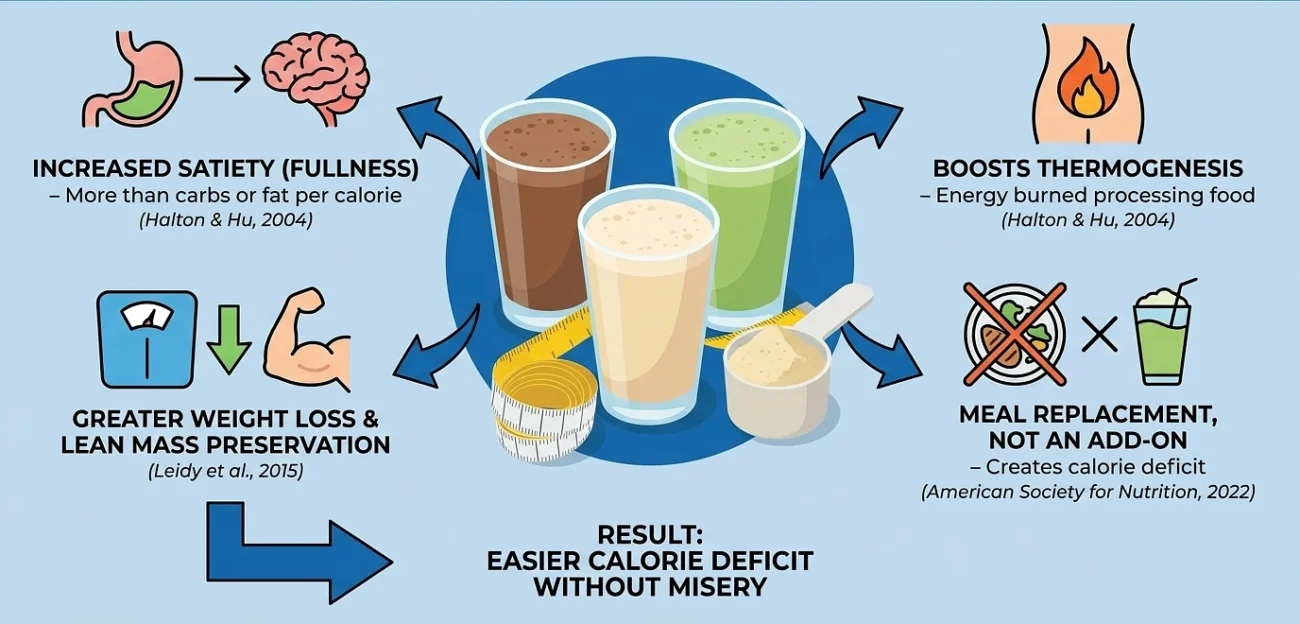
The logic behind using protein shakes for weight management isn’t complicated. Protein increases satiety the feeling of fullness after eating more than either carbohydrates or fat do at the same calorie count. That’s not bro-science; it’s a fairly well-established finding across nutrition research.
A critical review published in the Journal of the American College of Nutrition found convincing evidence that higher protein intake boosts thermogenesis (the energy your body burns processing food) and satiety compared to lower-protein meals. The same review noted that high-protein meals tend to reduce how much food people eat at their next sitting (Halton & Hu, Journal of the American College of Nutrition, 2004).
More recently, a 2022 study presented through the American Society for Nutrition looked at 206 adults with obesity who consumed high-protein, high-fibre shakes before breakfast and lunch for 12 weeks alongside a calorie-restricted diet. The group drinking the protein-fibre shakes lost more weight than the control group eating the same number of calories but with lower protein and fibre suggesting that the composition of those calories, not just the number, matters for outcomes (American Society for Nutrition, 2022).
A 2015 review published in the American Journal of Clinical Nutrition confirmed a similar pattern: meta-analyses of controlled feeding studies showed greater weight loss, fat mass loss, and lean mass preservation on higher-protein energy-restricted diets compared to lower-protein ones (Leidy et al., American Journal of Clinical Nutrition, 2015).
None of this means shakes are magic. The mechanism is straightforward: they make it easier to eat fewer total calories without feeling miserable. Where people go wrong is treating them as an add-on to their normal diet rather than a replacement for a meal or snack. Stacking 180 extra calories on top of everything you already eat doesn’t create a deficit. It eliminates one.
What to Look for in a Weight Loss Shake
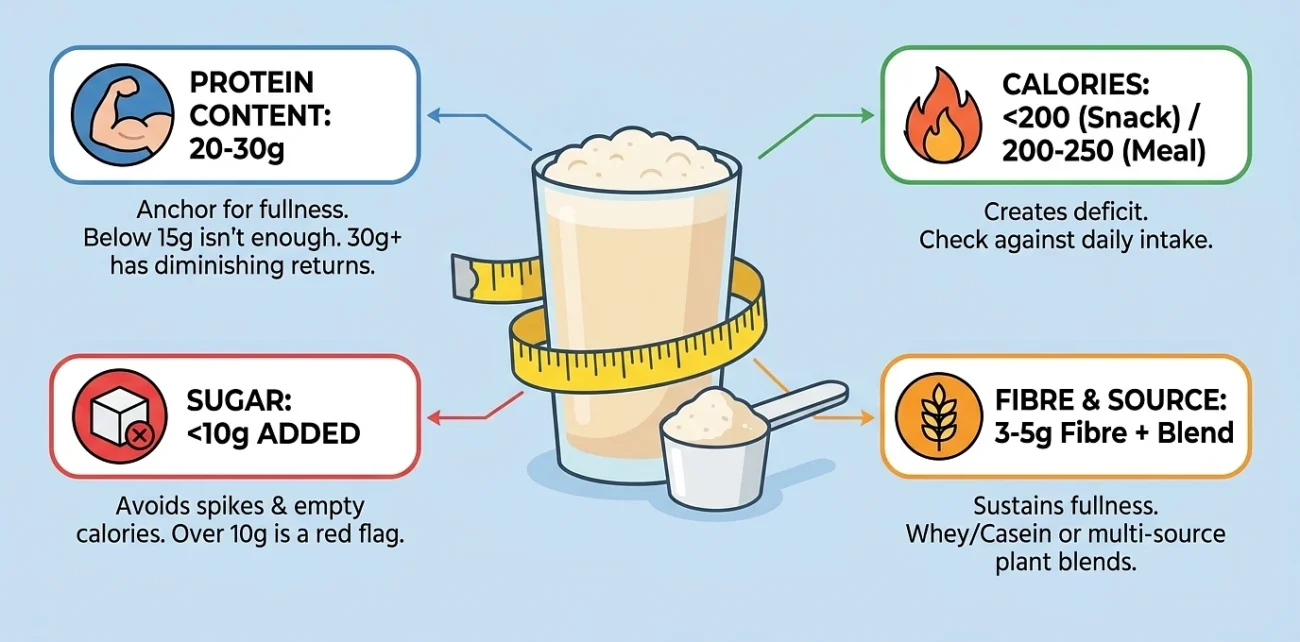
Not every RTD shake is designed with weight loss in mind. Some are built for athletes who need 400+ calories and 40g of protein post-workout. Others are glorified desserts. Here’s what actually matters when you’re choosing one specifically for fat loss.
- Protein content is the anchor. Dietitians generally recommend 20-30g of protein per serving for a shake you’re using as a snack or partial meal replacement. Anything below 15g isn’t doing enough to keep you full. Above 30g in a single sitting offers diminishing returns on muscle protein synthesis, though it won’t hurt.
- Calories should sit under 200 if the shake is functioning as a snack, or around 200-250 if it’s replacing a meal. Check this against your total daily intake a 150-calorie shake replacing a 600-calorie lunch creates a meaningful deficit. A 350-calorie shake replacing a 400-calorie lunch barely moves the needle.
- Sugar is where many shakes quietly sabotage you. Anything above 10g of added sugar per bottle is a red flag. Some of the “original” formula RTD shakes from older brands carry 15–20g, which spikes blood sugar, crashes energy, and adds empty calories that don’t contribute to satiety.
- Fibre doesn’t get talked about enough. Shakes with 3–5g of dietary fibre per serving keep you feeling fuller longer. Protein and fibre together seem to have a synergistic effect on appetite regulation, based on the 2022 research mentioned earlier.
- Protein source matters for digestibility and amino acid profile. Whey and casein (dairy-based) absorb at different rates whey quickly, casein slowly and a blend of both can sustain fullness over hours. For plant-based options, look for multi-source blends (pea + pumpkin seed + flax, for instance) that cover all nine essential amino acids.
The top RTD Weight Loss Shakes
Premier Protein
This is the workhorse of the RTD shake world, and for good reason. Each 11.5 fl oz bottle delivers 30g of protein from milk protein concentrate at just 160 calories, with only 1g of sugar. The protein-to-calorie ratio here is hard to beat roughly 5.3 calories per gram of protein.
The flavour lineup is enormous, spanning over a dozen options including Chocolate, Vanilla, Caramel, Café Latte, and more seasonal rotations. The taste is genuinely good for a protein shake, which matters because consistency is the single biggest predictor of whether a dietary approach actually works. A shake you dread drinking is a shake you stop drinking.
The downside: the ingredient list does include artificial flavours and sucralose, which some people prefer to avoid. Milk protein concentrate also absorbs more slowly than whey isolate, though that sustained-release profile actually works in your favour for appetite control between meals.
Price sits around $2.00–$2.50 per bottle in bulk, making it the most cost-effective high-protein option available.
Best for: Budget-conscious buyers who want maximum protein per dollar with minimal sugar and calories.
Fairlife Nutrition Plan
Fairlife uses ultra-filtered milk as its base, a process that concentrates the naturally occurring protein while stripping out lactose and excess sugar. The result is 30g of protein, just 2g of sugar, and 150 calories per 11.5 fl oz bottle one of the leanest macro profiles in the RTD category.
The texture is noticeably smoother and more “milkshake-like” than many competitors, thanks to that ultra-filtration process. Available in Chocolate, Vanilla, Salted Caramel, and Strawberry. The shake is also lactose-free, which opens the door for people who get digestive issues from standard dairy-based shakes.
On the vitamin and mineral front, each bottle provides significant amounts of calcium (about 60% DV), vitamin D, B12, and several other micronutrients. The calcium content alone is unusual for a protein shake and relevant for anyone whose weight loss diet has reduced their dairy intake.
The trade-off is price Fairlife runs about $2.50–$3.00 per bottle depending on where you buy. Costco’s 18-pack at around $47 brings the per-unit cost down, but it’s still a premium over Premier Protein.
Best for: People who want a clean macro profile with the taste and texture of real milk, especially those who are lactose-intolerant.
OWYN (Only What You Need)
OWYN is the strongest contender in the plant-based RTD space. The standard Non-Dairy Protein Shake delivers 20g of protein from a tri-blend of pea protein, organic pumpkin seed protein, and organic flaxseed oil a combination that provides a complete essential amino acid profile without any dairy, soy, or common allergens.
At 180 calories, 8g of carbs, and 3g of fibre per bottle, the macros are reasonable for weight loss. The shake is sweetened with organic cane sugar and monk fruit extract, totalling 4g of added sugar higher than Premier Protein or Fairlife, but not excessive. The Dark Chocolate and Cold Brew Coffee flavours test well for taste.
OWYN also makes a Pro Elite version with 32g of protein, zero added sugar, 6g of fibre, and 200 calories a better option if you’re specifically using the shake as a meal replacement and want more staying power.
A notable safety point: OWYN’s Pro Elite was one of the only RTD shakes to have lead levels come back below detection limits in Consumer Reports’ 2025 heavy metals investigation.
At roughly $3.00–$3.90 per bottle, OWYN is on the pricier side, but it’s the cleanest plant-based option widely available.
SlimFast High Protein
SlimFast has been around since the 1970s, and while the brand’s original shakes were heavy on sugar and light on protein, their newer High Protein RTD line is a different product entirely. The updated formula packs 20g of protein per bottle at around 180 calories, with 24 vitamins and minerals included.
The protein source is a mix of calcium caseinate and milk protein concentrate, which provides a slower-digesting protein profile that supports extended satiety. It’s a decent option for people who need their shake to bridge a four-to-five-hour gap between meals.
The flavour range is narrower than Premier Protein but covers the essentials Chocolate, Vanilla, Strawberry, and a newer Mocha Latte. Taste is acceptable without being exceptional. The ingredient list does include artificial sweeteners (sucralose) and carrageenan, which some consumers prefer to avoid.
Where SlimFast wins is pure availability. It’s stocked in virtually every supermarket, pharmacy, and big-box store, and the per-bottle price tends to sit around $1.50–$2.00 the cheapest option on this list.
Best for: People who want a widely available, affordable shake with decent protein content and don’t mind artificial ingredients.
Orgain Clean Protein
Orgain positions itself at the intersection of clean ingredients and accessibility. Their RTD shake uses grass-fed whey protein as the primary source, delivering 20g of protein per bottle at roughly 150 calories with just 1g of sugar. The ingredient list skips artificial flavours, colours, and preservatives entirely it’s one of the simplest labels you’ll find in the RTD category.
The shake is USDA Organic certified and uses stevia and monk fruit for sweetness, which keeps the sugar content low without resorting to sucralose or acesulfame potassium. The texture leans thicker and creamier than average.
Orgain also makes a plant-based RTD version using organic pea protein at 140 calories and 20g of protein per bottle, with 3g of sugar. The plant version is widely available at Target and Walmart and runs about $2.50–$3.00 per bottle.
One concern worth noting: Orgain’s protein powder (not the RTD) showed elevated lead levels in Consumer Reports’ 2025 testing. The RTD was not tested, so the results can’t be directly transferred, but it’s something to be aware of if heavy metal contamination is a priority concern for you.
Best for: People who want organic certification, clean ingredients, and a straightforward nutritional profile without artificial anything.
Huel Ready-to-Drink
Huel operates more as a complete meal replacement than a pure protein shake. Each 16.9 fl oz bottle of the standard RTD delivers 20g of protein, 17g of fat, 30g of carbs, and 400 calories along with 27 essential vitamins and minerals and 6g of dietary fibre.
For weight loss, the standard Huel RTD is best used as a full meal replacement rather than a snack, given its calorie density. If you’re replacing a 700-calorie lunch with a 400-calorie Huel, the maths works. If you’re adding it on top of meals, it doesn’t.
The Black Edition RTD is the higher-protein variant, bumping protein to 35g per bottle while keeping the same calorie count. The protein comes from a blend of plant sources including pea, rice, and hemp, making the whole line vegan-friendly.
Flavours include Banana, Berry, Chocolate, Vanilla, Salted Caramel, and others. The taste is divisive — some people love the oaty, slightly earthy profile, while others find it chalky. The price runs higher than most competitors at around $4.50–$5.50 per bottle.
Best for: People who want a genuine all-in-one meal replacement with balanced macros and full micronutrient coverage, not just a protein supplement.
Slate Milk
Slate Milk takes a different approach entirely. These are ultra-filtered, lactose-free milk-based protein drinks that come in slim cans and feel more like a flavoured milk than a thick shake. Each can delivers 20g of protein at just 100–120 calories with only 1g of sugar.
That calorie count is the lowest on this list by a significant margin, which makes Slate useful for people who want a protein hit without much caloric impact a mid-afternoon snack, for instance, when you need to hold off until dinner.
Flavours include Dark Chocolate, Caramel, Mocha Latte, and several others. The texture is thin and light, which is either a selling point or a drawback depending on what you’re after. If you want something that feels substantial and filling, Slate won’t deliver that. But if you want the protein without feeling like you just drank a meal, it’s a strong option.
Quick comparison
| Shake | Protein | Calories | Sugar | Fibre | Protein Source | Price (approx.) |
|---|---|---|---|---|---|---|
| Premier Protein | 30g | 160 | 1g | 3g | Milk protein concentrate | $2.00–$2.50 |
| Fairlife Nutrition Plan | 30g | 150 | 2g | 1g | Ultra-filtered milk | $2.50–$3.00 |
| OWYN Non-Dairy | 20g | 180 | 4g | 3g | Pea, pumpkin seed, flax | $3.00–$3.10 |
| SlimFast High Protein | 20g | 180 | 1g | 5g | Casein, milk protein | $1.50–$2.00 |
| Orgain Clean Protein | 20g | 150 | 1g | 0g | Grass-fed whey | $2.50–$3.00 |
| Huel RTD (Black Ed.) | 35g | 400 | 0g | 6g | Pea, rice, hemp blend | $4.50–$5.50 |
| Slate Milk | 20g | 100–120 | 1g | 0g | Ultra-filtered milk | $2.50–$3.00 |
How to actually use RTD shakes for weight loss
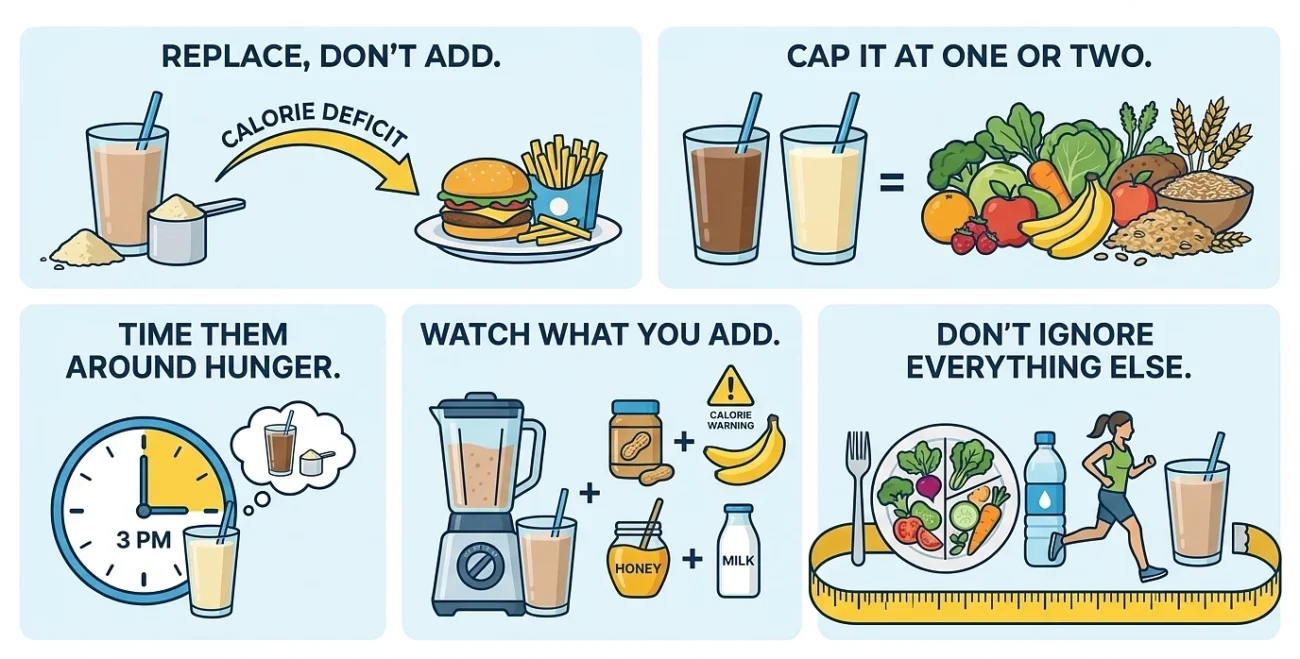
The shake itself is never the strategy. It’s a tool within a strategy. A few principles that separate people who see results from people who buy a 12-pack and wonder why nothing changed:
- Replace, don’t add. This is the single most common mistake. A shake works for weight loss only when it takes the place of a higher-calorie meal or snack. Drinking a 160-calorie shake instead of a 500-calorie lunch creates a 340-calorie deficit. Drinking it alongside that lunch adds 160 calories to your day. The arithmetic is unforgiving.
- Cap it at one or two per day. Dietitians consistently recommend limiting shakes to a maximum of one or two daily. Beyond that, you start missing out on fibre, phytonutrients, and the sheer variety of micronutrients that whole foods provide. Shakes should supplement a food-first approach, not replace it entirely.
- Time them around hunger patterns. If you tend to snack mindlessly between lunch and dinner, slot a shake in at 3pm. If mornings are chaotic and you skip breakfast, a shake gives you protein and calories without requiring any prep. The best time to drink a shake is the time when you’d otherwise make a bad food decision.
- Watch what you add. If you’re blending a shake with peanut butter, honey, banana, and full-fat milk, you’ve turned a 160-calorie protein drink into a 500-calorie smoothie. That might be exactly what you want but if the goal is weight loss, measure those add-ins at least once or twice so your “small spoonful” doesn’t quietly triple the calories.
- Don’t ignore everything else. A shake can’t compensate for a diet that’s otherwise chaotic. It works best inside a broader framework: reasonable total calorie intake, adequate protein across the day (the general target for active adults is about 0.7-1.0g per pound of bodyweight), enough vegetables and fibre, sufficient water, and some form of regular movement.
A word on safety and quality
The supplement industry in the United States isn’t regulated with the same rigour as pharmaceutical drugs. That means labels can sometimes overstate protein content or understate concerning ingredients like heavy metals.
Consumer Reports’ October 2025 investigation tested a number of protein products and found elevated lead levels in several popular brands. While most of the testing focused on powders rather than RTD shakes, the findings prompted reasonable caution across the category. Among RTD products specifically tested, OWYN’s Pro Elite came back with lead below detection limits a reassuring result for anyone concerned about long-term exposure.
Third-party certifications like NSF Certified for Sport, Informed Sport, or Clean Label Project’s Purity Award provide an extra layer of verification. Premier Protein, for instance, has received the Clean Label Project’s Purity Award. If you’re drinking a protein shake daily for months or years, it’s worth choosing products from brands that invest in independent testing.
References
- Halton, T.L. & Hu, F.B. (2004). The effects of high protein diets on thermogenesis, satiety and weight loss: a critical review. Journal of the American College of Nutrition, 23(5), 373–385.
- Leidy, H.J. et al. (2015). The role of protein in weight loss and maintenance. American Journal of Clinical Nutrition, 101(6), 1320S–1329S.
- American Society for Nutrition (2022). Greater weight loss and positive changes in metabolic outcomes achieved with regular consumption of high-protein, high-fibre shakes. Conference presentation.
- Nutrients (2022). Does a higher protein diet promote satiety and weight loss independent of carbohydrate content? An 8-week low-energy diet intervention. Nutrients, 14(3), 538.
- Scientific Reports (2025). Protein-enriched intermittent meal replacement combined with moderate-intensity training for weight loss and body composition in overweight women.
- Consumer Reports (2025). Protein powders and drinks heavy metals investigation.