Cucumber: Nutrition Facts and Health Benefits

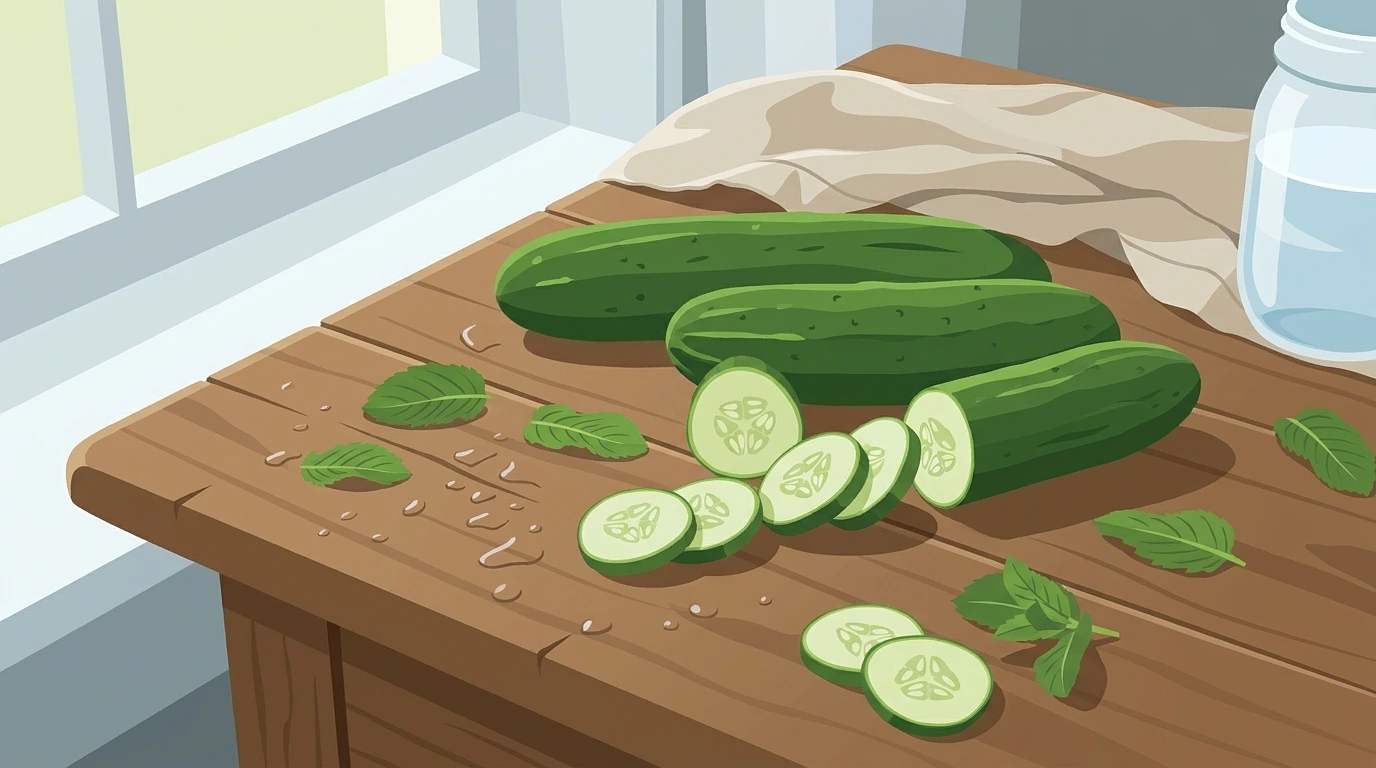
Cucumber is one of those vegetables that is actually a fruit because grown from flowers and have seeds in them which man eats stringently without bothering about much. They are featured in salads, sandwiches, raita and water jugs. However, much of the crunchy fun is hidden in the surprisingly good nutritional package and the mounting science supporting their health benefits.
Quick Overview
Cucumbers are of the same family as melons, squash and pumpkins. These are one of the most hydrating whole foods out there, being about 95-96% water by weight (Cleveland Clinic, “Foods To Help Keep You Hydrated,” 2025). They are a very low calorie food – at just 15-16 calories per 100 grams. They are particularly rich in vitamin K and have bioactive phytochemicals (cucurbitacins) that have been investigated for antioxidant and anti-inflammatory effects and even for their anti-cancer properties! The Glycemic Index Database from The University of Sydney confirms that this is true because the glycemic index of the cucumber is only 15. They are cheap, easily accessible, easy to prepare, and can be incorporated into almost any diet, from keto to Mediterranean.
Cucumber Nutrition Facts
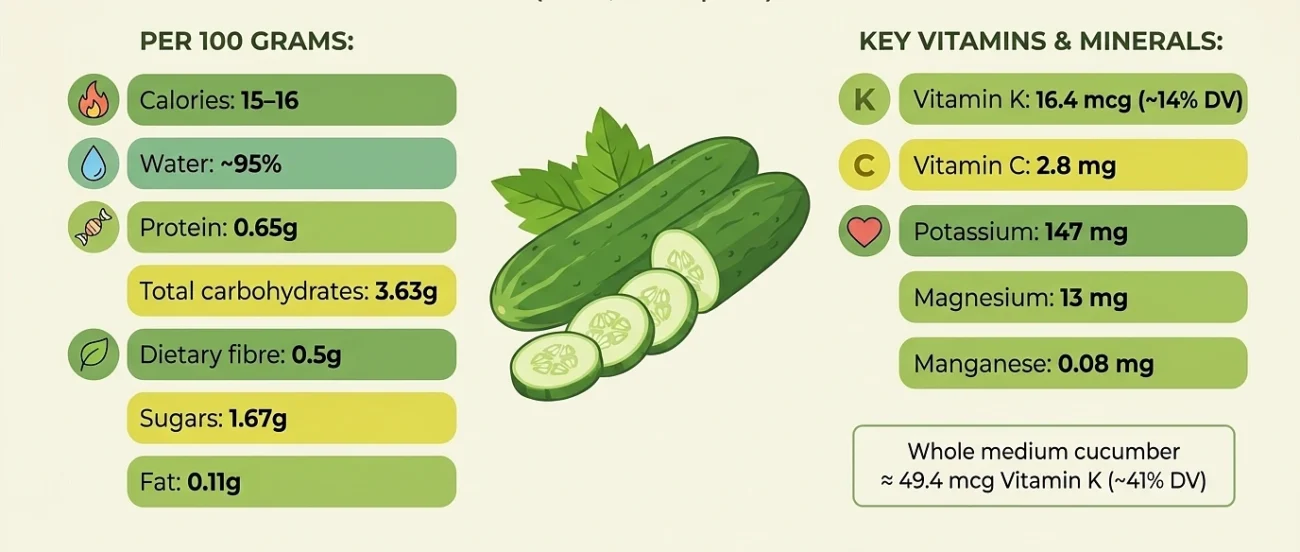
All nutritional data below is sourced from the USDA FoodData Central database specifically FDC ID: 2346406 for raw cucumber with peel, and FDC ID: 169225 for peeled.
Per 100 grams of raw cucumber, with peel:
- Calories: 15–16
- Water: ~95%
- Protein: 0.65g
- Total carbohydrates: 3.63g
- Dietary fibre: 0.5g
- Sugars: 1.67g
- Fat: 0.11g
Key vitamins and minerals per 100g (with peel):
- Vitamin K: 16.4 mcg (~14% daily value)
- Vitamin C: 2.8 mg
- Potassium: 147 mg
- Magnesium: 13 mg
- Manganese: 0.08 mg
The vitamin K content in a whole medium cucumber is approximately 49.4 mcg, which represents about 41% of the daily value (DV) (USDA FoodData Central). That’s a significant contribution from a single food that most people consider to be nutrition poor.
The difference between peeled and unpeeled doesn’t go without saying. The skin is rich in fibre, vitamin K and beta-carotene, which are concentrated in the skin removing this reduces the calorie content, but you lose a lot of those nutrients. Meanwhile the minerals found in the seeds were documented in a study published in the Pakistan Journal of Nutrition, which found the seeds to be a good source of minerals. Always leave the skin on a cucumber when eating it for its nutritional content.
There is a caveat: Cucumbers don’t have as many nutrients as spinach, sweet potatoes or broccoli. They’re “not supernutritious,” but they’re affordable and versatile, Dr. Matthew Landry, assistant professor of population health and disease prevention at the University of California, Irvine, told the American Heart Association (American Heart Association, “Cucumbers are trendy, but how healthy are they“). January 2025). The health benefits will be in their value for hydration, very low calorie density and certain bioactive compounds.
Cucumber Nutrition: Health Benefits
Hydration
Cucumbers consist of 95–96% water by weight, placing them at the top of the list for water-rich foods alongside iceberg lettuce and ahead of celery, watermelon, and tomatoes.
This is significant due to the Academy of Nutrition and Dietetics’ estimation that about 20% of daily water intake is from food rather than drinks. Cucumbers are one of the best sources for this 20% since you can consume a high amount of them without a significant amount of calories. The Cleveland Clinic especially points out cucumbers as a food that is very hydrating, stating that their watery content is a “giant when it comes to delivering fluid to your body” (Cleveland Clinic, “Foods To Help Keep You Hydrated,” 2025).
This is especially relevant for older adults who may not register thirst as reliably, for children who resist plain water, and for anyone living in hot climates where dehydration risk runs higher year-round.
Blood Sugar Management
Cucumbers have a glycemic index of approximately 15 and a glycemic load close to zero, meaning they cause virtually no spike in blood glucose even when consumed in large quantities. For reference, anything under 55 is classified as low-GI (The University of Sydney Glycemic Index Database).
In addition to the GI score, there are actual laboratory studies that are noteworthy. In a study published in Journal of Food Biochemistry (Ibitoye et al. 2018), the flavonol compound kaempferol was extracted from Cucumis sativus fruit and it was observed that kaempferol reduced blood glucose, and inhibited α-amylase and α-glucosidase enzymes in alloxan induced diabetic rats. Both of these enzymes are directly involved in the rate at which carbohydrates are converted to glucose in the body.
In a separate study published in BioImpacts (Heidari et al., 2016), the researchers studied the protective effect of cucumber fruit against diabetes-related models of oxidative stress and carbonyl stress, and measured some protective effects against the formation of ROS which is the type of cellular damage that has been shown to cause diabetic complications.
An earlier investigation (Minaiyan et al., published in the Iranian Journal of Basic Medical Sciences, 2011) tested hydroalcoholic and buthanolic extracts of cucumber seeds in streptozotocin-induced diabetic rats, with more mixed but still notable results.
Important context: these are animal and in-vitro studies. No large-scale human clinical trial has established cucumbers as a diabetes treatment. But for people managing diabetes or prediabetes, cucumbers are about as safe and blood-sugar-neutral a food as exists, and the direction of the research is genuinely encouraging.
Antioxidant Activity
The cucumber has compounds called cucurbitacins, which are highly oxygenated tetracyclic triterpenoids present in all cucumber plant family members. They also include flavonoids (apigenin, quercetin, kaempferol, luteolin), lignans (pinoresinol, lariciresinol, secoisolariciresinol) and tannins. All of these are reported in the chapter “Health Beneficial Effects of Cucumber” from the book of IntechOpen (2021).
One notable piece of human evidence: a 2015 pilot study published in The Journal of Nutrition, Health & Aging (Ji et al., Vol. 19, No. 7, pp. 765–770) supplemented 30 healthy adults over the age of 60 with cucumber powder for 30 days. The results showed significant increases in plasma glutathione peroxidase activity, vitamin C levels, and total phenolic content, along with a significant decrease in plasma uric acid. DNA damage markers in blood mononuclear cells also declined. It’s a small pilot study, not a large trial, but it’s real human data not just test-tube work.
On the test-tube side, a 2010 study cited by Healthline investigated cucumber’s antioxidant properties directly and found that its flavonoids and tannins were particularly effective at blocking harmful free radicals.
A more comprehensive review published in 2013 in Fitoterapia summarized the antioxidant, antimicrobial, antidiabetic and hypolipidemic effects of Cucumis sativus in various published research reports (Mukherjee et al., Phytochemical and therapeutic potential of cucumber).
Anti-Cancer Potential of Cucurbitacins
This is where the research gets more specific and more interesting, though still early-stage.
A 2019 study published in Frontiers in Pharmacology (PMC ID: PMC6857091) demonstrated that cucurbitacin C a compound found exclusively in cucumber showed significant antitumour activity in both in-vitro and in-vivo models. This was the first study to specifically establish the therapeutic potential of cucurbitacin C against human cancers.
A comprehensive 2022 review published in the Journal of Translational Medicine (PMC ID: PMC9805216) compiled evidence across multiple cancer types, confirming that cucurbitacins exhibit significant anti-inflammatory, antioxidant, antimicrobial, and hepatoprotective biological activities. The review covered cucurbitacins B, D, E, and I as the most extensively studied variants, with documented effects against breast, liver, gastric, cervical, and brain cancers all in laboratory and animal models.
This is not to say that cucumbers are a cancer cure. However, the phytochemical profile is actually more scientifically interesting than most people realize for a so-so tasting food.
Bone Health
The connection here runs through vitamin K. Cucumbers provide 16.4 mcg of vitamin K per 100g (with peel), and a whole cucumber delivers about 41% of the daily value.
Vitamin K’s role in bone metabolism is well established. It activates osteocalcin, a protein that binds calcium into bone tissue, and also activates matrix Gla proteins that regulate cartilage calcification. A 2020 review in Nutrients (Chin & Ima-Nirwana, PMC ID: PMC7281970) found that sufficient vitamin K levels are associated with lower risk of osteoarthritis and fewer pathological joint features.
A 2021 review in the International Journal of Molecular Sciences (MDPI) further confirmed that vitamin K-dependent proteins play important roles in bone and cartilage biology, including the control of calcification and bone turnover.
The Cleveland Clinic specifically notes the cucumber-bone connection: “Getting enough dietary vitamin K reduces your risk of bone fractures and promotes healthy bone mass” and adds that “the combination of vitamin K and calcium in cucumbers provides added bone benefits” (Cleveland Clinic, “Are Cucumbers Good for You?” 2023).
Cucumbers alone won’t prevent osteoporosis. But eaten regularly alongside other vitamin K sources like leafy greens, broccoli, and fermented foods, they make a genuine contribution.
Weight Management
This one doesn’t need complex research to explain the maths is straightforward. At 15–16 calories per 100g, cucumbers are among the lowest-calorie whole foods that exist. A whole medium cucumber contains roughly 45 calories (American Heart Association, 2025). Their high water content adds physical volume, and the fibre modest as it is contributes to satiety.
Dr. Matthew Landry told the American Heart Association: “You could eat cups of them, and barely reach 100 calories or so” (American Heart Association, January 2025).
One of the easiest volume eating tips is to replace high calorie snacks with slices of cucumber. You are decreasing calorie density without reducing the amount of food you are eating. Cucumbers are a more useful and practical food for those on a moderate calorie deficit than a miracle food, but they are a consistently helpful one.
Digestive Health
Cucumbers are a low-FODMAP food and are less likely to cause gas, bloating or gastrointestinal discomfort than many of the other vegetables. It is important for those who suffer from IBS and other functional gut issues that eat higher fibre vegetables such as beans, broccoli or onions may be a problem.
Water and soluble fibre – which is primarily in the skin – helps maintain regular bowel movements. Absolutely low fibre content (0.5-1g per 100g) but the moisture gives a natural lubrication to digestion.
A whole cucumber provides about 1.5 grams of fibre (American Heart Association, 2025). That’s modest against the FDA’s recommended 28g daily intake, but cucumbers function best as a gentle, low-risk addition to a broader fibre-rich diet rather than a primary fibre source.
Skin Health
The image of cucumber-on-the-eyes is almost iconic in the realm of skincare, and it’s not just about the marketing. The silica content strengthens the connective tissue and the water content has mild cooling and anti-inflammatory effects when applied topically.
The 2013 review in Fitoterapia (Mukherjee et al.) documented anti-hyaluronidase and anti-elastase activities in cucumber both of which are relevant to skin elasticity and ageing. Hyaluronidase breaks down hyaluronic acid (a key skin-hydrating molecule), and elastase degrades elastin (a protein responsible for skin’s ability to snap back). Compounds in cucumber that inhibit these enzymes have cosmetic and dermatological relevance.
The Cleveland Clinic adds that placing chilled cucumber slices over the eyelids can reduce puffiness while hydrating the surrounding skin (Cleveland Clinic, “Foods To Help Keep You Hydrated,” 2025).
These are relatively small effects, and cucumber does not provide any clinical treatment for the skin. For everyday skin maintenance, both internally (hydration and micronutrients) and externally (topical application), they are a good choice and free from risk.
Tips for Getting the Most from Cucumbers
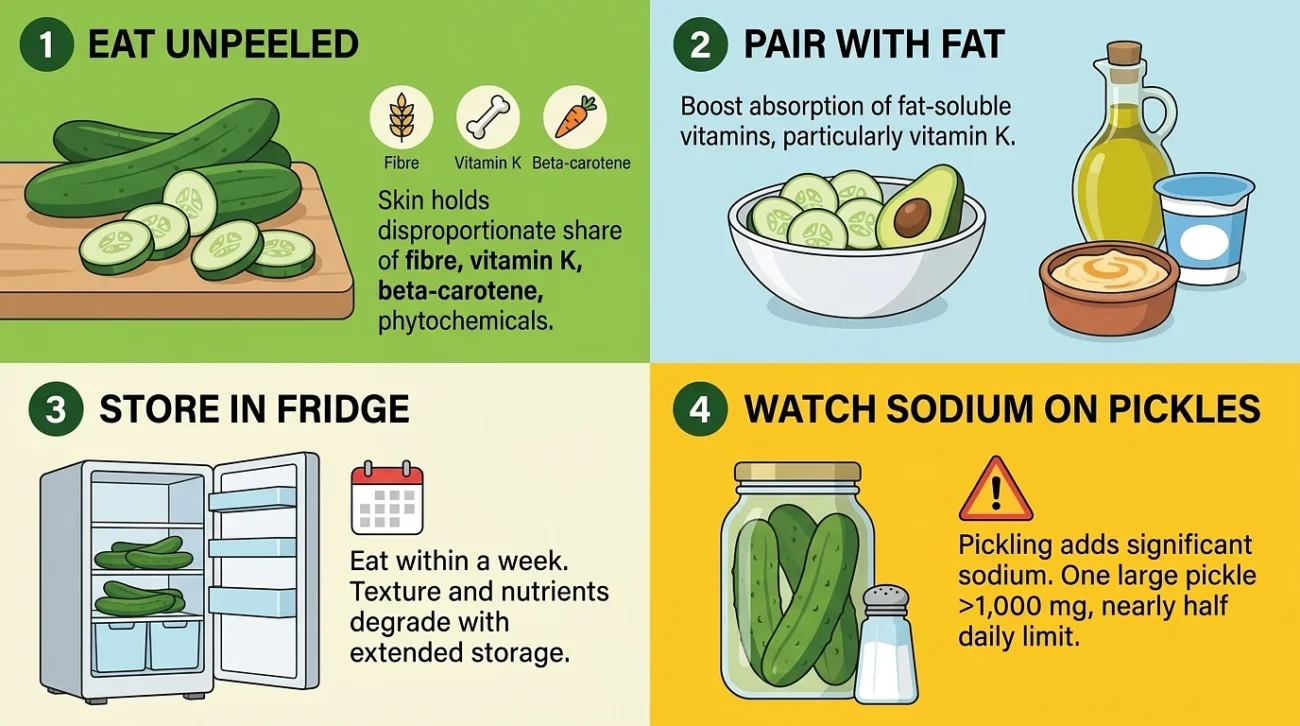
- Eat them unpeeled. The skin holds a disproportionate share of fibre, vitamin K, beta-carotene, and certain phytochemicals.
- Pair with a fat source olive oil, yoghurt, hummus, avocado to boost absorption of fat-soluble vitamins, particularly vitamin K.
- Store in the fridge and eat within a week. Both texture and nutrient content degrade with extended storage.
- Watch sodium on pickles. Pickling preserves some benefits but adds significant sodium a single large pickle can contain over 1,000 mg (American Heart Association, 2025), which is nearly half the AHA’s recommended daily limit of 2,300 mg.
Cucumber can be enjoyed raw in salads, raita, tzatziki, sandwiched or wrapped, as smoothies and infused water. No cooking is required and virtually no preparation other than cleaning and slicing is required.
References
- USDA FoodData Central – Cucumber, with peel, raw (FDC ID: 2346406). https://fdc.nal.usda.gov/fdc-app.html#/food-details/2346406/nutrients
- Cleveland Clinic – “Foods To Help Keep You Hydrated” (2025). https://health.clevelandclinic.org/hydrating-foods
- Cleveland Clinic – “Are Cucumbers Good for You?” (2023). https://health.clevelandclinic.org/benefits-of-cucumbers
- American Heart Association – “Cucumbers are trendy, but how healthy are they?” (January 2025).
- The University of Sydney – Glycemic Index Database.
- Ji, L. et al. – “In vivo antioxidant properties of lotus root and cucumber: A pilot comparative study in aged subjects.” The Journal of Nutrition, Health & Aging, Vol. 19, No. 7, pp. 765–770, 2015.
- Ibitoye, O.B. et al. – “Bioactivity-guided isolation of kaempferol as the antidiabetic principle from Cucumis sativus L. fruits.” Journal of Food Biochemistry, 2018.
- Minaiyan, M. et al. – “Effect of Hydroalcoholic and Buthanolic Extract of Cucumis sativus Seeds on Blood Glucose Level of Normal and Streptozotocin-Induced Diabetic Rats.” Iranian Journal of Basic Medical Sciences, 2011. PMC ID: PMC3586845.
- Heidari, H. et al. – “Protective mechanisms of Cucumis sativus in diabetes-related models of oxidative stress and carbonyl stress.” BioImpacts, 2016. PMC ID: PMC4916550
- Mukherjee, P.K. et al. – “Phytochemical and therapeutic potential of cucumber.” Fitoterapia, 2013.
- “In Vitro and In Vivo Antitumor Activity of Cucurbitacin C, a Novel Natural Product From Cucumber.” Frontiers in Pharmacology, 2019. PMC ID: PMC6857091.
- “Cucurbitacins as potential anticancer agents: new insights on molecular mechanisms.” Journal of Translational Medicine, 2022. PMC ID: PMC9805216.
- Chin, K.Y. & Ima-Nirwana, S. – “The Relationship between Vitamin K and Osteoarthritis: A Review of Current Evidence.” Nutrients, 2020. PMC ID: PMC7281970.