
Well Health Organic Fitness Tips: Getting Fit the Natural Way

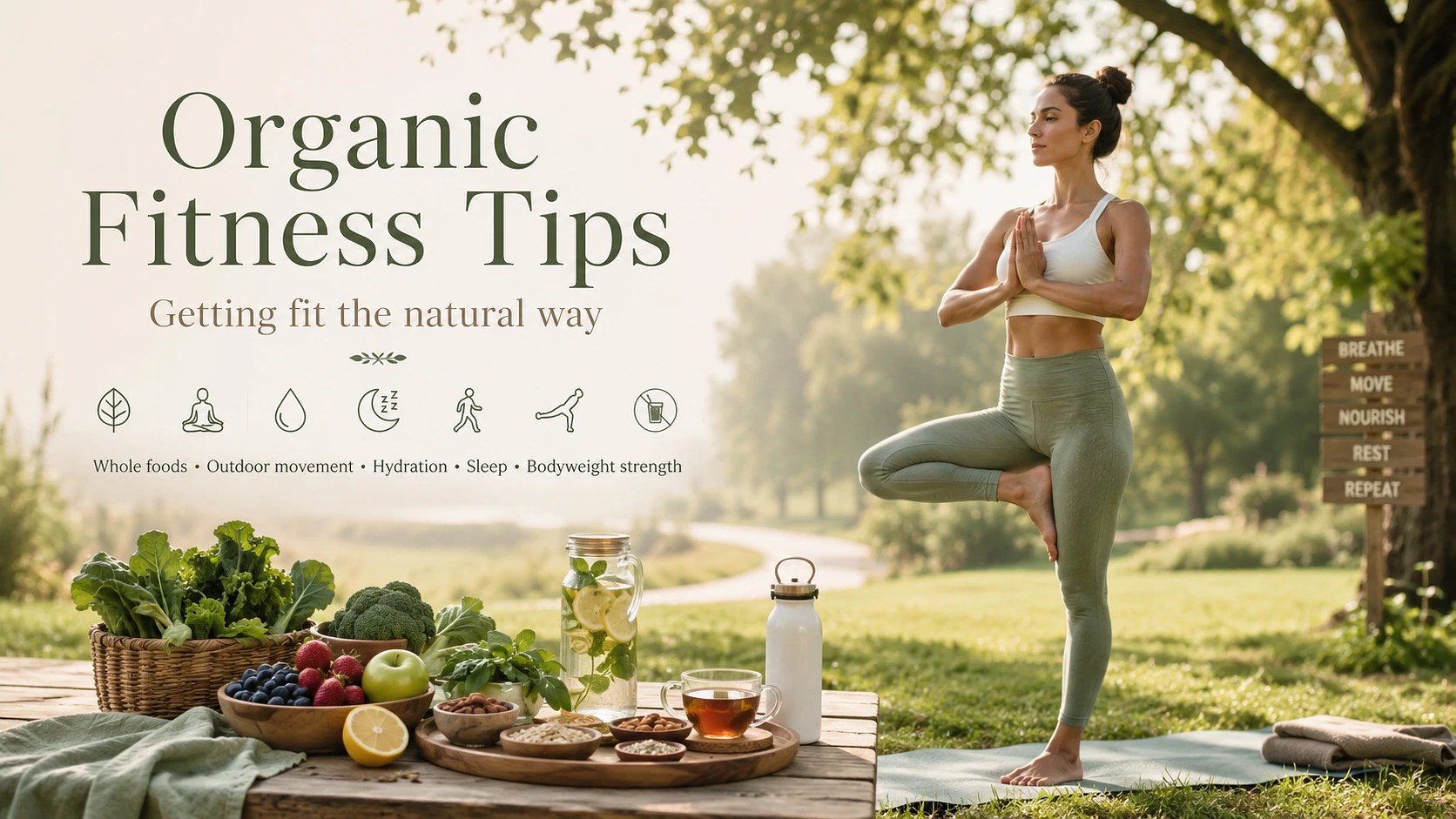
Most fitness advice these days arrives wrapped in something synthetic a powder, a tracker, a supplement stack, a subscription. Organic health fitness strips that back. The idea is simple enough: build physical health around whole foods, unprocessed inputs, and movement that works with the body rather than against it. None of this is exotic. It’s closer to how people stayed fit before the wellness industry turned everything into a product, and there’s a reasonable body of research suggesting the approach holds up.
Eat Organic Produce, & Eat a Lot Of it
The benefit of organic fruits and vegetables isn’t so much a matter of a label stating the number of vitamins. It’s about what isn’t there. In conventional farming pesticides remain on the produce and, in a few cases, pesticides can leave behind more toxic metals and these bioaccumulate over time within the body. In fact, a 2020 systematic review that compared the consumption of organic and conventional food in the journal Nutrients showed that organic foods contained significantly less cadmium and synthetic pesticide residues, a difference that would be expected to accumulate over years and not appear in one day.
The minimum working is 5 a day. Eat in season berries, leafy greens and root vegetables; they are fresher, more nutritious and cheaper than out-of-season produce which has been shipped over a hemisphere.
Build the Plate Around Whole, Unprocessed Food
The other lever is to make the entire diet more whole food based: Nuts, seeds, whole grains, legumes. Benefits are as much as what you gain as they are what you don’t. Eating whole foods provides sustained energy and satisfies hunger, while reducing the added sugar and refined fats in processed foods that are damaging to metabolic health.
A good example of this is nuts and seeds: A handful provides healthy fats and protein, so you will not only feel full, but you will also get a sizable boost in heart health without the blood sugar spike a processed snack brings along.
Use Yoga as Real Strength Training
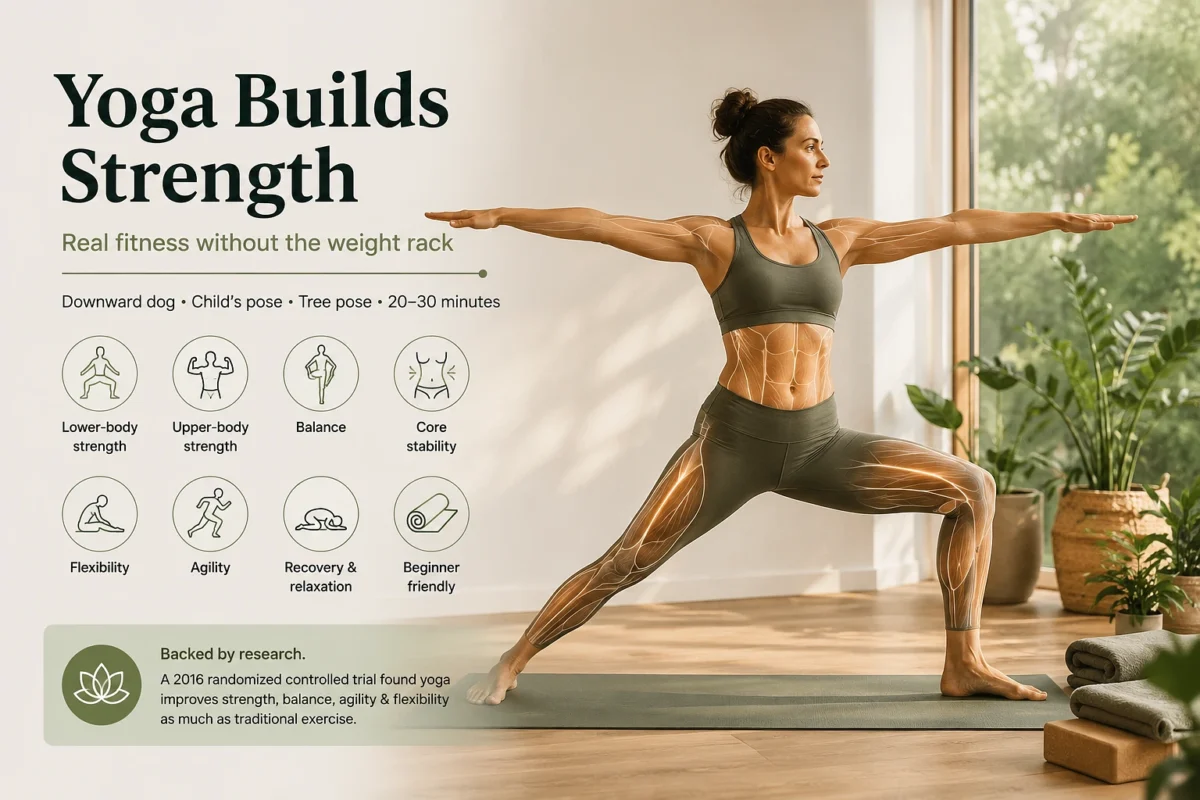
Yoga falls into the category of “flexibility” and that is its place that is the truth of underestimating yoga. A balanced and strong exercise for the body. The evidence is most compelling though in a 2016 randomized controlled trial published in The Journals of Gerontology: Series A in which 118 older adults were put into a yoga or traditional stretching & strengthening program twice-weekly, 1-hour sessions for 32 weeks and functional fitness was assessed using the Senior Fitness Test.
The take-home message: The two groups had similar gains. The number of extra chair stands performed in the lower body strength test, the number of arm curls performed in the upper body strength test, time spent on the timed up-and-go test and the sit-and-reach test flexibility all improved by approximately 2.5 to 3 units in yoga compared to traditional exercise, while there was no difference between the two exercises on the agility timed up-and-go test. In other words, yoga got the job done that training to strengthen is supposed to accomplish.
If you’re starting out, that’s encouraging, because the entry cost is low:
- Begin with downward dog for a full-body stretch and child’s pose for recovery, 20–30 minutes, two or three times a week.
- Once that feels steady, fold in balance-driven poses like tree pose to build core stability without ever touching a weight rack.
Walk Outside the Green Space is Doing Work
A walk is a walk, but a walk through a park or along a trail is also an intervention of low mental grade. In fact, a systematic review and meta-analysis of 2022 in the International Journal of Environmental Research and Public Health revealed that nature walks are a valid, measurable psychological boost and can be used as a non-pharmacological treatment for depression, if treatment is required.
Thirty minutes a day in a green space is the target. The physical movement is the obvious part; the gain in mood, self-esteem, and plain relaxation is the part most people underrate.
Pick Natural Sources When You Supplement
When it comes to supplements, however, “organic fitness” becomes a matter of opinion, so it is important to make it clear. Physiochemical differences are the basis for the argument for natural vitamins over synthetic ones; and a paper published in Medical Hypotheses (2000) suggested that the differences between natural and synthetic vitamins could lead to greater absorption and clinical effectiveness. That paper is a hypothesis and not a definite trial, so do not accept it for what it is, but rather as a reasonable lean.
- The actual application is very simple – use seaweed for iodine, fruit for vitamin C, herbs like turmeric for anti-inflammatory properties, and algae for omega-3s, rather than first to synthetic versions. Do use supplements when there really is a gap in the diet, but don’t use them as a substitute.
Hydrate Properly, and Skip the Bottled Stuff
Worth naming, but unglamorous and easy to put on the back burner is hydration. Drinking enough water can aid the body’s detoxification mechanisms, keeps your muscles functioning during workouts, and improves digestion by helping to carry out nutrient absorption, and waste removal, says a 2019 narrative review published in the journal Nutrients. In another (2010) review of the scientific literature, Nutrition, proper hydration was linked to healthier looking skin, reduced dryness, and improved brain function.
Instead of drinking bottled water that can have contamination issues, add lemon or mint for flavor and slightly more natural electrolytes and have this throughout the day rather than a few large quantities, particularly around training.
Protect Your Sleep Like it’s Part of the Program
Rehabilitation is recovery and recovery is when fitness is built. The consensus is 7-9 hours sleep per night. In 2015, the American Academy of Sleep Medicine and the Sleep Research Society published a statement in Sleep that correlated that range with reduced risk of weight gain, diabetes, hypertension and impaired immune function. A second position paper in the Journal of Clinical Sleep Medicine came out in later 2021 which reported that the cognitive and mood side was found to be, again, ‘more errors, worse mood and weaker immune response’.
But it doesn’t require a synthetic sleep aid to get there. Now, black out the room, keep it quiet, establish a routine to let your hormones get in the rhythm, and if you have a routine to wind down, a cup of chamomile tea is better than nothing.
Add Mindful Movement Like Forest Bathing
It is not essential that each session is intense. Being outdoors and enjoying the nature slowly, deliberately, for a bit of rest and relaxation, a gentle hike is good for fitness. A study in Extreme Physiology & Medicine (2013) revealed that green exercise reduces levels of stress hormones in the body and stimulates the production of endorphins. It’s the component of training which lets the rest stay intact.
Cut the Sugary and Processed Drinks
There is one swop that will return an outsized return; that’s drinks. Energy drinks and sodas are high amounts of sugar with no added benefit. A recent 2023 “umbrella” review in The BMJ on dietary sugar found that high sugar consumption was consistently correlated with obesity, diabetes and other chronic conditions across all studies reviewed, while a 2022 review in Nature Reviews Endocrinology demonstrated that there was a clear association between habitual consumption of sugar-sweetened drinks and weight gain and risk of type 2 diabetes.
The fix is gradual, not heroic. Move toward herbal teas, fruit-infused water, or fresh juice, and step the sugary stuff down over a few weeks so your energy levels stabilise instead of crashing.
Build Strength With Just Your Bodyweight
Strength can be closed without spending money. Squats, pushups and planks involve the same motions you use in everyday life, and they strengthen your muscles, core ability and endurance independent of your lifestyle. No equipment, no membership which is all fitting for a method that is based on stripping things back.
The Thread Running Through All Of It
Organic fitness is not a rigid program, it’s a bias. Whole food is better than processed food, natural is better than machine-driven, and time outdoors is better than time on a screen. The pieces of research support the individual pieces of yoga that the trial was, the hydration pieces of review, the sugar umbrella pieces of review and most importantly, listening to your body. If performed regularly, it is the type of fitness that can be sustained for a lifetime.
References
- A Systematic Review of Organic Versus Conventional Food Consumption: Is There a Measurable Benefit on Human Health? Nutrients, 2020
- Yoga Is as Good as Stretching Strengthening Exercises in Improving Functional Fitness Outcomes: Results From a Randomized Controlled Trial The Journals of Gerontology: Series A, 2016
- A Systematic Review and Meta-Analysis of Nature Walk as an Effective Nonpharmacological Intervention for Depression International Journal of Environmental Research and Public Health, 2022
- Narrative Review of Hydration and Selected Health Outcomes in the General Population Nutrients, 2019
- Sleep Is Essential to Health: An American Academy of Sleep Medicine Position Statement Journal of Clinical Sleep Medicine, 2021
- The Great Outdoors: How a Green Exercise Environment Can Benefit All Extreme Physiology & Medicine, 2013
- Dietary Sugar Consumption and Health: Umbrella Review The BMJ, 2023
- The Role of Sugar-Sweetened Beverages in the Global Epidemics of Obesity and Chronic Diseases Nature Reviews Endocrinology, 2022