
Fear of Failure (Atychiphobia): Causes & Treatment

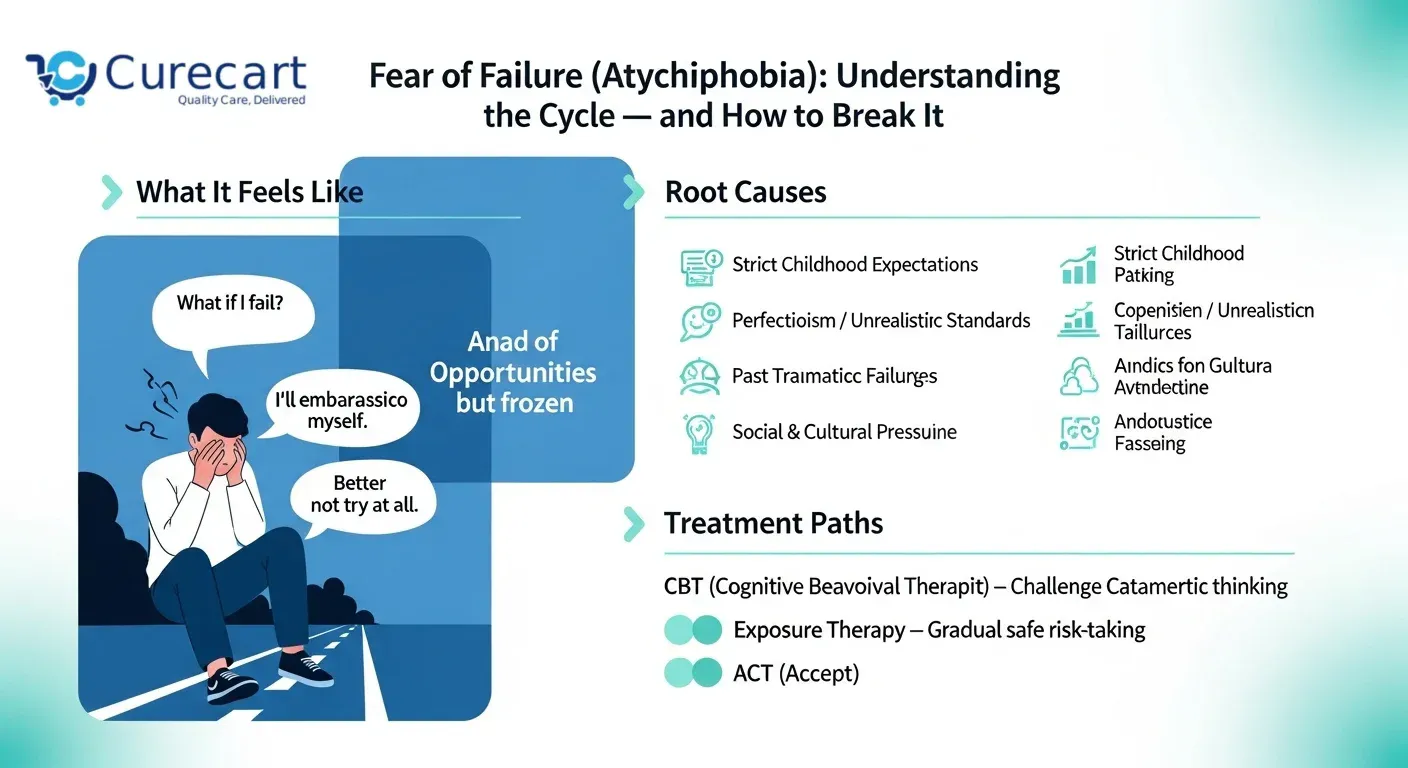
Key Takeaways
- This extreme, lingering dread of failure can inhibit a person from initiating anything where there is no ensure.
- It belongs to the clinical category of ‘Specific phobia’, which is estimated to affect about 7.4% of the general population in a lifetime (ScienceDirect metanalysis 2022).
- The anxiety typically develops over the course of several years, and is normally a blend of threatening childhood habits, perfectionism, a painful failure in the past, and a culture that equates achievement with identity, not one single cause.
- Symptoms affect three areas simultaneously: physical, behavioral, emotional.
- It’s genuinely treatable. Exposure therapy is first line, the Cleveland Clinic states there is a 90% improvement rate (Cleveland Clinic).
- CBT and Acceptance and Commitment Therapy (ACT) both were found to be approximately as effective as traditional CBT (PubMed review, 2017).
- Self-help micro-goals, mindfulness and reframing failure as a feedback tool to further the professional treatment.
What Is Atychiphobia?
Attychiphobia is derived from the Greek word “attyches,” which means unfortunate or unlucky. It’s an irrational and persistent fear of failing that is beyond normal performance anxiety. Most people experience some anxiety before significant events but atychiphobia causes extreme anxiety which affects people’s day to day life.
Each person’s symptoms are unique. Some will not take up a challenge of any sort, will not seek a promotion or learn a new skill or push past his/her comfort zone or do anything for that matter for as long as they can. Others might start to make but then get stuck and stop. All these messages were that if they failed, then the end of the world was coming.
Physical and Emotional Symptoms
For a person who has atychiphobia, when they are confronted with a situation where they may fail, their body goes into fight-or-flight. Physical signs are increased heartbeat, sweating, nausea, dizziness, shortness of breath and trembling. For some people, the attacks of panic may include chest pain and feelings of doom.
The emotional symptoms are also severe. They are filled with negative thoughts and fear of failure. Many become perfectionists, thinking that anything that’s not perfect is a failure. This forms a vicious circle, because as the standards get higher, the more likely they think they’ll fall short and so the more they will be afraid.
Low self-esteem and negative self-talk are always there. You have thoughts that say, “I’m not good enough” or “I’ll definitely mess this up. These feelings can be so overwhelming some individuals feel entirely avoidant of difficult situations, leading this pattern to further strengthen the fear over time.
Root Causes of Fear of Failure
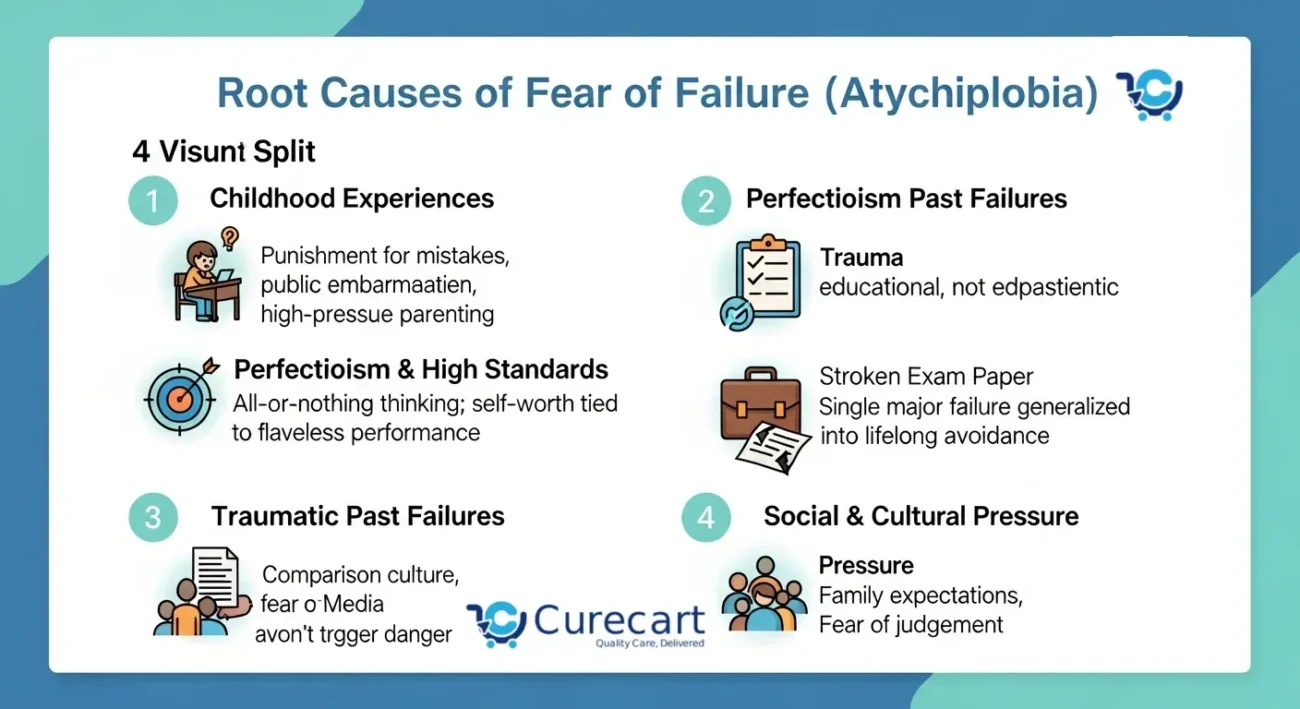
Childhood Experiences
Most atychiphobias stem from childhood. If parents are critical or challenging and focus more on results than effort, they can sow a seed of worry that may take a lifetime to grow. When children are disciplined for errors instead of learning from them, they may learn to think failure is not an option.
If these things occur at a young age, it can embed in a person’s mind a sense of failure and embarrassment, e.g. when they are embarrassed or ridiculed in class for not getting a simple question, or when they fail in front of others. These initial experiences create our vision of mistakes for the rest of our lives.
Perfectionism and High Standards
The vicious cycle of perfectionism and fear of failure goes on. Perfectionists have an extremely high bar when it comes to their standards which is impossible to attain and when they fall short of the standard they see it as a total failure. This is the all-or-nothing attitude which prevents them from taking into account the fact that most achievement is made through trial and error.
When perfectionism is linked to self-worth it’s a recipe for trouble. If your worth is tied to your performance, then making a mistake is more like a personal disaster than a normal part of developing.
Traumatic Past Failures
Sometimes a single significant failure can trigger atychiphobia. Bombing a major exam, losing a job, experiencing a devastating business failure, or ending a relationship can all create trauma around failure. The brain then overgeneralizes if you failed catastrophically once, it must mean you’ll fail again in similar situations.
This is particularly true if the consequence of the failure was serious and/or the failure occurred at a sensitive time. The emotional hurt is paired with any sense of failure, leading the brain to become hyper vigilant of the failure situation.
Social and Cultural Pressures
Success is what our culture is all about. Social media has endless highlight reels of others’ successes and a lot of hiding the struggles and failures. This sets the bar for what life is supposed to be like and intensifies the feelings of failure.
Cultural factors are also a consideration. For some cultures, grades or career success are extremely important and not doing well is tantamount to letting one’s family down, or community down. These expectations can be overwhelming.
How Atychiphobia Affects Your Life
Career and Academic Impact
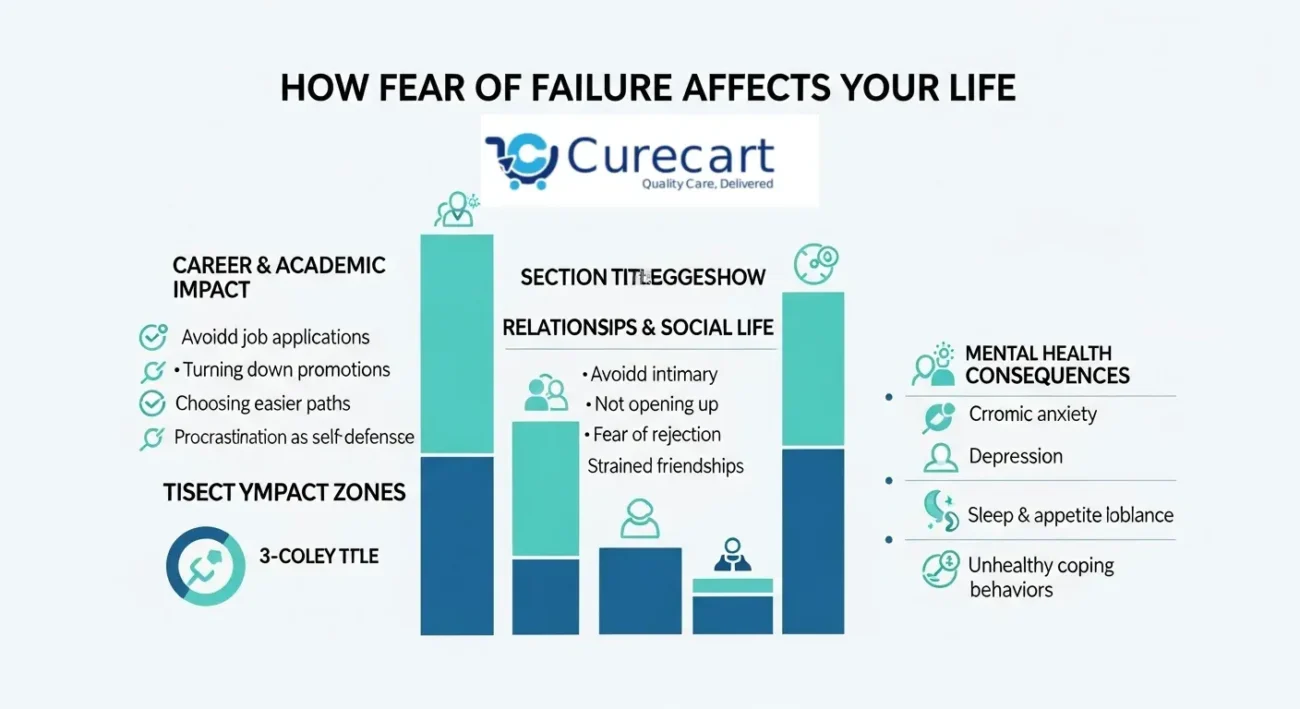
The fear of failure can be a major obstacle to career success. They don’t apply for jobs that they are qualified for because they think that they will be turned down. They reject promotions due to the added responsibility. Students with atychiphobia may select more simple subjects to pursue or avoid taking any difficult courses, which reduces their options for the future.
Procrastination becomes a defense mechanism. If you never really try, you can tell yourself you would have succeeded if you’d given full effort. This self-sabotage provides psychological protection but guarantees mediocre results.
Relationships and Social Life
It’s not only work either, atychiphobia infiltrates personal relationships as well. The anxiety of being rejected can make individuals not be able to follow their feelings for romance and friendships. Others may not engage in open emotional dialogue because they don’t want to fail the relationship.
The self-doubt and worry can also affect current relationships. Partners and friends may not grasp the reasons for made-up minds or reluctance to take up opportunities when they are obviously available to help.
Mental Health Consequences
It is an incredible strain on mental wellbeing to live with chronic anxiety of failure. Chronic stress is the normal state of being. Those suffering from atychiphobia often experience depression, with a sense of disillusionment regarding their ability to change and/or succeed.
The condition may lead to, and exacerbate other anxiety disorders. This ongoing stress has an impact on sleep, appetite and physical health tips. Others might engage in unhealthy coping behaviours, such as alcohol or drug abuse, or compulsive activities to cope with those overwhelming feelings.
Treatment Options for Atychiphobia
Cognitive Behavioral Therapy (CBT)
One of the best remedies for atychiphobia is CBT. CBT identifies and refutes negative thinking patterns that are the cause of fear of failure. A therapist can help you learn to replace your catastrophic thinking (thinking the worst case scenario) with more realistic thoughts.
Therapy consists of inspecting facts for and against your fear beliefs. A CBT therapist may ask you to recall instances in which you have succeeded or managed setbacks well, if you think, “I’ll definitely fail and it will be terrible.” This continues to change your brain’s interpretation of failure over time.
Another important consideration is behavioural experiments. You begin to take small calculated risks in a safe environment and you don’t think that taking the risk is going to fail. These experiences help to develop confidence and awareness that most fears are overblown.
Exposure Therapy
Exposure therapy consists of gradually confronting situations you have been avoiding because of a fear of failure. The first step is to establish a list of anxiety-provoking situations in order from least to most. This is then followed by a systematic approach on this list to tackle the easy ones first.
For instance, a reluctant public speaker could begin by speaking in a small meeting with a few people, move on to speaking to a larger audience, and finally give a formal presentation. As long as each exposure is successful, the fear gets weaker.
The trick is to repeat the exposure, and to make it long enough and strong enough to bring about a natural decrease in anxiety. This helps the brain to grasp that while it may be uncomfortable it is not necessarily dangerous.
Acceptance and Commitment Therapy (ACT)

ACT is more than the fear-avoidance approach. Rather, it helps you to embrace uncomfortable emotions without giving up on following through with action that is congruent with your values. The concept is that it’s possible to feel scared and still take action, fear does not need to dictate behavior.
This therapy helps you determine what is most important to you and then make decisions about actions that support and support your values even when fear arises. If family is an important value, but fear of failure is stopping you from beginning a business that would allow you more time with your family, then ACT helps you take the leap despite your fear of failure.
Mindfulness exercises are an practices are central to ACT. You discover anxious thoughts and feelings without becoming engrossed in them or attempting to displace them. This distances a person from fear, allowing him/her to take action despite the fear.
Medication
While therapy addresses the root causes of atychiphobia, medication can help manage severe symptoms that interfere with daily functioning. Selective serotonin reuptake inhibitors (SSRIs) are commonly prescribed for anxiety disorders and can reduce the intensity of fear and worry.
For acute treatment of anxiety, medications may be used such as benzodiazepines, but long-term use should be avoided as this can lead to dependency. In extremely stressful situations, beta-blockers can be given to treat the physical symptoms (fast heart beat).
Medication is best used in conjunction with therapy. Medication will calm the symptoms to a level where they can work on the therapy, but is not going to alter the thought patterns that keep the fear alive.
Self Help Strategies
Reframe Your Relationship with Failure
Develop the ability to view failure as an opportunity for learning. Every time something doesn’t work out you have learned about what doesn’t work and what needs to change or what you must be brave enough to try the next time again. Instead of failure is bad, the new approach is failure is feedback.
Practice self-compassion if it goes as it doesn’t go. Speak to yourself as if you were a friend who is having problems. A person is harder on himself than he is on a loved one.
Set Realistic Goals
Divide big objectives into smaller chunks. Rather than starting a successful business, try to research business models for an hour each week. If you have small wins, you build confidence and momentum without that same fear.
Avoid outcome goals and use process goals instead. Concentrate on what you have the power to do, not what you don’t have the power to do such as sending five job applications, not getting hired. This helps to alleviate the pressure and it helps to keep you going no matter what.
Build a Support Network
Keep company with those who embrace failure as a step toward success. Tell trusted friends or family members about your fears – they can help you gain perspective when you are feeling anxious. Sometimes it’s just a matter of hearing one’s own words: “I’ve been there and survived”.
If you have similar fears, join support groups or online communities of other people who are dealing with similar fears. When you know that you are not alone to make the experience normal and you get some strategies from others with the experience of dealing with it.
Practice Gradual Exposure
Hang out with the guys that make mistakes, but take them as learning opportunities. Share your concerns with friends or family members who you know will support you – they might be able to help you to see things from a different perspective when you feel anxious. Sometimes it’s just a matter of hearing one’s own words: “I’ve been there and survived”.
If you have similar fears, join support groups or online communities of other people who are dealing with similar fears. If you know that you aren’t a victim, then it is normal and if you have some strategies from other people that have experienced it, then it is much easier.
Mindfulness and Relaxation Techniques
Develop a regular mindfulness practice. Meditation helps you become aware of fear-filled thoughts, but not taken them at face value or respond to them. Just 5 minutes help to reduce overall anxiety.
Practice breathing techniques for times of heightened fear. Slow, deep breathing stimulates the relaxation response or parasympathetic nervous system. Box breathing inhaling for 4, holding for 4, exhaling for 4 and holding for 4 is especially effective!
References:
- Watson, D., & Friend, R. (1969). Measurement of social-evaluative anxiety. Journal of Consulting and Clinical Psychology, 33(4), 448-457
- Conroy, D. E., Kaye, M. P., & Fifer, A. M. (2007). Cognitive links between fear of failure and perfectionism. Journal of Rational-Emotive & Cognitive-Behavior Therapy, 25(4), 237-253
- Cleveland Clinic. (2022). Atychiphobia (Fear of Failure)
- Wolitzky-Taylor, K. B., Horowitz, J. D., Powers, M. B., & Telch, M. J. (2008). Psychological approaches in the treatment of specific phobias: A meta-analysis. Clinical Psychology Review – Referenced via multiple research databases
- Kampmann, I. L., Emmelkamp, P. M., & Morina, N. (2016). Meta-analysis of technology assisted interventions for social anxiety disorder. Journal of Anxiety Disorders
- Craske, M. G., Niles, A. N., Burklund, L. J., et al. (2014). Randomized controlled trial of cognitive behavioral therapy and acceptance and commitment therapy for social phobia. Journal of Consulting and Clinical Psychology
- Arch, J. J., Eifert, G. H., Davies, C., et al. (2012). Randomized clinical trial of cognitive behavioral therapy (CBT) versus acceptance and commitment therapy (ACT) for mixed anxiety disorders. Journal of Consulting and Clinical Psychology
- Eifert, G. H., Forsyth, J. P., Arch, J., et al. (2009). Acceptance and Commitment Therapy for anxiety disorders: Three case studies exemplifying a unified treatment protocol. Cognitive and Behavioral Practice
- Medical News Today. (2023). Fear of failure (atychiphobia): Symptoms and treatment
- Healthline. (2018). Atychiphobia: Understanding Fear of Failure
- American Psychological Association – Understanding Anxiety Disorders and Specific Phobias