
4 Top Weight Loss Center Options Near Parker Colorado


Colorado is still the nation’s leanest state, yet almost one in four adults here live with obesity (Denver Gazette). If you’re in Parker, long commutes and craft-beer weekends can sabotage the best intentions.
Help is close. Hospital bariatric teams, university clinics, doctor-run nutrition programs, and boutique GLP-1 spas all sit within a few miles. We spent weeks rating their outcomes, safety records, service depth, innovation, and pricing so you can answer one question: where should I start?
First, you’ll see our scoring yardstick. Then we’ll spotlight each center, flag who thrives there, and wrap with must-know insurance and medication tips.
Ready to meet the local pros who can help you lose the weight and keep it off? Let’s go.
How We Ranked Parker’s Weight-Loss Centers
Choosing a weight-loss partner is a big decision, so we graded every serious clinic around Parker on what patients care about most.
We pulled hundreds of public reviews, read accreditation reports, and compared each provider’s service menu line by line. Then we weighed the findings against seven factors that predict long-term success, from surgical safety records to the cost of a monthly follow-up visit.
Here’s the exact yardstick we used:
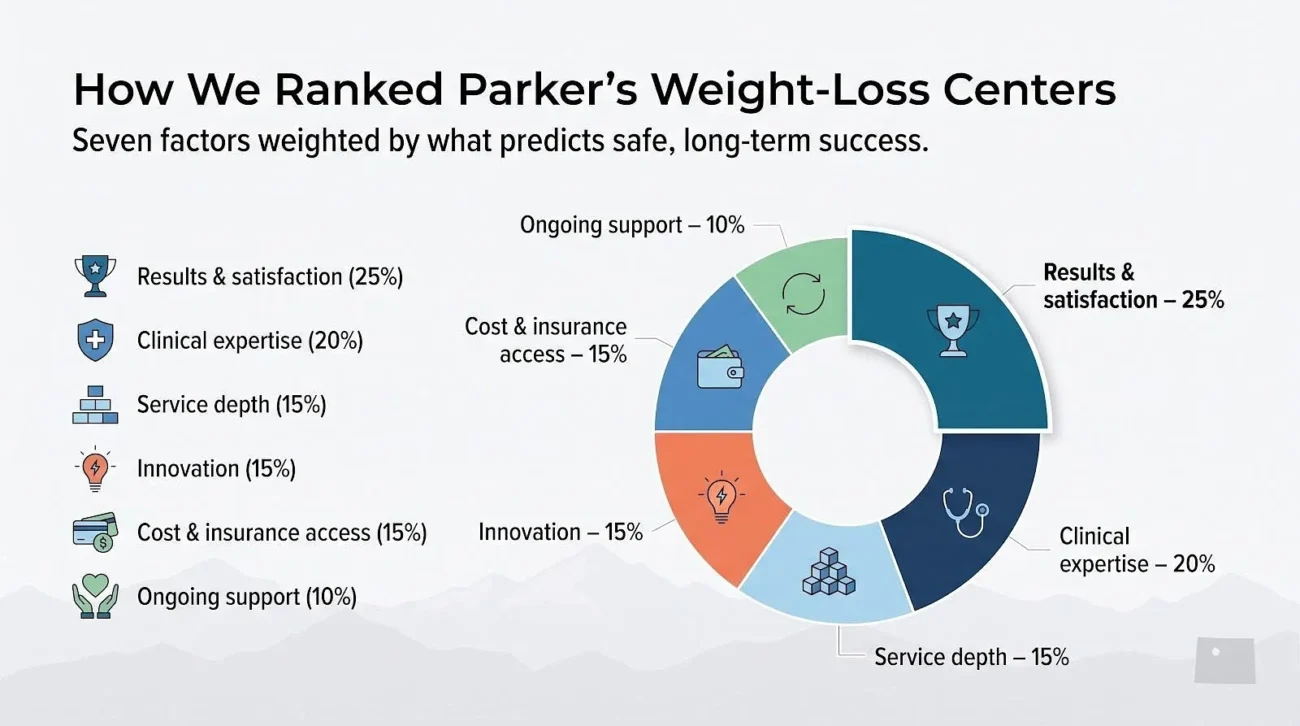
- Results and satisfaction (25 percent): star ratings, published success rates, and verified transformation stories.
- Clinical expertise (20 percent): board-certified obesity physicians or MBSAQIP surgeons and their complication stats. Parker’s top hospital program holds a Center of Excellence accreditation, signaling rigorous safety standards.
- Service depth (15 percent): nutrition, behavior coaching, medication management, and, when needed, minimally invasive surgery.
- Innovation (15 percent): early access to GLP-1 drugs, body-composition scanners, telehealth, or emerging procedures such as endoscopic sleeve gastroplasty.
- Cost and insurance access (15 percent): clear self-pay rates, financing help, and broad insurance acceptance.
- Ongoing support (10 percent): free support groups, maintenance visits, or digital check-ins that catch regain early.
We kept the weights in that order because lasting weight loss starts with proven outcomes, and it sticks only when experts keep you engaged and your budget can handle the journey.
Every center on our final list scored at least 80 percent overall, and the top pick leads in four of the seven factors. Ready to meet the heavy hitters? Let’s dive in.
Bariatric & Metabolic Center Of Colorado: Parker’s Hospital-Grade Powerhouse
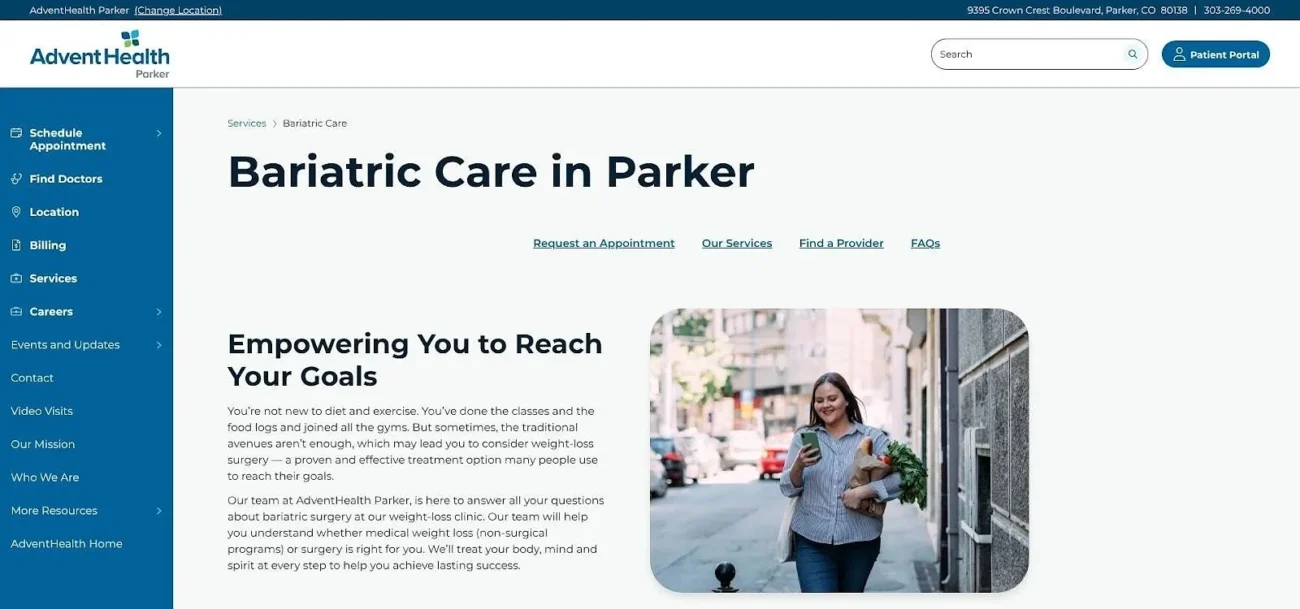
Step into the weight-loss wing at AdventHealth Parker and the difference is clear. This is not a spa or a diet storefront. It is a fully accredited surgical program backed by a full hospital, complete with intensive-care support, registered dietitians, and psychologists who understand obesity inside out. The Center of Excellence badge on the wall shows the team passed the Metabolic and Bariatric Surgery Accreditation and Quality Improvement Program’s toughest safety audits.
Dr. Joshua Long and his team fight obesity on every front. Most patients choose minimally invasive procedures such as sleeve gastrectomy, gastric bypass, or the newer loop duodenal switch, yet the clinic never pushes surgery. If a detailed consult suggests you’ll do better with medication or a structured diet plan, they switch to a medical track instead of the scalpel.
Wrap-around coaching sets this center apart. Before surgery you attend nutrition classes, mindset sessions, and insurance prep with a coordinator who speaks the carrier’s language. Those nutrition lessons dive into practical tactics such as increasing fiber with plant-forward meals; the clinic’s vegetarian diet for weight loss guide maps out protein-rich staples like Greek yogurt, lentils, and quinoa that many patients adopt in their first month. After surgery you join free monthly support groups, hop into virtual check-ins, and grab quick lab work in the same hallway where you started. The whole path feels seamless because it is.
Patients notice. Across 135 verified reviews the program averages 4.7 stars, with many stories of 100-pound losses that stay off. Complication rates sit well below national figures thanks to robotic tools that keep incisions small and hospital resources that keep emergencies rare.
Cost clarity helps, too. Most major insurers and Medicare cover qualifying cases, and self-pay bundles are posted upfront so there are no wallet surprises.
If you need to drop significant weight and want the safety only a hospital can offer, this Parker flagship is your strongest bet in Colorado’s leanest state.
Uchealth Weight Management Clinic: Best Academic Non-Surgical Program
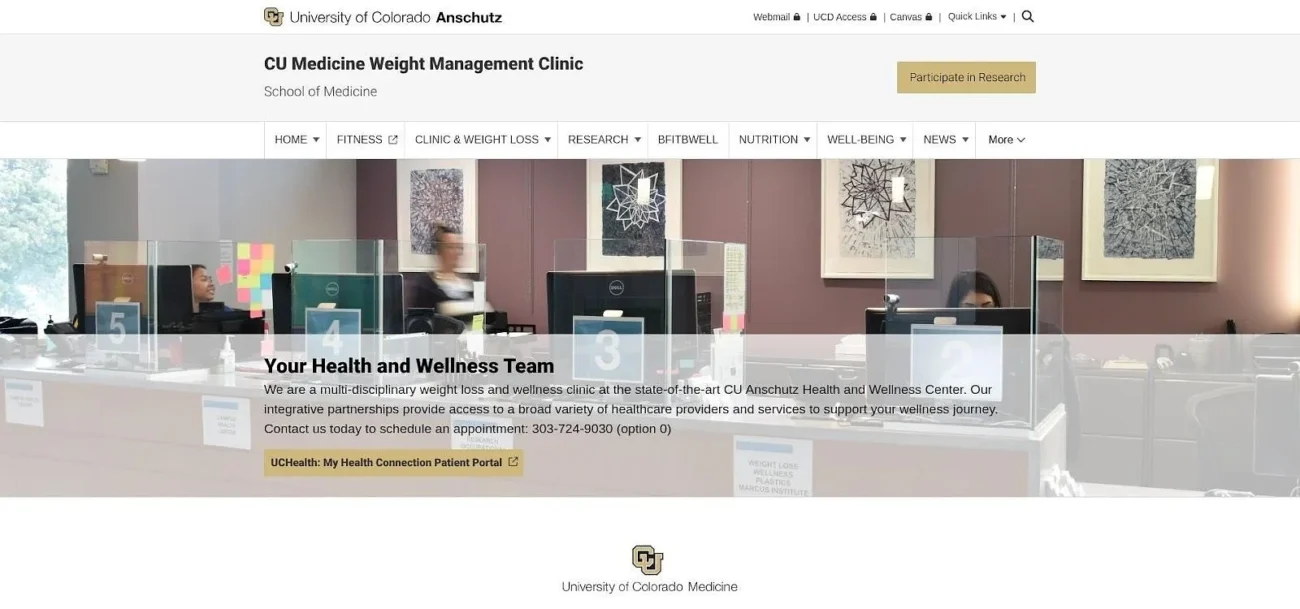
Drive twenty minutes north on E-470 and you trade suburban streets for the glass-and-steel campus of the Anschutz Health & Wellness Center. Inside, UCHealth’s Weight Management Clinic tackles obesity the way teaching hospitals treat heart disease or cancer, with a full bench of specialists and peer-reviewed protocols.
Your first visit feels like a precision tune-up. A board-certified obesity physician reviews labs, a dietitian maps your meals, and an exercise physiologist tests how many calories you burn at rest. By the time you leave, you own a data-driven action plan, not a generic meal sheet.
Medication is available when lifestyle shifts alone are not enough. The clinic prescribes GLP-1 drugs, older appetite suppressants, or combination therapies, tracking side effects and insurance hurdles for you. Prefer to skip pills? Jump into the group-based “State of Slim” program, built on university research and realistic habit changes.
Because the clinic sits inside a hospital ecosystem, you are never boxed in. Need bariatric surgery later? The team hands you to UCHealth’s surgical unit two floors up and keeps coaching you before and after the operation. Insurance billing stays simple; most visits process like any other specialist appointment, so copays stay reasonable.
Patients looking for medical horsepower without the OR lights flock here. Typical members lose eight to ten percent of body weight in a year, with bigger wins in lower A1C, improved cholesterol, and the confidence that comes from having an academic team in your corner.
Clinical Nutrition Center: Personalized, Doctor-Led Coaching Beyond The Scale
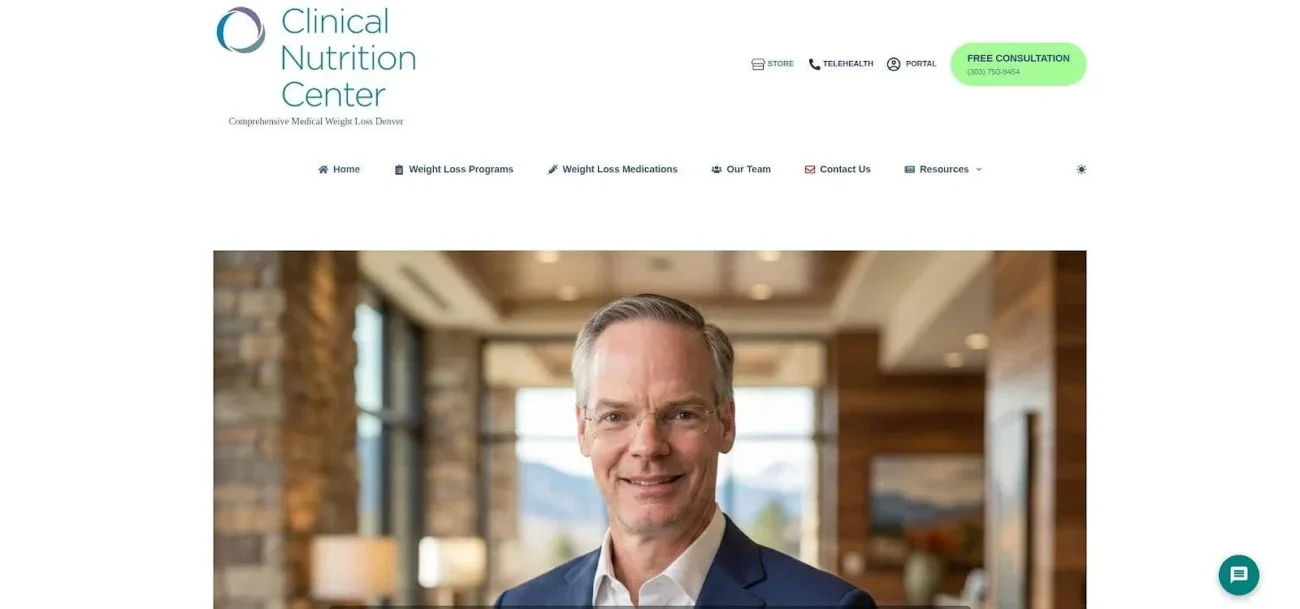
If hospitals feel intimidating and med-spas too light, Clinical Nutrition Center lands in the Goldilocks zone. Tucked just off I-25 in Greenwood Village, this long-running practice is led by Dr. Ethan Lazarus, a past president of the Obesity Medicine Association who lives and breathes metabolic science. Patients say the vibe is part family doctor, part performance coach, and the mix works.
Your first hour-long consult starts with body-composition scanning and a candid talk about what has and has not worked for you. No shaming, no one-size-fits-all script. From there, the team builds a plan that can pivot quickly. You might open with meal replacements for a fast jump-start, then shift to a Mediterranean pattern once cooking feels easy again. Macros, grocery lists, and real-world dining tips land in your inbox that same day, so dinner is never a guess.
Medication is an option, not a mandate. CNC was among Colorado’s first private clinics to prescribe GLP-1 drugs and knows the insurance dance by heart. Staff handle prior-auth forms, appeals, and coupon hunts while you track side effects and weekly wins.
Progress reviews stay data-driven. Every few weeks you step on the same medical-grade analyzer to confirm you’re losing fat, not muscle, and lab numbers sit next to the scale readout so victories go beyond pounds. Many clients drop fifteen to twenty percent of body weight within a year and keep coming back quarterly just to guard the gains.
The trade-off for concierge-style attention is cash pay. Expect a few hundred dollars at sign-up and roughly a hundred per follow-up, with partial PPO reimbursement possible later. For self-motivated professionals who value one-on-one expertise and early-morning slots, CNC remains the metro area’s masterclass in sustainable, medically supervised weight control.
Beyond Human Wellness: Fast-Track Results With GLP-1 Science And Spa-Level Service
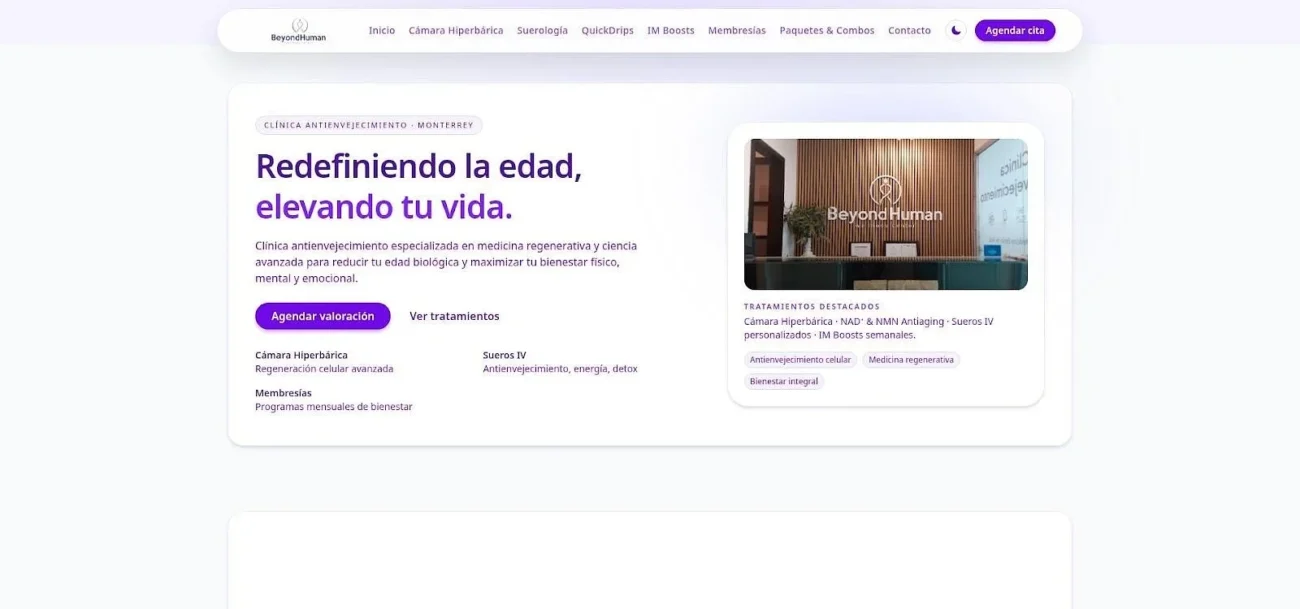
Sometimes you just want to start, drop the first twenty pounds, and feel momentum now. Beyond Human Wellness meets that urge with a physician-supervised semaglutide program wrapped in a boutique spa setting in downtown Parker.
The weekly ritual is simple. You swing by for a quick vitals check, a tailored GLP-1 dose, and a brief chat about appetite, cravings, and side effects. The shot tamps down hunger so well that many clients cut portions without white-knuckle effort, losing one to two pounds a week. Staff can tweak hormones or add B-12 boosters if labs show you need extra metabolic help.
The space helps, too. Private treatment rooms, no waits, and the option to add IV hydration or post-weight-loss skin tightening make the visit feel like self-care, not a clinic run. Yet medical guardrails stay firm: baseline labs, screening for thyroid or pancreatic issues, and on-call nurse practitioners for the rare bout of nausea.
Plan on paying cash between $450 and $2,100 for a three-month package, depending on the compound, and you see the full cost before the first syringe clicks. Many clients use HSA funds, and some switch to a small at-home maintenance pen once they reach goal weight.
Beyond Human is not the choice if you want deep nutrition classes or group therapy. It shines when you need rapid, science-backed weight loss delivered with concierge polish and zero insurance paperwork. Busy Parker professionals are finding that hard to resist.
Quick-Glance Comparison
You have just met four very different programs. To keep the details straight, use this side-by-side snapshot whenever decision fatigue creeps in.
| Center | Core programs | Avg. patient rating | Insurance accepted | Stand-out feature |
| Bariatric & Metabolic Center of Colorado | Surgical (bypass, sleeve, loop DS) plus medical track | 4.7★ | Yes, most commercial plans and Medicare | MBSAQIP Center of Excellence hospital unit |
| UCHealth Weight Management Clinic | Non-surgical lifestyle, GLP-1 meds, seamless path to surgery | Varies by hospital clinic | Yes, broad hospital contracts | Academic team with metabolic-testing gym |
| Clinical Nutrition Center | Physician-led diet and medication coaching | 4.8–5.0★ | Visits cash, meds often covered out-of-network | Early GLP-1 adopter with body-composition scans |
| Beyond Human Wellness | Weekly semaglutide injections, hormone and IV add-ons | 4.8★ | No; HSA or FSA only | Spa ambience with 15-minute in-and-out visits |
The table is not the whole story, but it crystallizes the big levers: type of care, real-world satisfaction, how you’ll pay, and the unique edge each provider brings. Use it as a cheat sheet while you revisit the deeper profiles or call to schedule consults.
Your Top Questions, Answered
Will My Insurance Pay For Any Of This?
Most commercial plans and Medicare cover bariatric surgery when medical criteria are met. That is why the hospital program in Parker lists Blue Distinction and Cigna Center of Excellence status right on the wall. Coverage for prescription weight-loss drugs is patchier, but momentum is building. A new federal pilot now lets eligible Medicare members get GLP-1 medications such as Wegovy for about fifty dollars a month, a fraction of retail cost. If you are under 65, call your insurer’s pharmacy line to ask whether obesity drugs fall under “step therapy” rules; many plans need a prior authorization that the clinic can file for you.
How should I pick between surgery, medication, or a lifestyle clinic?
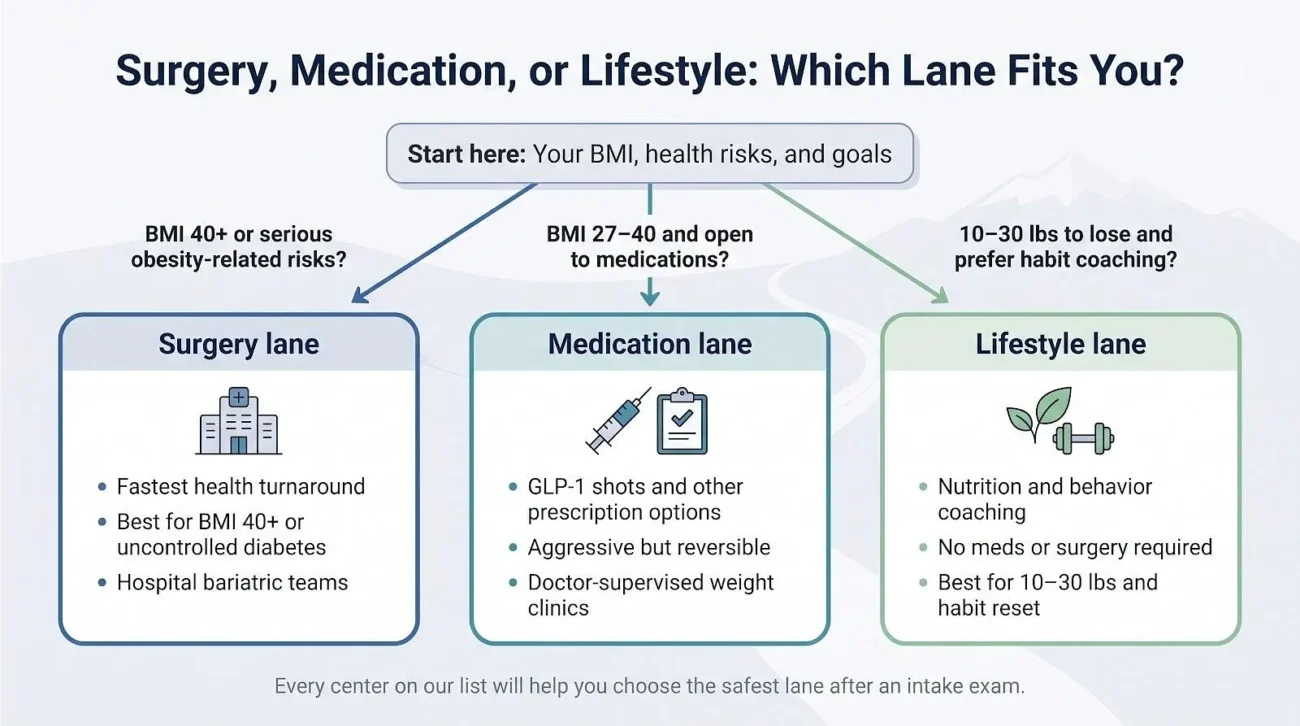
Start with your BMI and health risks. A BMI over 40 or uncontrolled diabetes makes surgery the fastest health turnaround. Med-supervised clinics suit anyone in the 27–40 BMI band who wants aggressive yet reversible options like GLP-1 shots. Lifestyle-only programs win when you have 10–30 pounds to lose and need habit coaching more than medical intervention. Every center on our list will steer you to the safest lane after an intake exam, so book at least one consult and hear their take on your numbers.
Is Colorado really healthier than the rest of the country?
Yes, and no. Colorado is still the leanest state, with fewer than one in four adults classified as obese. That still means hundreds of thousands of neighbors carry extra health risk, which is why clinics stay busy. Living in a fit zip code will not shrink your waistline for you, but it does place high-quality resources close to home.
What happens when I hit my goal weight?
All four centers bake maintenance into the plan. The hospital program runs free monthly support groups; UCHealth graduates shift to quarterly tune-ups with the same physician; CNC offers a low-cost “Keep-It-Off” membership for weigh-ins and lab tweaks; Beyond Human teaches you how to taper to a micro-dose injection or move to phone check-ins. Before you sign anything, ask, “What does year two look like?” The best answer includes scheduled follow-ups, easy re-entry if pounds return, and clear fees.
Are newer, less-invasive procedures coming soon?
Absolutely. Endoscopic sleeve gastroplasty (ESG) and gastric balloons, both incision-free, are already offered in Denver academic hospitals. While Parker centers do not provide them today, several surgeons here train on ESG and expect broader rollout as insurance codes mature. If you choose to wait for the next wave, stay connected to UCHealth’s newsletters; teaching hospitals usually pilot cutting-edge tools first.
Pick the center that fits your medical need, budget, and support style, then commit. Colorado’s track record shows that with accredited care, consistent follow-up, and modern tools, long-term success is no longer a roll of the dice. It is a proven process, and now you know exactly where to start.