
Pravi Celer: Health Benefits, Everyday Uses, and Simple Ways to Add It to Your Diet

Overview
Pravi celer isn’t a superfood gimmick. It’s an old, accessible vegetable used in its full form and that’s exactly why it works. By treating the stalks, leaves, and root as one ingredient family, you get hydration, fiber, vitamins, antioxidants, and flavor all from a single plant that’s affordable and easy to find.
Add a couple of stalks in your next soup or salad. Store some in the fridge to have as a snack. Put the leaves in a stew, rather than toss them. Simple daily routines with this modest vegetable can contribute to a significant increase in daily nutrition without the need to plan or buy complicated meals or costly supplements.
What Is Pravi Celer?
Botanically identical to common celery Apium graveolens, a species of Apiaceae family (also including carrots, parsley, fennel, and coriander). It is a cultural and practical difference. All the parts of the plant are consumed in most Eastern European and Balkan kitchens: the crunchy stalks, the fresh leaves, the root and the tiny seeds, dried and used as spice.
This whole-plant approach isn’t a trendy reinvention. Has been used for thousands of years, going back to ancient Egypt, Greece, and Rome, where it served as both food and medicine.
Health Benefits and Nutrition of Pravi Celer
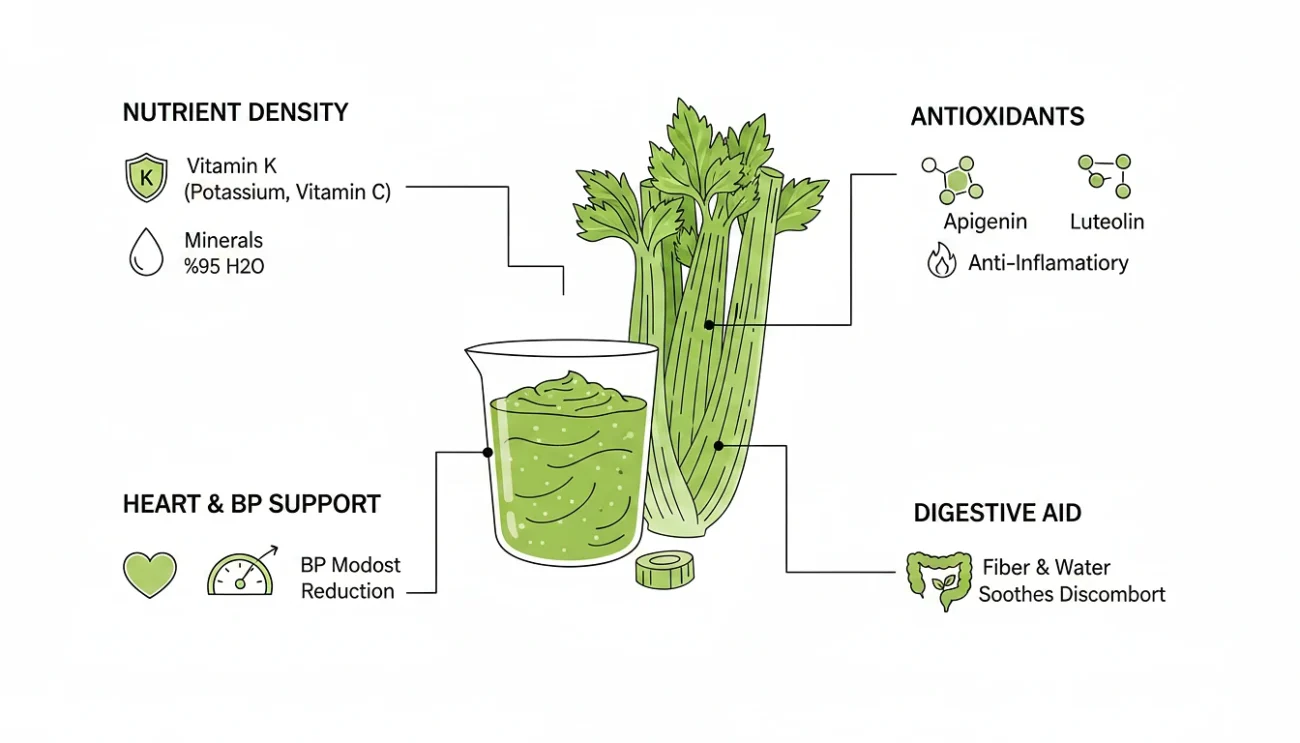
Worth eating regularly is the combination of high nutrient density and very low calories. Per the USDA, raw celery contains roughly 14-16 calories per 100 grams, with about 95% water content (USDA FoodData Central). That makes it one of the most hydrating vegetables you can eat while keeping you full on very few calories.
- Vitamins and minerals. A one-cup serving of chopped raw celery (about 101 g) provides roughly 29.6 µg of vitamin K about 25% of the Daily Value along with 260 mg of potassium and 3.1 mg of vitamin C (USDA FoodData Central). Vitamin K is the standout here: according to the NIH Office of Diet & Nutrition Supplements, it’s essential for blood clotting, and some research suggests that people who consume more vitamin K from food have stronger bones and a lower risk of hip fracture (NIH Office of Dietary Supplements, Vitamin K Fact Sheet).
- Antioxidants and bioactive compounds. Notable dietary source of two flavonoids apigenin and luteolin that have been studied for their antioxidant and anti-inflammatory properties. A peer-reviewed review published in Pharmaceuticals (PMC) summarises that apigenin shows anti-inflammatory and antioxidant activity across multiple body systems, including respiratory, cardiovascular, and digestive (Salehi et al., “Apigenin: A Bioflavonoid with a Promising Role in Disease Prevention and Treatment,” PMC).
- Heart and blood pressure support. Contains a compound called 3-n-butylphthalide (3nB), most concentrated in the seeds, which has been investigated for its effect on blood pressure. A randomized, triple-blind, placebo-controlled crossover trial published in Journal of Food Biochemistry (2022) found that hypertensive patients given 1.34 g of celery seed extract daily for four weeks saw average systolic blood pressure drop from about 141 to 130 mmHg, and diastolic from 92 to 84 mmHg (Shayani Rad et al., 2022, PubMed). A 2024 narrative review in the International Journal of Food Science concluded that the available evidence supports celery’s role in modestly improving blood pressure parameters, primarily through 3-n-butylphthalide and apigenin acting as vasodilators, mild diuretics, and calcium channel blockers (Alobaidi et al., 2024, Wiley Online Library).
- Digestive support. A cup of chopped raw celery contributes about 1.6 g of dietary fiber (USDA FoodData Central), which combined with its 95% water content supports regular digestion. Celery leaves and seeds also have a long traditional use for soothing bloating and stomach discomfort, and some of the plant’s flavonoids are now being studied for those effects.
Simple Ways to Add It to Your Diet
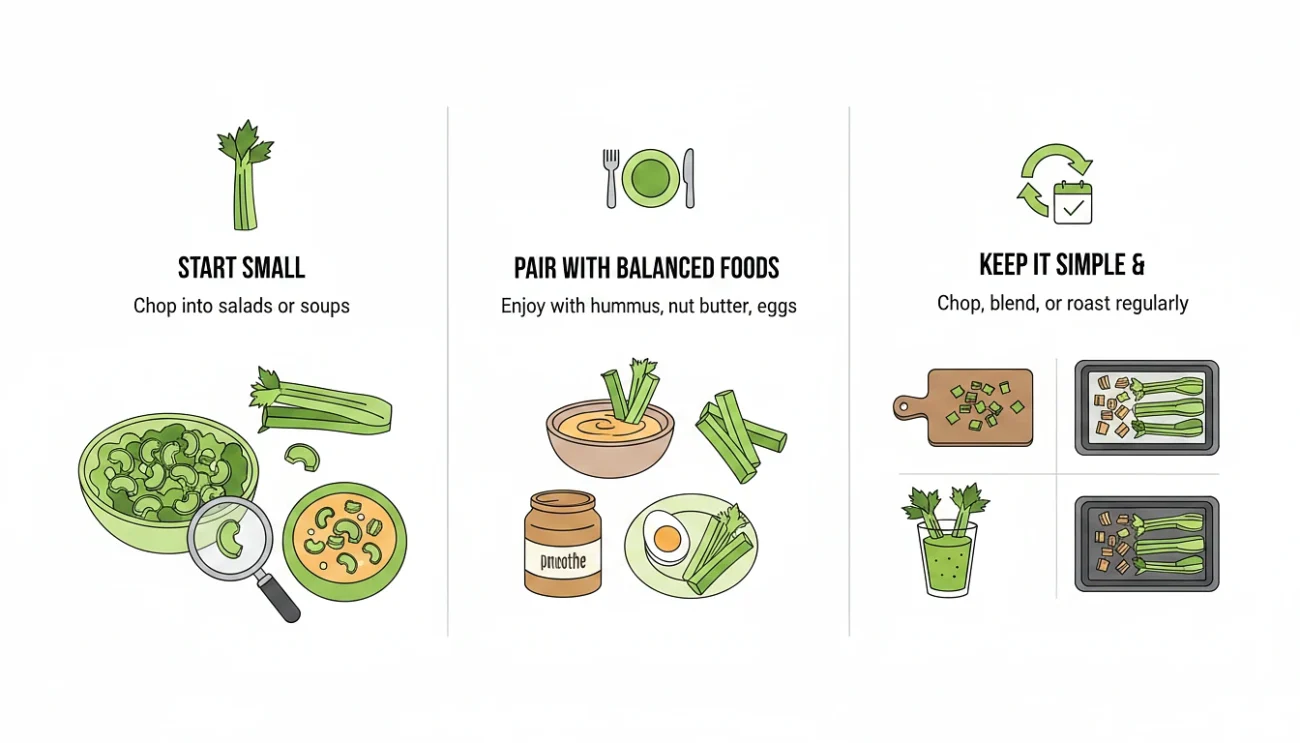
- Start small. If you’re not used to eating regularly, begin with a small amount a few stalks chopped into a salad or soup you already make. Your palate adjusts gradually, and you’re more likely to stick with it than if you try to overhaul everything at once.
- Pair with balanced foods. Celery’s flavor is mild on its own, but it shines alongside richer ingredients think hummus, nut butter, eggs, hearty grains, or roasted vegetables. Pairing it with protein or healthy fats also extends how full it keeps you, which matters because vitamin K is fat-soluble and absorbs better when eaten with some fat (NIH Office of Dietary Supplements, Vitamin K Fact Sheet).
- Be consistent. Small amounts most days do far more for your health than the occasional juice cleanse. Think of it as a steady background ingredient rather than an event.
- Keep it simple. The easiest preparations are usually the best. Chop, blend, or roast no elaborate technique required.
Everyday Uses Pravi Celer
- Salads and soups. Finely chopped raw adds a clean, crisp bite to green salads, grain bowls, or chicken salad. Diced is also a foundational base alongside onion and carrot for soups, stews, broths, and sauces. Don’t toss the leaves; they have a more concentrated flavor than the stalks and work beautifully chopped into soups or sprinkled over finished dishes like an herb.
- Snacks. Cut stalks into sticks and pair them with hummus, peanut butter, Greek yogurt dip, or soft cheese. The classic “ants on a log” sticks with nut butter and raisins remains one of the easiest healthy snacks for both kids and adults.
- Smoothies and juices. Two or three stalks blended into a green smoothie add hydration and a fresh, slightly grassy note without overpowering fruit or greens. Apple, cucumber, lemon, fresh celery juice is a popular morning drink though eating the whole stalk preserves the fiber that juicing strips away.
- Roasted celeriac. If you can find the root, peel and cube it, toss with olive oil and herbs, and roast at around 200 °C (400 °F) until golden. The flavor is earthy and nutty, somewhere between potato and parsnip.
- Celery seed seasoning. Dried seeds bring a concentrated, savory flavor to soups, eggs, salad dressings, and pickles. A pinch goes a long way.
A Few Things to Keep in Mind
Generally safe and well-tolerated, but a few notes are worth remembering. Celery is a recognised allergen it’s one of the 14 substances that EU food law (Regulation EU No 1169/2011) requires food businesses to declare on labels and reactions can range from mild oral itching to severe anaphylaxis in sensitive individuals (European Commission, Food Information for Consumers Regulation).
Because celery is rich in vitamin K, anyone taking blood-thinning medications such as warfarin should keep their intake consistent and consult their doctor before increasing it significantly, since vitamin K can interfere with how these drugs work (NIH Office of Dietary Supplements, Vitamin K Fact Sheet).
And whenever possible, choose organic. Celery tends to absorb pesticide residues more than some other vegetables, and washing thoroughly is always a good idea.
References
- USDA FoodData Central – Celery, raw (nutrient profile)
- National Institutes of Health, Office of Dietary Supplements – Vitamin K Fact Sheet for Consumers
- Salehi B. et al., “Apigenin: A Bioflavonoid with a Promising Role in Disease Prevention and Treatment,” PubMed Central (PMC)
- Shayani Rad M. et al., “Effect of celery (Apium graveolens) seed extract on hypertension: A randomized, triple-blind, placebo-controlled, cross-over, clinical trial,” Journal of Food Biochemistry (2022).
- Alobaidi et al., “Antihypertensive Property of Celery: A Narrative Review on Current Knowledge,” International Journal of Food Science (2024), Wiley Online Library
- European Commission – Regulation (EU) No 1169/2011 on the provision of food information to consumers (list of 14 declarable allergens, including celery)