
Sudden Severe Hair Loss And Scalp Nerve Pain After Mold Exposure: What Is Likely Happening And What Helps

I had a telogen effluvium in 2021 after a bad case of Covid, so I read this message differently from most people.
The mold part I can leave for a moment. The rest of it I have lived. The drain full of hair. The parting getting wider every week. The scalp that burned and prickled for no reason I could find. The blood tests that all came back normal, which felt like an insult. And the exhaustion, which was partly the illness and partly the hair, and after a while I could not tell which.
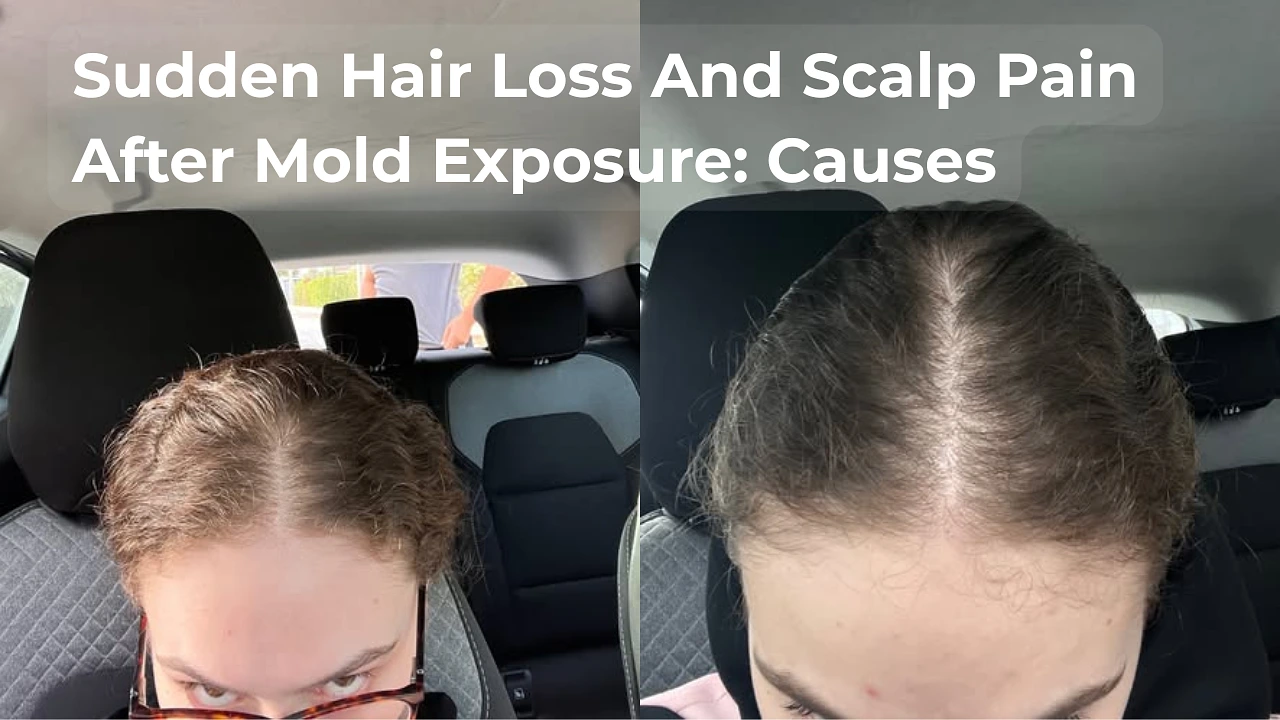
She is 28. Her thinning started slowly about 8 years ago, and then 7 months ago, after she found mold in her house and got a sinus infection out of it, the shedding went off the scale and the scalp pain started. The mold has been dealt with. The hair is still falling. She has tried quercetin, perilla extract, and 4 days of cetirizine on the scalp, which is the interesting one, because it cut the shedding and stopped the pain almost at once and then gave her brain fog and migraines, so she stopped. She has had psoriasis on her hands and feet for 10 years. She has a corticosteroid nasal spray she is still using. She wants to know how to calm her scalp and get her hair back, and she said she is struggling emotionally, and I am glad she said it.
First, The Mold
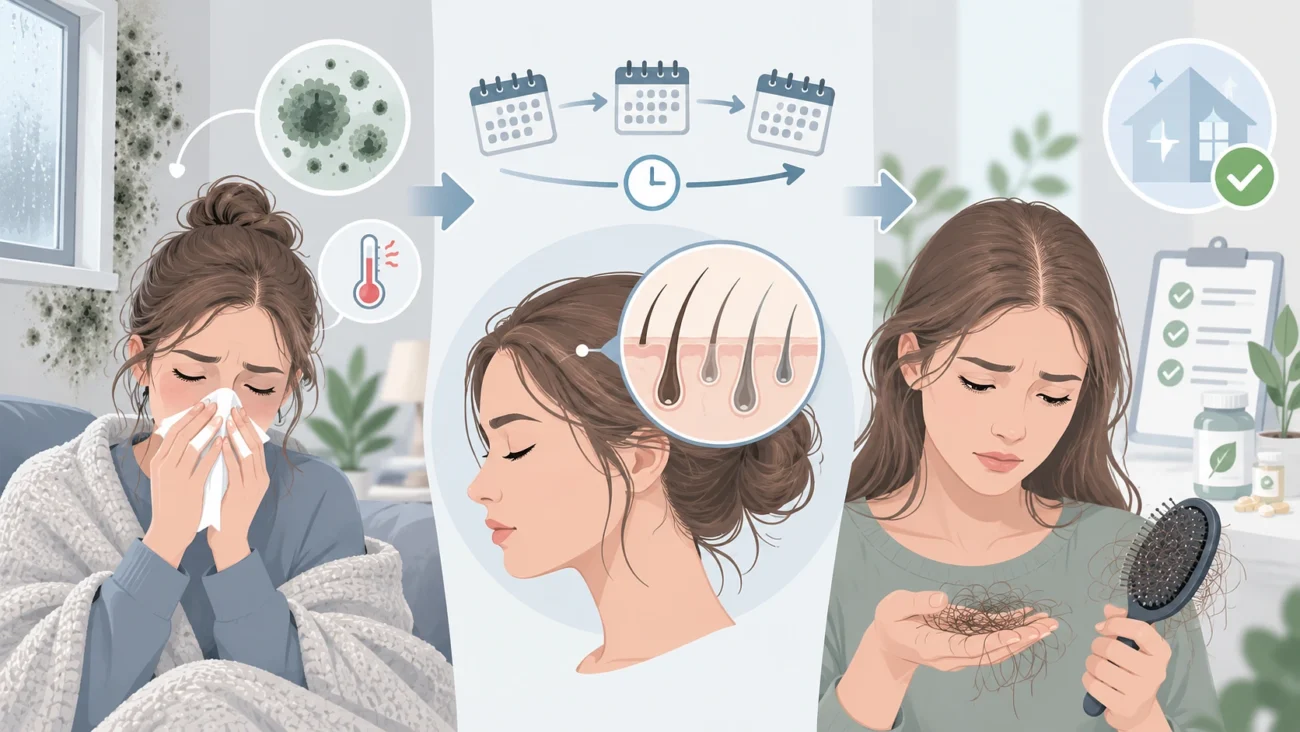
I know she does not want to hear this, and I am going to say it anyway. The mold made her ill, and the illness was real; a sinus infection after living in a damp house is not in anyone’s head. But the illness is what started the hair loss transplant, not the mold itself, and the illness is over.
- A big infection, a fever, a shock, or a very stressful stretch of weeks can push a large share of the follicles on the scalp into their resting phase at the same time.
- About 3 months later, all of that hair comes out together. That is the telogen effluvium.
- Once it has started, it does not need the trigger to still be there. It runs for months on its own.
Her mold panels came back normal. That is the answer to whether mold is still doing something to her. It is not. The quercetin and the perilla are for a problem that ended in the spring, and I would stop paying for them.
Why Everything Came Back Normal
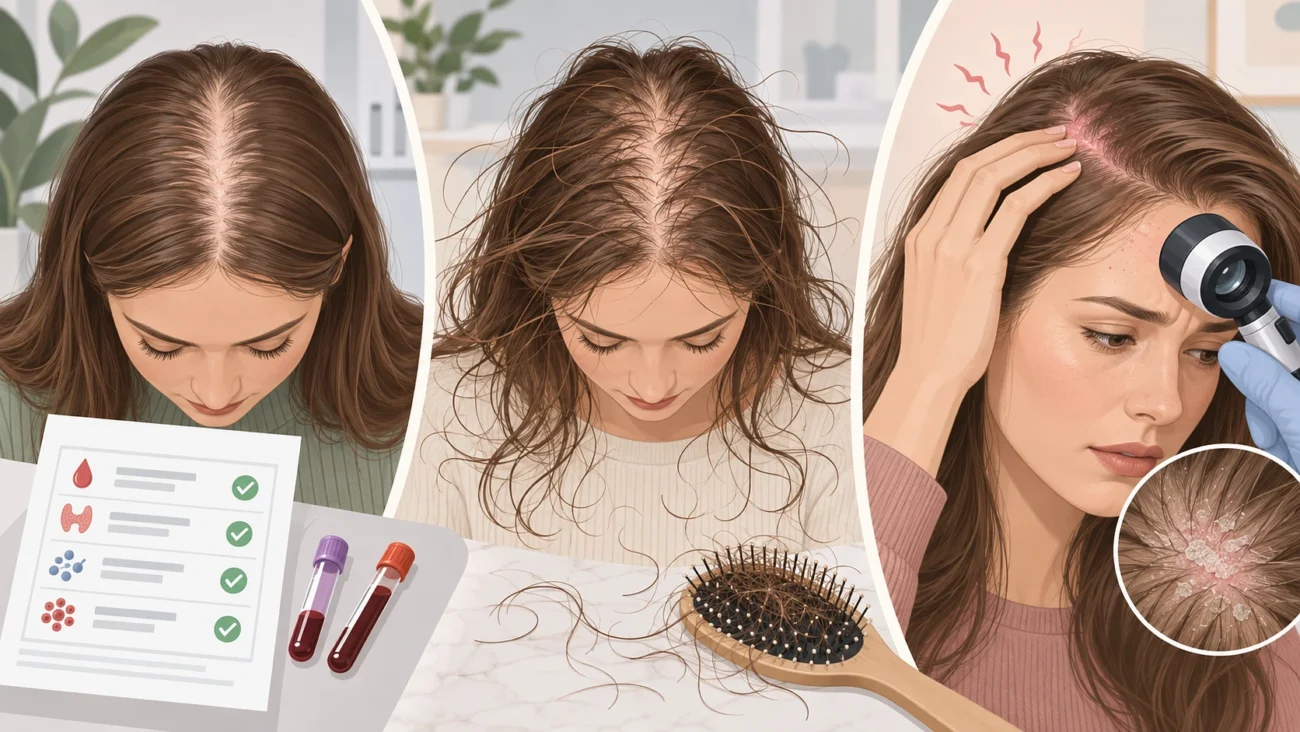
Because the 2 things she most likely has do not show up in blood.
The Slow One: Female Pattern Hair Loss
Look at the second photo. The parting is wide, the scalp shows all along it, and the hairline at the front is still where it should be. That shape is female pattern hair loss. It is inherited, it works through the follicles’ own sensitivity to normal hormone levels, and it starts in women in their early 20s much more often than anyone tells you. She dated her thinning to 8 years ago. That is what has been going on for 8 years, and it never needed an abnormal test to be real.
The Fast One: Telogen Effluvium
Then the shed landed on top of it. A telogen effluvium takes out maybe a third of the hair on the head over a few months, and when a third of the hair comes off a scalp that was already thinning on top, the thinning is suddenly obvious everywhere at once. That is what “unbelievable” means in her message. It is not that the pattern loss suddenly got 5 years worse. It is that the cover came off.
I did not believe this when my dermatologist told me. I was sure the hair loss had started the month the shedding started. It had not, and the old photographs proved it, and I would ask her to go and look at hers from 2 and 3 years ago before she decides I am wrong.
The Scalp Pain
It has a name, trichodynia, and about a third of people with a heavy shed get it. Burning, soreness, sometimes a crawling feeling, worse on bad days, tied to the shedding and to stress. It is not nerve damage. Nobody knows exactly what it is. It went away for me a couple of months after the shedding slowed, and I have not had it since.
The 4 days of cetirizine are worth thinking about here. Cetirizine on the scalp lowers an inflammatory signal called prostaglandin D2, which is raised in pattern hair loss and probably in a shedding scalp too, and it has a small amount of trial evidence behind it for exactly this. So it working fast is not strange. The brain fog and the migraine are harder to explain, since barely any gets through the skin, and I do not know whether they were the lotion or just a bad week. Tell the dermatologist both halves of that story. Do not tidy it up for them.
One more thing that needs looking at rather than guessing about. She has had psoriasis for 10 years. Scalp psoriasis is common, it can be nothing more than a fine scale at the hairline and an itch and a burn, it sheds hair, and it is found in under a minute with a dermatoscope. It may not be there. It should be checked.
What Actually Needs To Happen
Two things, and neither is a supplement.
The Hair Bloods, By Name
- Ferritin above all. A ferritin of 18 is within the lab range and it is also too low for hair to regrow well; most hair specialists want it over 40 or 50.
- Thyroid, TSH and free T4, because both directions of thyroid trouble shed hair and cause this kind of tiredness.
- Vitamin D, low in almost everyone who has spent a winter indoors fighting a house.
- Zinc, and B12 if she does not eat much meat.
If she has already had these, get the actual figures. “Full blood work” very often does not include ferritin at all.
A Dermatologist Who Does Hair

When she rings, the words to use are “female pattern hair loss with telogen effluvium, scalp pain, and I have psoriasis”. That gets a proper appointment. What is likely to come out of it:
- Minoxidil, as a foam or as a low dose tablet, which is the treatment with the most evidence for pattern loss and which also shortens a shed. It takes 4 to 6 months to show anything, and in the first few weeks the shedding gets briefly worse, and that is when most people give up on it, and it is the worst possible moment to give up.
- Possibly spironolactone, if she is not planning a pregnancy and the pattern part is significant.
- Treatment for the scalp psoriasis if it is there.
- The cetirizine back in the conversation, with the fog reported.
- Photographs of the parting, same light, same angle, at that visit and every 3 months, because you cannot see hair regrowing and you can see it in pictures.
Until then, wash it normally. The hair in the plughole was already loose; washing does not take out anything that was going to stay. No tight ponytails, no heat, no bleach for now.
The Tired Part
I remember writing almost the same sentence she wrote, “I’m exhausted and really struggling emotionally with this”, at the bottom of a message to a forum at 2 in the morning, as though it were an afterthought. It was not an afterthought. It was the whole message. Losing your hair young is a grief, and it is a grief other people make jokes about, and the fear of it is itself a stress, and stress feeds the shed, and you can go round that loop for a long time on your own. What got me out was a diagnosis I believed, a plan with dates in it, and one friend who let me talk about hair for as long as I needed to without once saying “it’s just hair”. If it goes deeper than that, a doctor or a counsellor is not a defeat.
7 months in, her shed is probably closer to finishing than starting. The follicles in those photos are still there. Mine came back. It took about a year, and the new hair was awful and fluffy for the first 6 months of that, and then it was just hair again.
This is written from experience and for information, not as medical advice. See a dermatologist before starting any of the treatments named here.