
How to Get Rid of Wisdom Tooth Pain

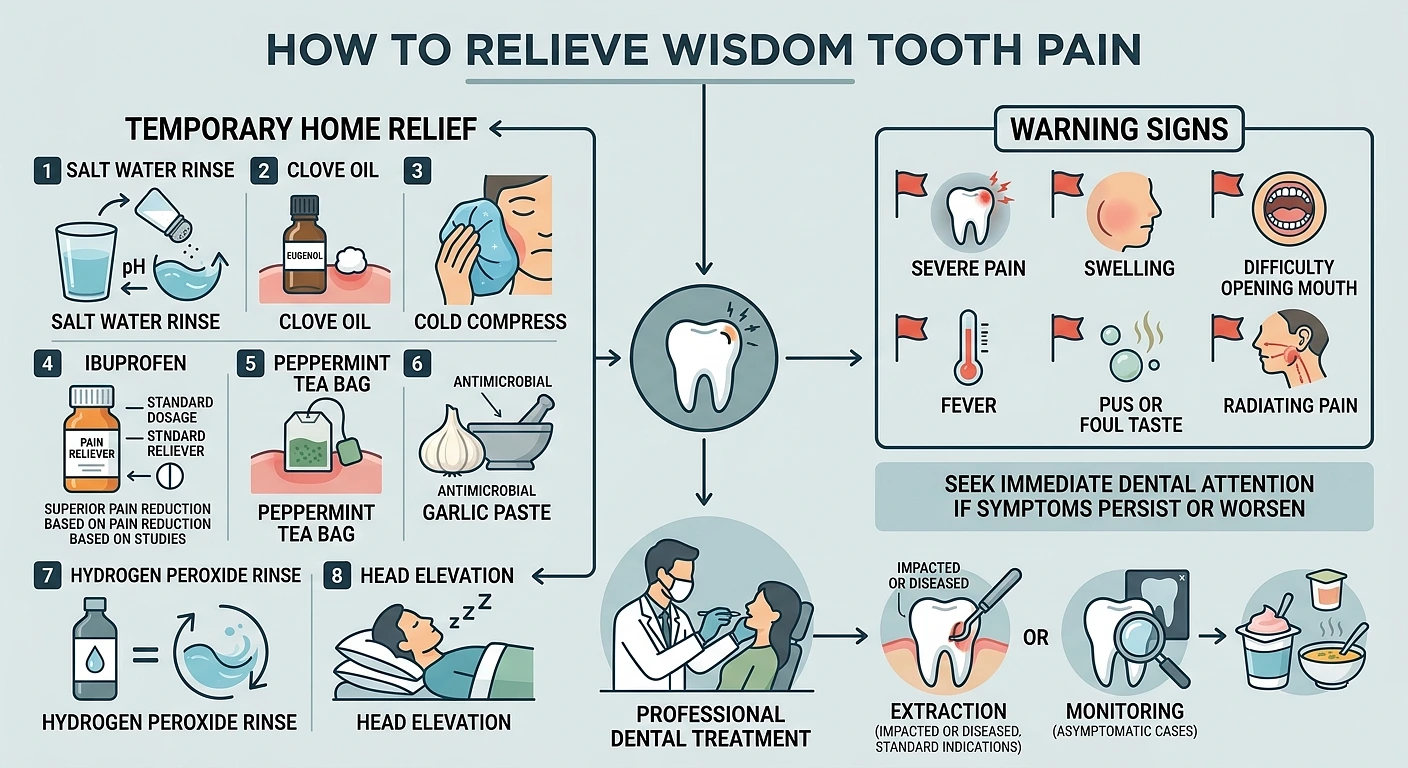
That dull, throbbing ache at the very back of your mouth is hard to ignore. It creeps in slowly, then builds into something that makes eating, talking, and even sleeping feel like a challenge. If you have ever been through it, you already know. Wisdom tooth pain is no ordinary toothache.
What Are Wisdom Teeth and Why Do They Hurt?
Wisdom teeth are your third molars. They are the last set of teeth to grow in, sitting at the very back of your mouth, two on top and two on the bottom. They usually emerge between the ages of 17 and 25. Because they are the last to arrive, there is often very little room left in the jaw to accommodate them.
When a wisdom tooth does not have enough space to erupt properly, it becomes impacted. This means it gets stuck below the gum line, grows at an angle, or presses into the neighboring molar. According to “Impacted Wisdom Teeth,” a systematic review published in BMC Oral Health (PMC, 2014), more than 72% of Swedish adults aged 20 to 30 have at least one impacted lower wisdom tooth, and between 30% and 60% of people who retain their asymptomatic wisdom teeth eventually proceed to extraction within 4 to 12 years.
A 2022 analysis titled “Estimated Cumulative Incidence of Wisdom Tooth Extractions in Privately Insured US Patients,” published in Frontiers in Dental Medicine – found that roughly 50% of privately insured U.S. patients had undergone at least one wisdom tooth extraction by age 25.
The inflammation that results is often called pericoronitis. It causes pain, pressure, swelling, and in many cases infection. According to “The Indications for Third-Molar Extractions,” published in the Journal of the American Dental Association (JADA), Vol. 145, June 2014, pericoronitis accounts for 25 to 30 percent of all impacted third molar extractions.
Home Remedies to Relieve Wisdom Tooth Pain
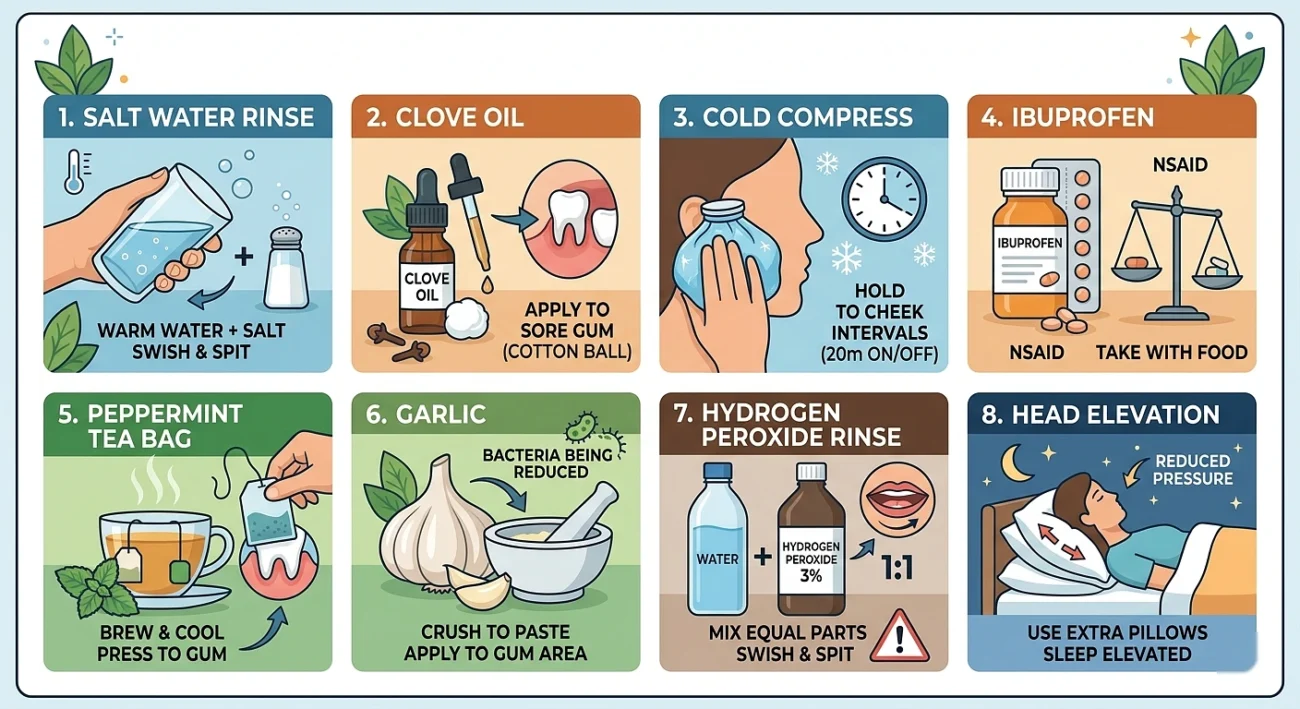
These remedies will not resolve the underlying cause, but they deliver real short-term relief while you arrange professional care.
1. Salt Water Rinse
Dissolve half a teaspoon of salt into a glass of warm water, swish for 30 seconds, and spit. Repeat two to three times daily.
Salt water works by raising the pH of the oral environment, creating an alkaline setting where harmful bacteria have difficulty surviving. A study published in the Journal of Indian Society of Pedodontics and Preventive Dentistry found that saline rinses effectively reduced plaque as an adjunct to routine mechanical plaque control. Dentists routinely recommend this rinse after oral surgery because it:
- Reduces bacteria in the mouth.
- Soothes inflamed and swollen gum tissue.
- Supports wound healing without the harshness of alcohol-based mouthwashes.
2. Clove Oil
Apply a small amount to a cotton ball and press it gently against the sore gum for a few minutes. Do not swallow it, and avoid overuse. Clove oil can irritate tissue if applied too frequently.
The mechanism is well-established. According to “Analgesic Efficacy of Phytotherapeutic Agents in Dental Pain Management: A Systematic Review,” published in the International Journal of Dentistry (Wiley Online Library), 2025, a review covering 21 clinical studies indexed across PubMed, the Cochrane Library, Scopus, and Web of Science, eugenol (the active compound in clove oil) was consistently effective across oral surgery and endodontic pain, with moderate-certainty evidence.
Separately, a 2006 randomized clinical trial of 73 adults found clove oil to be as effective as benzocaine, a standard topical anesthetic, with both outperforming placebo.
3. Cold Compress
Hold a cold pack wrapped in a cloth against your cheek for 15 to 20 minutes. Use it in intervals, 20 minutes on and 20 minutes off, especially in the first 24 to 48 hours when swelling is at its worst.
Cold therapy constricts blood vessels, reduces inflammation, and numbs the surrounding tissue enough to bring meaningful short-term relief. It is one of the simplest and most immediately effective things you can do.
4. Ibuprofen
For wisdom tooth pain specifically, ibuprofen outperforms acetaminophen as a standalone medication. A double-blind, placebo-controlled randomized clinical trial indexed in PubMed, titled “Ibuprofen and Acetaminophen in the Relief of Acute Pain: A Randomized, Double-Blind, Placebo-Controlled Study” (PMID: 2689471), tested both drugs on patients after dental impaction surgery. Ibuprofen 400 mg was significantly more effective than acetaminophen 1,000 mg on:
- Total pain relief score.
- Time to half-pain reduction.
- Overall patient evaluation at 6 hours.
- Peak effect strength and duration of action.
For stronger relief, combining both works better still. A 2025 study of 1,800 patients undergoing impacted wisdom tooth surgery, published in the Journal of the American Dental Association (January 2025), found that the over-the-counter combination outperformed opioid-containing regimens in pain relief and produced fewer side effects. The American Dental Association has formally recommended NSAIDs like ibuprofen as first-line therapy for acute dental pain since 2016.
Always take ibuprofen with food and follow the recommended dosage on the label.
5. Peppermint Tea Bag
Brew a peppermint tea bag and let it cool to just slightly warm. Press it directly against the painful gum and hold it there for a few minutes. Menthol, the key compound in peppermint, has established mild anesthetic and antibacterial properties that can calm irritated gum tissue and reduce soreness temporarily.
6. Garlic
Crush a fresh garlic clove into a paste and apply it gently to the affected gum. Garlic contains allicin, a naturally occurring organosulfur compound with well-documented antimicrobial effects. It helps reduce the bacteria that accumulate around a partially erupted or inflamed tooth, lowering the risk of secondary infection taking hold.
7. Hydrogen Peroxide Rinse
Mix equal parts of 3% hydrogen peroxide and water. Swish for 30 seconds, then spit thoroughly. Never swallow.
Hydrogen peroxide kills oral bacteria and helps keep the area around an erupting tooth clean. This is particularly useful when the gum tissue around your wisdom tooth appears red, swollen, or shows early signs of infection.
8. Head Elevation While Sleeping
Lying flat allows blood to pool in the head, increasing vascular pressure and intensifying the throbbing sensation overnight. Propping your head up with an extra pillow keeps it elevated above the heart and reduces that pressure. This small change can make a genuine difference in how much pain you experience through the night.
What to Eat and What to Avoid
What you eat during a wisdom tooth flare-up matters more than most people realize.
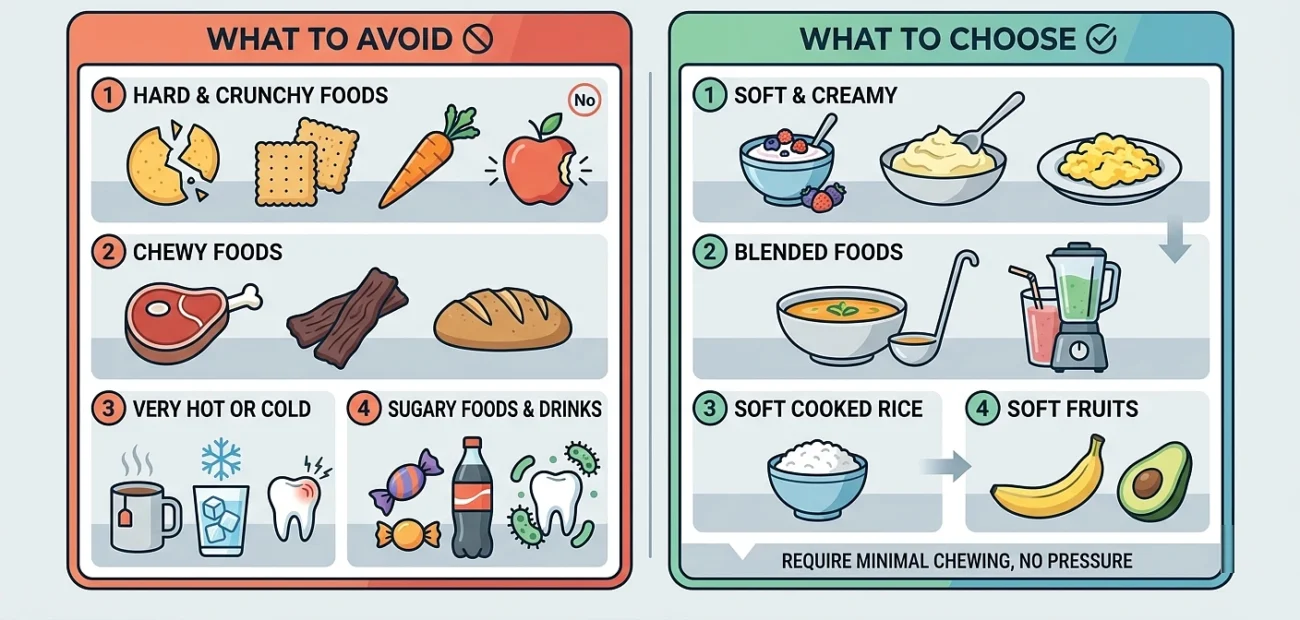
Foods to avoid:
- Hard and crunchy foods like chips, crackers, and raw vegetables.
- Chewy foods like tough meats and crusty bread.
- Very hot or very cold drinks that trigger sensitivity.
- Sugary foods and drinks that feed oral bacteria.
Foods to choose:
- Yogurt, mashed potatoes, and scrambled eggs.
- Blended soups, smoothies, and soft-cooked rice.
- Soft fruits like bananas and avocado.
- Anything that requires minimal chewing and puts no pressure on the back of the mouth.
Warning Signs That Need Immediate Dental Attention
Ordinary wisdom tooth soreness can sometimes escalate into something more serious. Do not delay care if you notice any of the following:
- Severe or rapidly worsening pain that home treatment does not ease.
- Swelling in the jaw, cheek, or neck that keeps growing.
- Difficulty opening your mouth, swallowing, or breathing.
- Fever alongside tooth pain, which signals active infection.
- Pus or a persistent foul taste in the mouth, indicating an abscess.
- Pain radiating into the ear, temple, or down the neck.
According to the Cleveland Clinic’s clinical resource on Impacted Wisdom Teeth, if impacted wisdom teeth are causing pain, infection, or structural damage to surrounding teeth and bone, extraction is usually recommended. A spreading dental infection can escalate rapidly and become a medical emergency if left untreated.
When Extraction Is the Right Decision
Home care is always temporary. If your wisdom teeth are impacted, repeatedly infected, or causing damage to neighboring teeth, your dentist will likely recommend extraction.
However, extraction is not automatically the right answer for every case. According to “The Prophylactic Extraction of Third Molars: A Public Health Hazard,” published in the American Journal of Public Health (2007), authored by Jay W. Friedman, only approximately 12% of truly impacted teeth are associated with pathological conditions such as cysts and damage to adjacent teeth. The decision to extract should always be grounded in clear clinical evidence of disease or disease risk.
A related review, “Third Molars: To Extract or Not to Extract?,” published in the Brazilian Journal of Oral Sciences (PMC, 2015), confirms that ten million wisdom teeth are extracted from approximately five million individuals each year in the United States. The same review underlines that extraction decisions should always involve a clinical and radiographic evaluation of the individual patient’s specific risk.
If extraction is indicated, recovery typically takes three to five days. A soft food diet and gentle salt water rinses are standard aftercare, and most patients return to normal activity within a week.
References
- “Impacted Wisdom Teeth,” BMC Oral Health (PMC), 2014 — https://pmc.ncbi.nlm.nih.gov/articles/PMC4148832/
- “Estimated Cumulative Incidence of Wisdom Tooth Extractions in Privately Insured US Patients,” Frontiers in Dental Medicine, 2022 — https://www.frontiersin.org/journals/dental-medicine/articles/10.3389/fdmed.2022.937165/full
- “The Indications for Third-Molar Extractions,” Journal of the American Dental Association (JADA), Vol. 145, June 2014 — https://jada.ada.org/article/S0002-8177(14)60117-3/fulltext
- “Analgesic Efficacy of Phytotherapeutic Agents in Dental Pain Management: A Systematic Review,” International Journal of Dentistry, Wiley Online Library, 2025 — https://onlinelibrary.wiley.com/doi/10.1155/ijod/5614623
- “Ibuprofen and Acetaminophen in the Relief of Acute Pain: A Randomized, Double-Blind, Placebo-Controlled Study,” PubMed (PMID: 2689471) — https://pubmed.ncbi.nlm.nih.gov/2689471/
- “Oral Analgesics for Acute Dental Pain,” American Dental Association (ADA), Clinical Resource — https://www.ada.org/resources/ada-library/oral-health-topics/oral-analgesics-for-acute-dental-pain
- “Impacted Wisdom Teeth,” Cleveland Clinic, Clinical Patient Resource — https://my.clevelandclinic.org/health/diseases/22296-impacted-wisdom-teeth
- “The Prophylactic Extraction of Third Molars: A Public Health Hazard,” American Journal of Public Health, 2007 (PMC) — https://pmc.ncbi.nlm.nih.gov/articles/PMC1963310/
- “Third Molars: To Extract or Not to Extract?,” Brazilian Journal of Oral Sciences (PMC), 2015 — https://pmc.ncbi.nlm.nih.gov/articles/PMC4593524/