
Locain (Lidocaine): Uses, Side Effects, Dosage & More

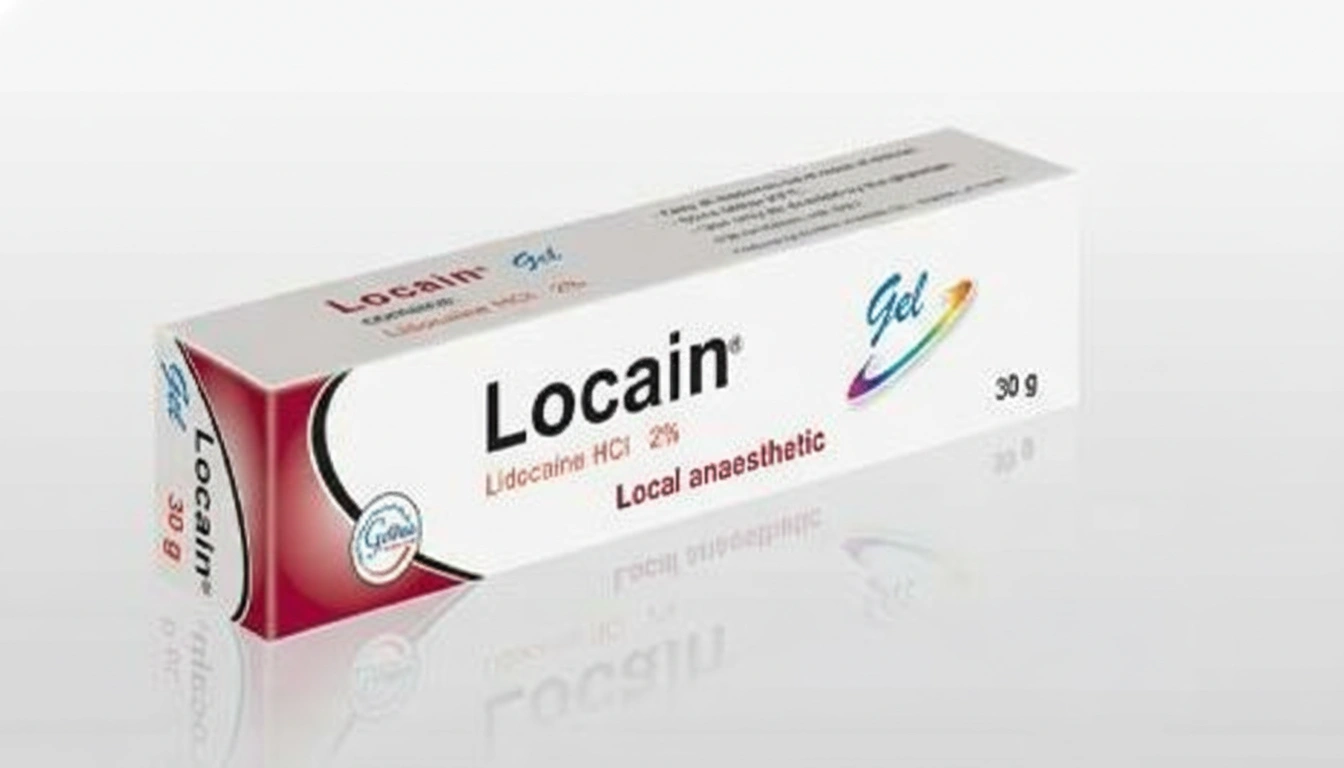
Locain is a brand of lidocaine, which is also spelled lignocaine, and it is one of the most widely used local anaesthetics in medicine. If you have ever had a tooth filled, a cut stitched, or a mole removed, there is a good chance lidocaine is what kept it painless. It belongs to the amide group of local anaesthetics, and it doubles as a Class Ib antiarrhythmic, meaning the same drug that numbs your gum is also used in emergencies to settle certain dangerous heart rhythms. That dual personality is worth keeping in mind, because it explains both how useful the drug is and why the dosing has to be respected.
Medical disclaimer: This article is for general information only and does not replace professional medical advice, diagnosis, or treatment. Lidocaine is a powerful medicine with dose limits that, if exceeded, can cause seizures and cardiac arrest. Never self-dose injectable forms, and always follow the exact instructions of your doctor or pharmacist and the leaflet in the pack.
How Locain Works
The mechanism is elegant in its simplicity. Nerves send pain signals by opening sodium channels in their membranes, and lidocaine plugs those channels, so the signal is never generated and never reaches the brain. No signal, no pain. It is a local effect, which is why a numbed lip does not numb the rest of you.
In the heart the same sodium-channel action calms down overexcitable tissue in the ventricles, which is what makes it valuable against ventricular arrhythmias. One practical quirk worth knowing: lidocaine works less well in inflamed or infected tissue, because the acidic environment there interferes with how the drug crosses into the nerve. That is why a dentist sometimes struggles to fully numb a badly abscessed tooth, it is not your imagination, it is chemistry.
What Locain Is Used For
Lidocaine turns up across an enormous range of settings, which is part of why it comes in so many forms. Broadly, the uses fall into a few groups.
Local and surgical anaesthesia
This is the bread and butter of lidocaine. It covers:
- Numbing skin and tissue before medical or surgical procedures.
- Infiltration anaesthesia, where it is injected directly into the area being worked on.
- Nerve blocks and IV regional anaesthesia.
- Dental work, one of its most common uses anywhere in the world.
- Endotracheal intubation, where it acts as a numbing lubricant.
Topical relief
Applied to the surface, it eases:
- Skin problems such as ulcers, minor burns, and insect bites.
- Haemorrhoids and the discomfort around them.
- A sore mouth or throat, and reducing the gag reflex during dental X-rays.
- Nasal and throat passages before an endoscopic procedure.
Urological procedures
These are sensitive-area procedures where topical numbing makes a real difference:
- Pain relief during urinary catheterisation.
- Treatment of painful urethritis.
- Urethral dilation and cystoscopy.
Nerve pain after shingles
The 700 mg medicated plaster is specifically approved for post-herpetic neuralgia (PHN), the stubborn nerve pain that can linger long after the shingles rash has cleared.
Cardiac emergencies (injection only)
Always in a clinical setting and never self-administered, lidocaine injection is used for:
- Acute ventricular tachyarrhythmias.
- Ventricular dysrhythmias following cardiac surgery.
- Emergency management of ventricular tachycardia and fibrillation.
Other uses
It also works as an add-on pain reliever for acute and chronic pain, helps blunt the blood-pressure spike during intubation, and a 5% spray has been studied for premature ejaculation when applied shortly before intercourse. The point is that “lidocaine” is less one product than a whole toolkit.
The Forms It Comes In
The form matters as much as the drug, because it determines how much reaches your bloodstream and how fast.
- Injection (0.5%–2%) — nerve blocks, regional anaesthesia, and cardiac arrhythmias.
- Gel — burns, haemorrhoids, and urethral procedures.
- Medicated plaster (700 mg) — post-herpetic neuralgia.
- Spray — numbing mucous membranes in the throat and nose.
- Viscous solution — mouth and throat soreness.
- Ointment — topical skin anaesthesia.
- Eye drops — short ophthalmic procedures.
Dosage: The Numbers That Actually Matter
Dosing depends entirely on the form, and the injectable limits are the ones where getting it wrong has serious consequences. The figures below are general reference, not a licence to self-administer.
Injectable maximums (adults)
This is the single most important information on the page:
Without epinephrine: up to 4.5 mg/kg, never exceeding 300 mg. With epinephrine: up to 7 mg/kg, never exceeding 500 mg.
Epinephrine raises the ceiling because it constricts local blood vessels, which slows how fast the lidocaine enters your circulation and widens the safety margin. The standing rule in any setting is to use the lowest concentration that does the job.
Topical gel (adults)
- Apply to the affected area 3–4 times daily.
- Typical dose around 15 ml every 3 hours.
- Maximum of 8 doses in any 24-hour period.
- Do not treat “more” as “better” here.
Medicated plaster
- Apply once daily for up to 12 hours in any 24-hour period, then at least 12 hours patch-free.
- Up to 3 plasters may be used at once if needed.
- Plasters can be cut to size before peeling off the backing.
Children
- Dosing must be worked out by a doctor on body weight, never estimated at home.
- Use extreme caution under 3 years of age.
Never use viscous lidocaine for infant teething the FDA has placed a Boxed Warning, its strongest possible alert, on oral viscous lidocaine for this use. When too much is applied or a child swallows it, it can cause seizures, severe brain injury, heart problems, and death. This followed a review of 22 real cases in children aged 5 months to 3.5 years, of which 6 died. For teething, use a chilled (not frozen) teething ring or a gentle gum rub with a clean finger.
Missed dose
- Apply as soon as you remember.
- If it is nearly time for the next dose, skip the missed one.
- Never apply double doses at the same time.
Side effects
At correct doses, most people tolerate lidocaine well. Side effects largely appear when too much is absorbed into the bloodstream, which is exactly why the dose limits exist.
Common / mild
- Dizziness or light-headedness.
- Drowsiness or sedation.
- Numbness or tingling around the lips and tongue.
- Tinnitus (ringing in the ears).
- Headache and restlessness.
- A metallic taste in the mouth.
- Redness, burning, or swelling at the application site.
Serious seek emergency help immediately
- Seizures or convulsions.
- Severe confusion or slurred, incoherent speech.
- Rapid or irregular heartbeat.
- Dangerously low blood pressure.
- Difficulty breathing or respiratory depression.
- Cardiovascular collapse or cardiac arrest.
- Anaphylaxis — hives with swelling of the face, lips, or throat.
Recognising toxicity
Lidocaine toxicity follows a predictable order, and the nervous-system signs almost always come before the heart is affected, which gives a window to act:
- First, drowsiness, a drunk-like disinhibition, and restlessness, often with that telltale metallic taste, lip tingling, and ringing ears.
- Then twitching, tremors, and seizures as levels climb.
- Finally the cardiovascular stage circulatory depression and, at the extreme, collapse.
If you suspect an overdose, call emergency services immediately and focus on keeping the airway open and the person breathing while help arrives.
Warnings And Precautions
Lidocaine is genuinely powerful, and a few situations call for real caution or rule it out altogether.
Do not use Locain if you have
- An allergy to lidocaine or any amide-type local anaesthetic.
- Complete heart block without a pacemaker present.
- Stokes-Adams syndrome or Wolff-Parkinson-White syndrome.
- Cardiogenic shock or severe hypovolaemia (low blood volume).
- A history of porphyria.
- Infected, cut, burned, or inflamed skin at the application site.
Use with extra caution if you have
- Liver disease — the liver clears lidocaine, so moderate to severe impairment needs lower doses and closer monitoring.
- Older age — slower liver, kidney, and heart function let the drug linger, so doses are often reduced.
Key drug interactions
- Beta-blockers – increased risk of a slow heart rate and low blood pressure.
- MAOIs and tricyclic antidepressants – combined with the epinephrine in some lidocaine products, can cause severe, prolonged high blood pressure.
- Liver-metabolism drugs such as cimetidine and certain antidepressants can raise lidocaine levels.
- Sedatives, opioids, and tranquillisers – additive drowsiness.
The honest rule is simply to tell your doctor everything you take prescription, over-the-counter, and herbal alike. On long-term use, a lidocaine breakdown product called 2,6-xylidine has shown genotoxic effects in animal studies, so prolonged treatment is reserved for cases with a clear benefit.
One practical dental warning: while your mouth is still numb you can bite your cheek or tongue without feeling it, and swallowing may be awkward, so wait until full sensation returns before eating solid food.
How long it lasts
- Standard injection: 30 minutes to 3 hours, depending on site and dose.
- With epinephrine: significantly longer, as reduced blood flow keeps the drug in place.
- Topical forms: typically 30–60 minutes.
How the body processes it
- Metabolised by the liver (mainly the CYP3A4 pathway) and cleared by the kidneys.
- Half-life of about 1.5–2 hours in a healthy adult, longer in liver disease or heart failure.
- The plaster delivers only about 3% of its total dose into the bloodstream when used correctly, which is what makes it so safe for long-term topical nerve-pain control.
References
- Lidocaine — StatPearls, NCBI Bookshelf (NIH).
- FDA Drug Safety Communication — FDA recommends not using lidocaine to treat teething pain and requires new Boxed Warning.
- Lidocaine Toxicity — StatPearls, NCBI Bookshelf.
- “Toxicity of Infiltrative Lidocaine in Dermatologic Surgery.” Journal of Clinical and Aesthetic Dermatology, PMC.