
The Max Fitness Classes and Nutrition Coaching


Most structured fitness programs fail not because the exercises are wrong but because the architecture holding them together is incomplete. The Max Challenge is a 10-week U.S.-based group fitness and nutrition coaching program that has put over 300,000 people through a combined training and eating system since its founding. This article breaks down how the program’s fitness class format, phased nutrition coaching, and community accountability structure interact – and where the research on HIIT and behavioral coaching supports the outcomes members actually report.
The Standard Fitness Program Has a Structural Problem
The American gym industry collects around $35 billion in annual revenue. Roughly 67% of gym memberships go unused. That gap between payment and participation isn’t a motivation problem – it’s a design problem. Most fitness products sell access: a machine, a class, a calorie-tracking app. They hand you a tool and expect you to build a system around it yourself, which almost nobody does consistently for more than a few weeks.
The programs that actually produce lasting body composition changes share a common architecture. They combine:
- Structured exercise with a fixed schedule and professional guidance.
- Nutritional coaching that runs parallel to the training, not separately from it.
- Social accountability inside a community that notices when you’re absent.
Take any one of those three out and the dropout rate climbs sharply. Most commercial gyms offer one, occasionally two, and rarely all three in a single coherent package. The Max Challenge is built specifically around that three-part structure, and the ten-week format is deliberate - long enough for measurable physical adaptation and habit formation, short enough to feel finite rather than a permanent lifestyle overhaul you have to commit to forever.
Forty-Five Minutes of HIIT Inside a Room Full of People

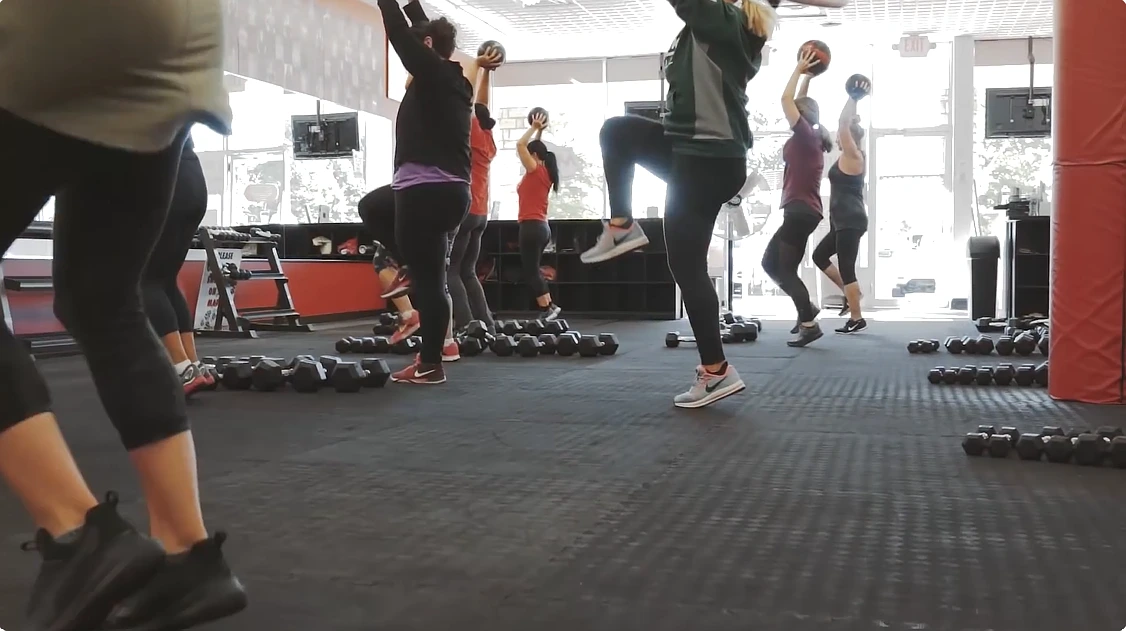
Classes run 45 minutes a day, five days a week, combining functional strength training and dynamic cardio led by certified instructors in a group setting that provides motivation conventional gyms or home workouts simply cannot replicate.
The training methodology centers on high-intensity interval training (HIIT) – alternating periods of near-maximal effort with controlled recovery. The physiological case for HIIT is well-established. A meta-analysis covering studies through December 2024 found that HIIT significantly reduces BMI, body fat percentage, waist-to-hip ratio, and resting heart rate, while meaningfully improving VO2 max and muscle strength compared to moderate-intensity training or sedentary controls. Programs running longer than eight weeks showed substantially stronger muscle strength outcomes than shorter interventions – which maps directly onto the ten-week structure here.
A Typical Class Breakdown
Inside The Max Challenge, sessions rotate through a deliberate mix of movements:
- Battle ropes and agility work for cardiovascular output and coordination under fatigue.
- Plyometric boxes and bodyweight circuits for lower-body power and sustained endurance.
- Alternating upper and lower body strength rounds to keep heart rate elevated between sets.
- Instructor-led modifications built in from day one so beginners and conditioned participants train side by side without either group being underserved
The group element isn’t incidental. Research on group fitness consistently shows that exercising alongside others reduces perceived exertion, improves long-term adherence, and produces meaningful reductions in self-reported stress compared to solo training.
Kim joined after gaining weight during the pandemic, and what stood out wasn’t the workouts themselves but the personalized engagement. Trainers knew her name from day one, actively corrected her form, and followed her progress throughout. She left physically and mentally changed, describing a more confident version of herself in the mirror.
Tamila described herself for years as a professional yo-yo dieter and gym-hopper who secretly hated working out. She tried The Max Challenge in 2017, shifted her focus from chasing diets to building health from the inside out, and eventually became an instructor herself in September 2024. That arc – member to instructor – shows up repeatedly across Max locations and says something meaningful about the depth of the program’s effect on people who stick with it.
Nutrition Coaching Built Around Education, Not Restriction
The nutrition coaching is designed to fit your lifestyle rather than the other way around. Members learn to make healthy, sustainable choices while still enjoying everyday foods, supported by access to healthy recipes, expert tips, and meal planning guides. Plant-based guidance is available for members whose dietary preferences run that direction.
Foundation Habits:
Basic portion awareness, food timing, and identifying the specific eating patterns working against current goals. No dramatic restriction – just structured observation and incremental adjustment. The goal here is pattern recognition, not perfection.
Active Application:
Nutrition principles get applied under real-life conditions – social meals, busy work weeks, travel. This is where most rigid diet plans collapse. Flexible education holds because it teaches the logic behind choices rather than a checklist to follow. When you understand why a food choice supports your goals, you make it again without being reminded.
Sustainable Maintenance:
The coaching shifts toward independence. Members learn to evaluate meals without a plan telling them what to eat, which is the only way results last past week ten.
A randomized controlled trial on overweight adults found that intermittent nutrition coaching reduced energy intake and BMI not by dramatically cutting calories but by improving practical food knowledge and personal accountability. A separate systematic review on health coaching confirmed that behavioral support paired with nutritional guidance consistently outperforms standard care advice – the mechanism being self-efficacy rather than the specific meal plan content.
Ten Weeks of Adaptation Broken Into Three Phases
The Hardest Part Is Showing Up Twice
The body is adapting to unfamiliar movement patterns and the nutrition framework is new. Soreness is normal. Most conventional programs lose people here because there’s no external pull to return after a hard day. The group dynamic inside The Max Challenge changes that calculus entirely – missing a class means missing people who notice your absence, which turns out to be a surprisingly effective adhesive.
What to expect during this phase:
- Muscle soreness in the first week, easing considerably by week three.
- Nutrition adjustments feeling effortful and slightly inconvenient.
- Energy fluctuations as the body adapts to a different fuel schedule.
- A noticeable social pull toward showing up that most gym memberships never produce.
The Shift Happens Around Here
Energy levels stabilize. Sleep quality tends to improve. The nutrition habits that required active thought in week one start running closer to default. Most members report their first visible physical changes in this window, which reinforces the behavior loop considerably. The workouts get harder but feel more rewarding because strength gains are now measurable in real time.
Consolidation Before the Program Ends
The most physically demanding phase. The focus shifts to crushing plateaus with increasingly challenging workouts while the nutrition coaching pivots toward empowering smart, sustainable choices that don’t depend on the program’s structure to execute. People who learned the reasoning behind the nutrition plan do well after week ten ends. People who followed instructions without understanding them tend to drift back within a month.