Mediterranean Diet: Meal Plan, Foods List and Tips

The Mediterranean diet is inspired by the traditional eating habits of countries bordering the Mediterranean Sea Greece, Italy, Spain, and southern France. Rather than a strict “diet,” it’s a flexible eating pattern centered on whole, minimally processed plant foods, healthy fats (especially olive oil), moderate fish and poultry, and limited red meat and sweets.
It’s consistently ranked among the world’s healthiest eating patterns and is linked to reduced risk of heart disease, type 2 diabetes, certain cancers, and cognitive decline.
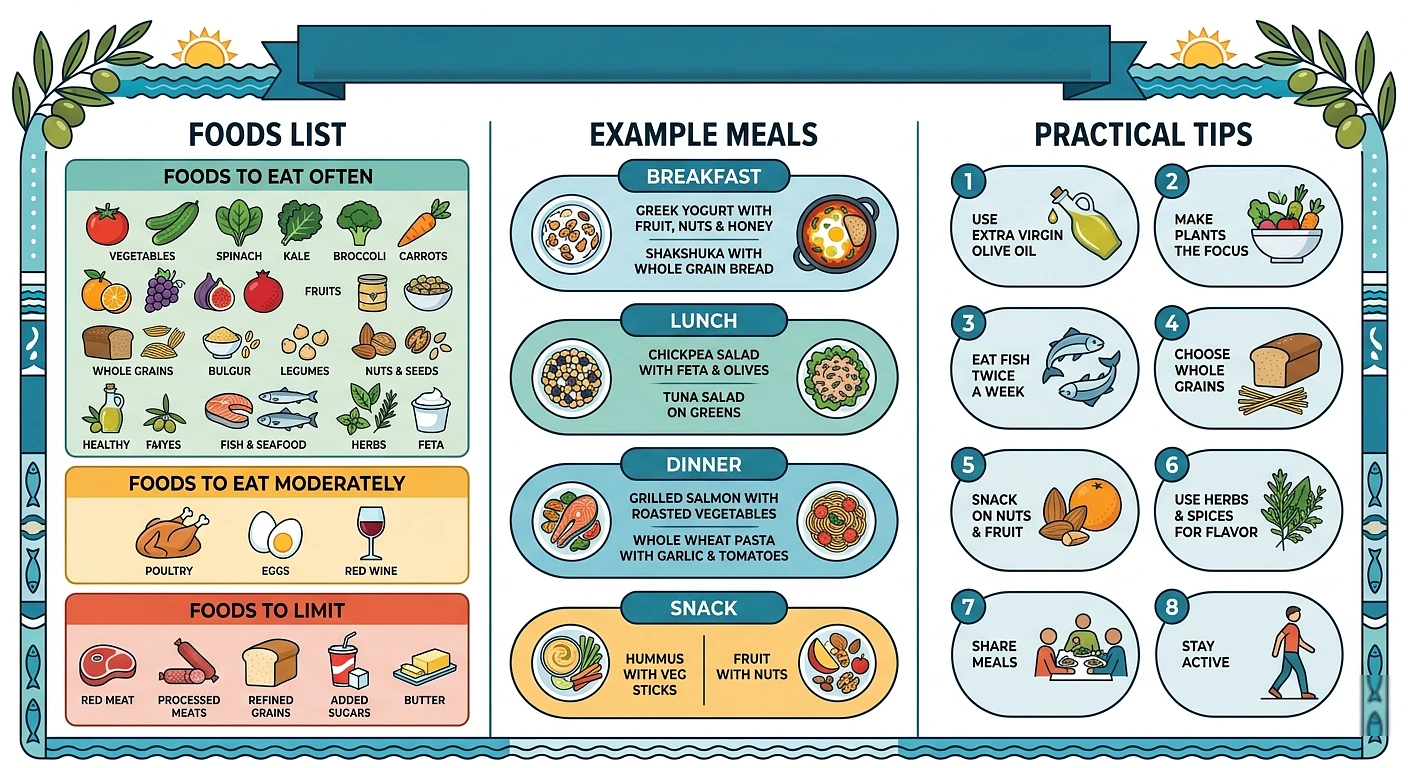
Mediterranean Diet Foods
Vegetables (daily, with most meals) Tomatoes, cucumbers, eggplant, zucchini, bell peppers, onions, garlic, leafy greens (spinach, kale, arugula), artichokes, broccoli, cauliflower, carrots, okra.
Fruits (daily) Oranges, apples, figs, grapes, pomegranates, melons, peaches, dates, berries, lemons.
Whole grains (daily) Whole wheat bread and pasta, bulgur, farro, barley, brown rice, couscous, oats, freekeh.
Legumes (several times per week) Chickpeas, lentils, fava beans, white beans, kidney beans, black-eyed peas.
Nuts and seeds (daily, small portions) Almonds, walnuts, pistachios, hazelnuts, pine nuts, sesame seeds, flaxseeds.
Healthy fats (daily) Extra virgin olive oil is the primary fat use it for cooking, dressing, and drizzling. Also olives, avocados, and tahini.
Fish and seafood (at least 2x per week) Salmon, sardines, mackerel, tuna, anchovies, trout, shrimp, mussels, squid, octopus.
Herbs and spices Basil, oregano, rosemary, thyme, parsley, mint, dill, cumin, coriander, sumac, za’atar, cinnamon.
Dairy (moderate, mostly fermented) Greek yogurt, feta, ricotta, halloumi, kefir, small portions of aged cheeses.
Foods to Eat Moderately
- Poultry (chicken, turkey) – 2 to 3 times per week.
- Eggs – up to 1 per day on average.
- Red wine – optional, in moderation with meals (1 glass for women, up to 2 for men). Skip if you don’t drink.
| Food Mediterranean | Examples | Recommendation |
|---|---|---|
| Red Meat | Beef, Lamb | Limit to only a few times per month |
| Processed Meats | Sausage, Salami, Bacon | Avoid or limit intake |
| Refined Grains | White Bread, White Rice, Pastries | Avoid, choose whole grains |
| Added Sugars & Sweetened Beverages | Soda, Sweetened Tea, Candy | Minimize or avoid completely |
| Butter & Margarine | Regular Butter, Margarine | Replace with healthier fats like Olive Oil |
| Heavily Processed or Packaged Foods | Packaged Snacks, Instant Meals | Limit consumption |
7-Day Meal Plan
Day 1
- Breakfast: Greek yogurt with honey, walnuts, and sliced figs.
- Lunch: Chickpea and cucumber salad with feta, tomatoes, olives, and lemon-olive oil dressing; whole grain pita.
- Dinner: Grilled salmon with roasted vegetables (zucchini, bell peppers, eggplant) and a side of bulgur pilaf.
- Snack: Handful of almonds and an orange.
Day 2
- Breakfast: Whole grain toast topped with mashed avocado, tomato slices, and a poached egg.
- Lunch: Lentil soup with lemon, carrots, and spinach; side of whole grain bread.
- Dinner: Chicken souvlaki with tzatziki, Greek salad, and brown rice.
- Snack: Apple slices with tahini
Day 3
- Breakfast: Oatmeal cooked with milk, topped with berries, chopped pistachios, and a drizzle of olive oil and honey.
- Lunch: Tuna salad with white beans, red onion, parsley, olive oil, and lemon juice over greens.
- Dinner: Whole wheat pasta with garlic, cherry tomatoes, basil, olive oil, and shaved parmesan; side salad.
- Snack: Hummus with carrot and cucumber sticks.
Day 4
- Breakfast: Shakshuka (eggs poached in spiced tomato sauce) with whole grain bread.
- Lunch: Stuffed bell peppers with rice, herbs, pine nuts, and feta.
- Dinner: Baked cod with olives, tomatoes, and capers; roasted potatoes and steamed greens.
- Snack: Greek yogurt with cinnamon and dates.
Day 5
- Breakfast: Smoothie with spinach, banana, Greek yogurt, flaxseed, and a little honey.
- Lunch: Falafel wrap in whole grain flatbread with tahini sauce, tomato, cucumber, and lettuce.
- Dinner: Grilled sardines with lemon; farro salad with roasted vegetables and herbs.
- Snack: Small bowl of olives and a piece of cheese.
Day 6
- Breakfast: Labneh (strained yogurt) drizzled with olive oil and za’atar, served with whole grain bread and cucumber.
- Lunch: Minestrone soup loaded with vegetables, beans, and a little whole grain pasta.
- Dinner: Chicken tagine with chickpeas, apricots, and couscous.
- Snack: Pomegranate seeds with walnuts.
Day 7
- Breakfast: Frittata with spinach, tomato, and feta; side of fruit.
- Lunch: Grain bowl with quinoa, roasted vegetables, chickpeas, olives, and lemon-herb dressing.
- Dinner: Grilled shrimp skewers with a large Mediterranean salad and grilled flatbread.
- Snack: Fresh figs or grapes with a few almonds.
Practical Idea for Mediterranean Diet
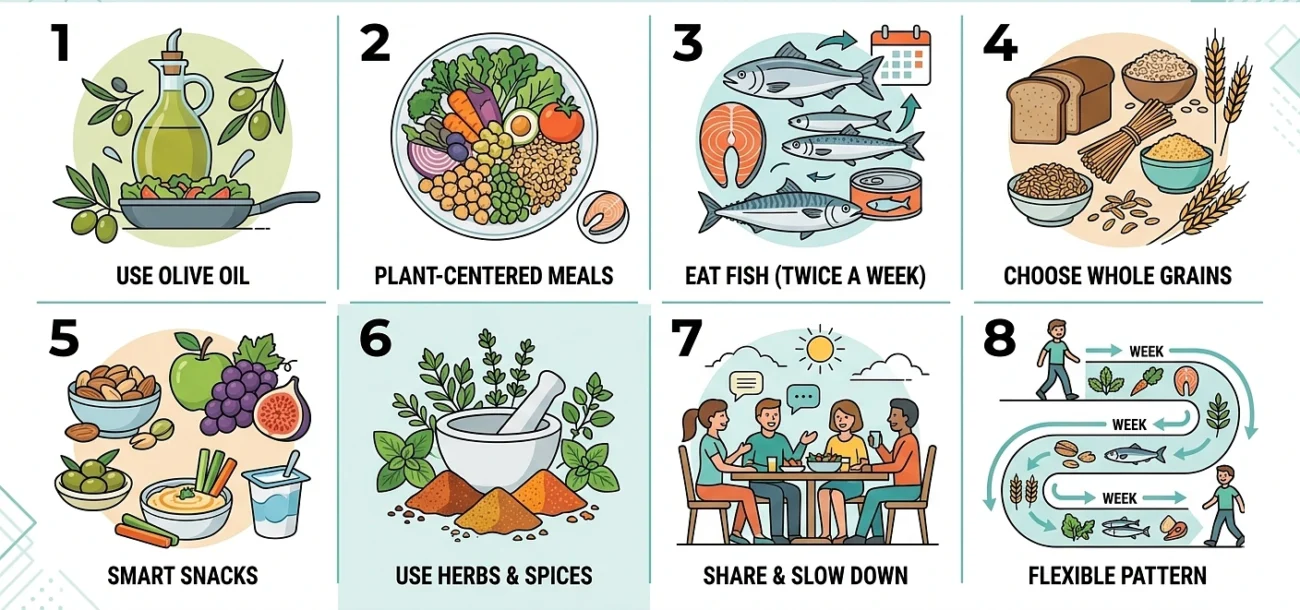
Make olive oil your default fat. Replace butter, margarine, and neutral oils with extra virgin olive oil for cooking, dressings, and finishing dishes. A good bottle is worth the investment.
Build meals around plants. Aim to have vegetables, legumes, or whole grains as the centerpiece of most meals, with animal protein as a supporting role rather than the star.
Eat fish twice a week. Fatty fish like salmon, sardines, and mackerel provide omega-3 fatty acids that are central to the diet’s heart benefits. Canned sardines and tuna count and are budget-friendly.
Swap refined for whole grains. Choose whole grain bread, pasta, and rice. Experiment with bulgur, farro, and freekeh for variety.
Snack smart. Keep nuts, fruit, olives, hummus, and yogurt on hand instead of chips and sweets.
Use herbs and spices generously. They add flavor without salt or sugar and carry their own health benefits.
Slow down and share meals. The Mediterranean way of eating emphasizes eating with others, taking time, and enjoying food not just what’s on the plate.
Don’t aim for perfection. The pattern is flexible. A weekly rhythm of mostly plants, regular fish, moderate dairy, and occasional meat is what matters not hitting every box every day.
The Mediterranean diet’s benefits aren’t from any single “superfood” but from the overall pattern: abundant antioxidants and fiber from plants, heart-healthy monounsaturated fats from olive oil, omega-3s from fish, and minimal processed food and added sugar. Decades of research including the landmark PREDIMED trial have shown meaningful reductions in cardiovascular events, diabetes risk, and all-cause mortality among people who follow it closely.
References
- Estruch R, Ros E, Salas-Salvadó J, et al. Primary Prevention of Cardiovascular Disease with a Mediterranean Diet Supplemented with Extra-Virgin Olive Oil or Nuts. New England Journal of Medicine, 2018. (The landmark PREDIMED trial – 7,447 high-risk participants, ~30% reduction in major cardiovascular events.).
- Ros E, Martínez-González MA, Estruch R, et al. Mediterranean Diet and Cardiovascular Health: Teachings of the PREDIMED Study. Advances in Nutrition, 2014.