Health Benefits of Asparagus: Uses, Side Effects and More

If you are looking for a simple way to upgrade your diet, asparagus is one of the easiest places to start. These crisp spring spears have been prized for centuries not just for their distinct, earthy flavor, but for the heavy-hitting nutrition they bring to the table.
Often seen as a premium side dish or a staple in seasonal salads, asparagus actually doubles as a functional superfood. It punches far above its weight in terms of health benefits, offering everything from potent antioxidants and digestive support to essential vitamins that protect your bone and heart health. This guide breaks down exactly what makes asparagus so good for you, how to make the most of it in your kitchen, and a few minor side effects you should know about.
What Exactly Is Asparagus?
Botanically known as Asparagus officinalis, asparagus is a perennial flowering plant species. Unlike most vegetables that you have to replant every year, an asparagus plant can produce spears for 15 years or more once it is established in the ground.
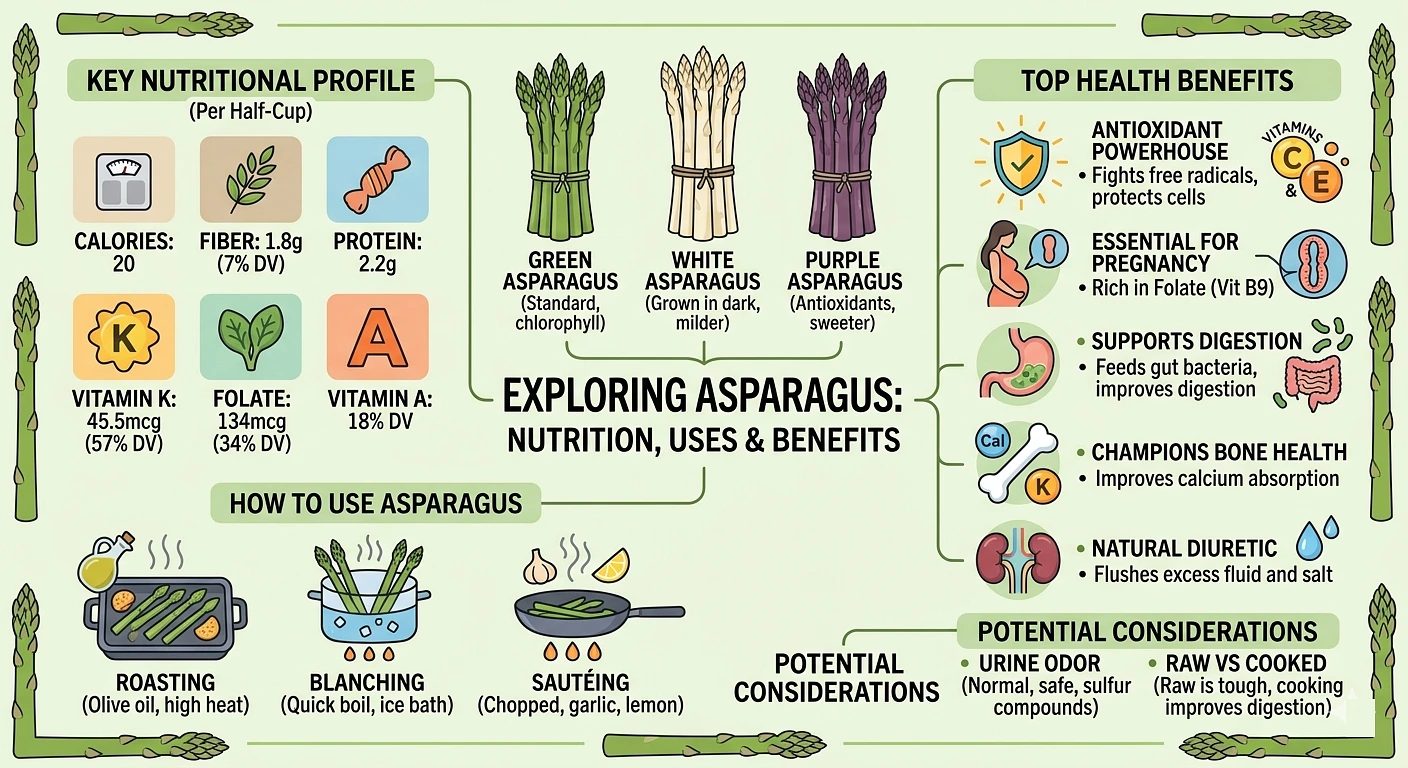
The parts we eat are the young, tender shoots that emerge in early spring. While the green variety is the most common, there are actually three main types:
- Green Asparagus: The standard variety that develops its color through chlorophyll when exposed to sunlight.
- White Asparagus: Grown in the dark to prevent photosynthesis, resulting in a milder, sweeter flavor and a pale appearance.
- Purple Asparagus: Naturally rich in anthocyanins, this variety is fruitier and sweeter than its green cousin.
How to Use Asparagus?
A minimalist approach usually yields the best results and preserves the nutrient content:
- Roasting: Toss trimmed spears with olive oil, sea salt, and cracked black pepper. Roast at 205°C for 10-15 minutes until tender-crisp.
- Blanching: Boil for 3 minutes, then immediately submerge in an ice bath to lock in that vibrant green color.
- Sautéing: Chop spears into one-inch pieces and quickly stir-fry with garlic and lemon zest for a bright, fresh side.
The Asparagus Nutritional
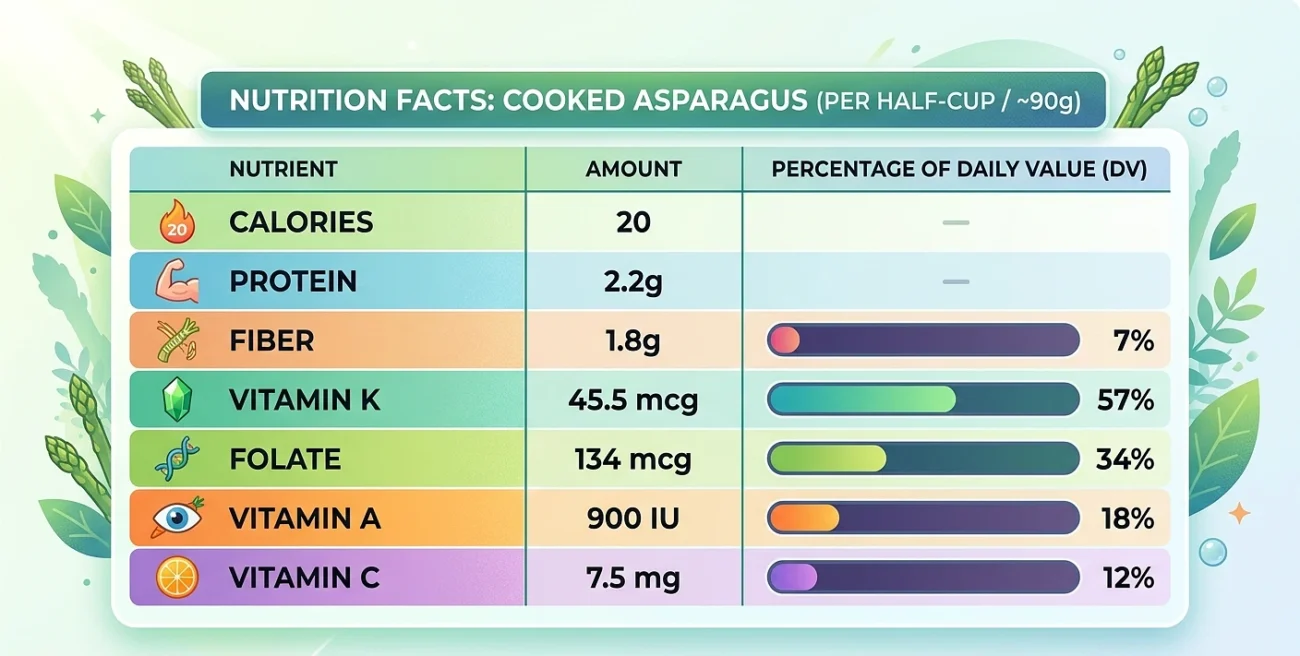
Asparagus is incredibly nutrient-dense, delivering a heavy dose of vitamins and minerals for very few calories. Here is a look at what a standard half-cup (about 90 grams) of cooked asparagus provides:
Top Health Benefits of Asparagus
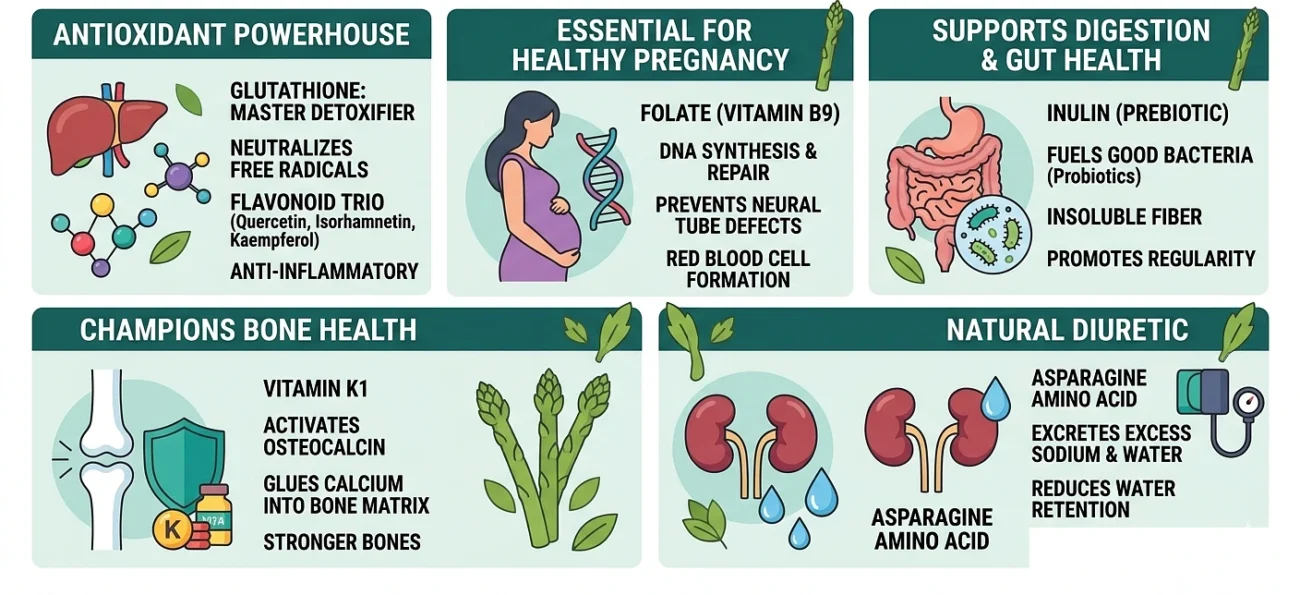
1. An Antioxidant Powerhouse
While many foods contain antioxidants, asparagus offers a unique “cocktail” of protective compounds.
- Glutathione: The Master Detoxifier: Asparagus is one of the top plant sources of glutathione. This compound is critical for the liver’s detoxification process. It helps neutralize “free radicals” unstable molecules that damage DNA and lead to cellular aging.
- The Flavonoid Trio: It contains quercetin, isorhamnetin, and kaempferol. Clinical studies suggest these specific flavonoids have anti-inflammatory, anti-viral, and even anti-cancer properties. They work by inhibiting the production of pro-inflammatory cytokines in the blood.
2. Essential for Healthy Pregnancy
The role of folate (Vitamin B9) in asparagus goes beyond basic nutrition; it is a biological building block.
- DNA Synthesis: Folate is required for the synthesis and repair of DNA and RNA. During pregnancy, when rapid cell division is occurring, a deficiency can lead to “neural tube defects” like spina bifida.
- Red Blood Cell Formation: Beyond pregnancy, folate is essential for producing healthy red blood cells. A lack of folate can lead to megaloblastic anemia, which causes fatigue and weakness. Because it’s a water-soluble vitamin, your body doesn’t store it long-term, making fresh sources like asparagus vital.
3. Supports Digestion and Gut Health
Asparagus functions as a two-stage system for your digestive tract.
- Inulin (The Prebiotic): Asparagus contains a specific type of carbohydrate called inulin. Unlike other carbs, inulin isn’t digested in your stomach. It travels to the large intestine where it becomes “fuel” for probiotics (good bacteria). This increases the population of Bifidobacteria, which crowds out harmful pathogens.
- Mechanical Regularity: The insoluble fiber acts like a “broom,” physically sweeping through the intestines. This increases stool bulk and speed of transit, which significantly reduces the risk of colon-related issues and chronic constipation.
4. Champions Bone Health
Most people associate bone health only with Calcium, but bones are living tissues that require a protein-based matrix to stay strong.
- Osteocalcin Activation: Vitamin K1 (phylloquinone) is a co-factor for the “carboxylation” of osteocalcin. This is a protein that literally “glues” calcium molecules into the bone matrix. Without enough Vitamin K, calcium cannot be properly deposited, leading to brittle bones even if your calcium intake is high.
- Synergy with Vitamin D: Vitamin K works in tandem with Vitamin D to ensure that calcium goes to your bones rather than depositing in your arteries (calcification).
5. Acts as a Natural Diuretic
The diuretic effect of asparagus is more than just a “flush”; it is a balancing act for your kidneys.
- Breaking the Salt-Water Bond: The amino acid asparagine stimulates the kidneys to excrete excess sodium. Because water always follows salt, as you flush the salt, you lose the excess fluid weight.
- Blood Pressure Regulation: By reducing the total volume of fluid circulating in your veins, asparagus naturally lowers the pressure on your arterial walls. This makes it an excellent dietary tool for managing mild hypertension and reducing “water weight” or edema in the ankles and legs.
FAQs
Q: Can you eat asparagus raw?
A: Yes, you can! However, raw asparagus can be quite tough. To make it more palatable, try using a vegetable peeler to create thin ribbons for salads. Cooking typically makes the fiber easier to digest and the nutrients more bioavailable.
Q: How do you keep asparagus fresh in the fridge?
A: Treat it like a bouquet of flowers. Trim about half an inch off the bottom of the stems and stand them upright in a glass with an inch of water. Cover the tops loosely with a plastic bag and they will stay crisp for up to a week.
Q: Why does asparagus make my urine smell?
A: This is due to the breakdown of asparagusic acid into sulfur-containing compounds. Not everyone can produce the smell, and not everyone can smell it all depends on your unique genetic makeup.
Q: Is asparagus high in sugar?
A: No. Asparagus is very low in sugar and has a low glycemic index, making it an excellent choice for those managing blood sugar levels or following a keto diet.
Potential Side Effects
We currently have no information for Asparagus side effects.
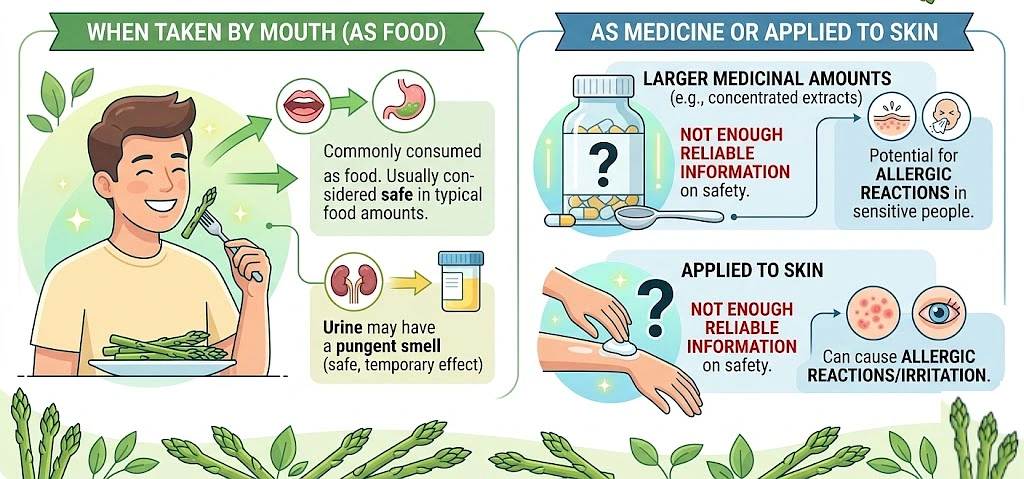
When taken by mouth: Asparagus spears are commonly consumed as food. Eating asparagus can make the urine have a pungent smell. There isn’t enough reliable information to know if asparagus is safe when used in larger amounts as medicine. It can cause allergic reactions in sensitive people.
When applied to the skin: There isn’t enough reliable information to know if asparagus is safe to use. It can cause allergic reactions in sensitive people.