Pain Under Shoulder Blade: Causes & Relief

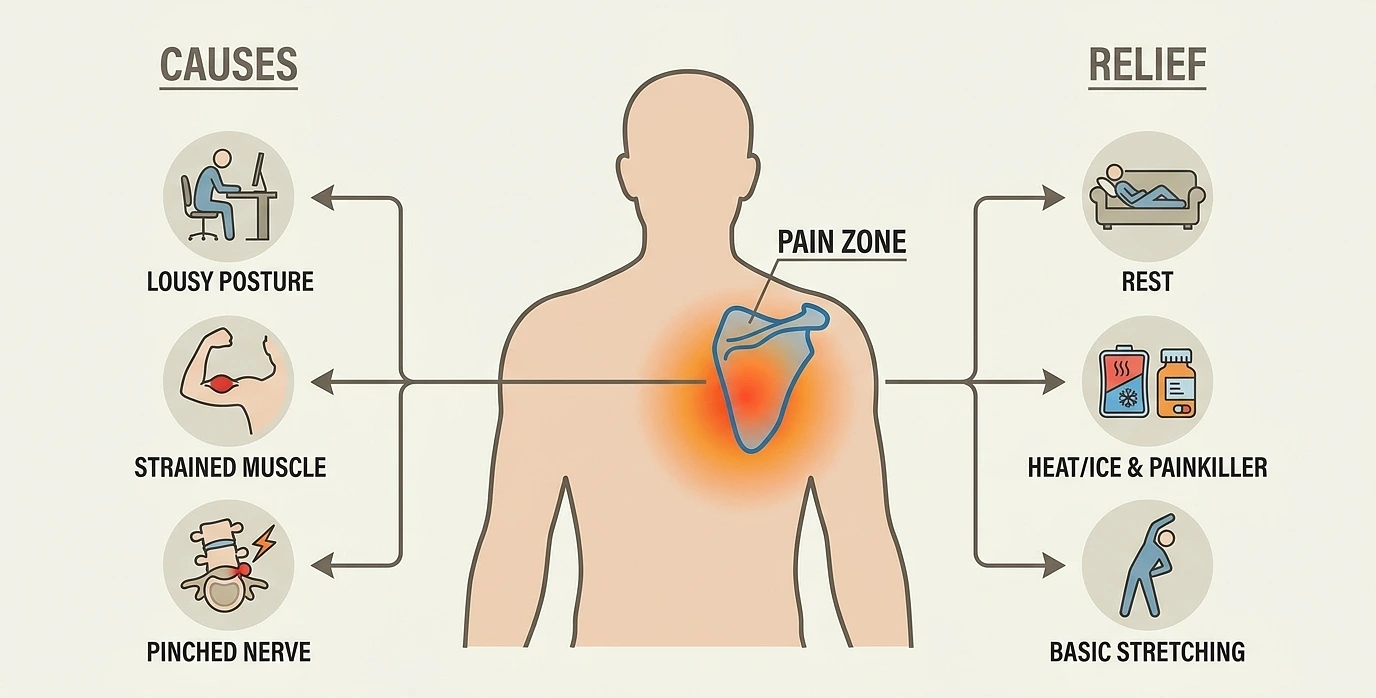
Pain under your shoulder blade (the scapula, if we’re being technical) usually traces back to one of three things: a strained muscle, lousy posture, or a nerve getting pinched somewhere it shouldn’t. The usual suspects are tight rhomboids from too many hours at a desk, a grumpy disc in your neck, or irritation where your ribs meet your spine. Most of the time, you can sort it out at home with rest, a heating pad or ice pack, some basic stretching, and an over-the-counter painkiller. But if it sticks around, gets worse, or comes with trouble breathing, that’s your cue to stop self-treating and see someone.
What Even Is Shoulder Blade Pain?
Your shoulder blade is that flat, triangle-shaped bone in your upper back that slides around when you move your arm. The pain people describe in this region usually shows up as a deep ache, a burning sensation, or a sharp jab right between the spine and the blade itself. It’s the kind of pain you can’t quite reach, no matter how impressively you twist in the bathroom mirror.
Common Causes of Pain Under the Shoulder Blade
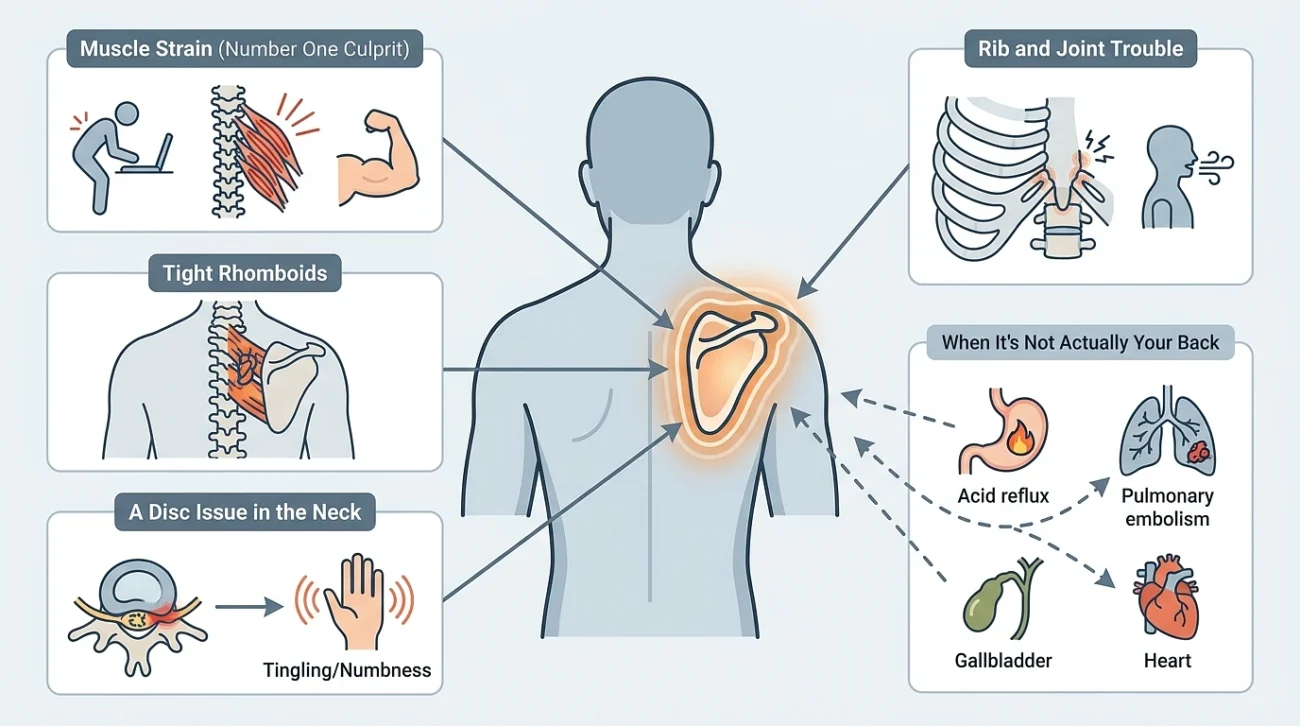
Muscle Strain (The Number One Culprit)
This is by far the most common reason. Long hours hunched over a laptop, lifting something heavier than you should have, or repeating the same motion at work or in the gym, all of it overloads the small muscles around the scapula. They get tight, then irritated, then loud about it.
Tight Rhomboids
The rhomboids are the muscles running between your spine and shoulder blade. When they’re weak or constantly tense (looking at you, desk workers), they ache. Especially after you’ve been sitting still for a while.
A Disc Issue in the Neck
A herniated disc in the cervical spine can fire pain straight down into the shoulder blade area. The giveaway? It often comes with tingling, numbness, or weakness running into the arm or hand. If that’s happening, the problem isn’t really in your back, it’s higher up.
Rib and Joint Trouble
Where your ribs meet your spine is a busy little intersection. Arthritis, bursitis, or simple joint dysfunction in that area can make every breath feel like a small reminder that something’s off.
When It’s Not Actually Your Back
Sometimes the pain has nothing to do with muscles or bones at all. Acid reflux can mimic upper back pain. A pulmonary embolism (a blood clot in the lung) can cause sharp pain between the shoulder blades, usually with shortness of breath. Lung issues, gallbladder trouble, and even a heart attack can refer pain to this area. These are the rarer causes, but they’re the reason you can’t just shrug off shoulder blade pain that comes with weird symptoms.
How to Get Relief
Target Stretches and Light Strengthening
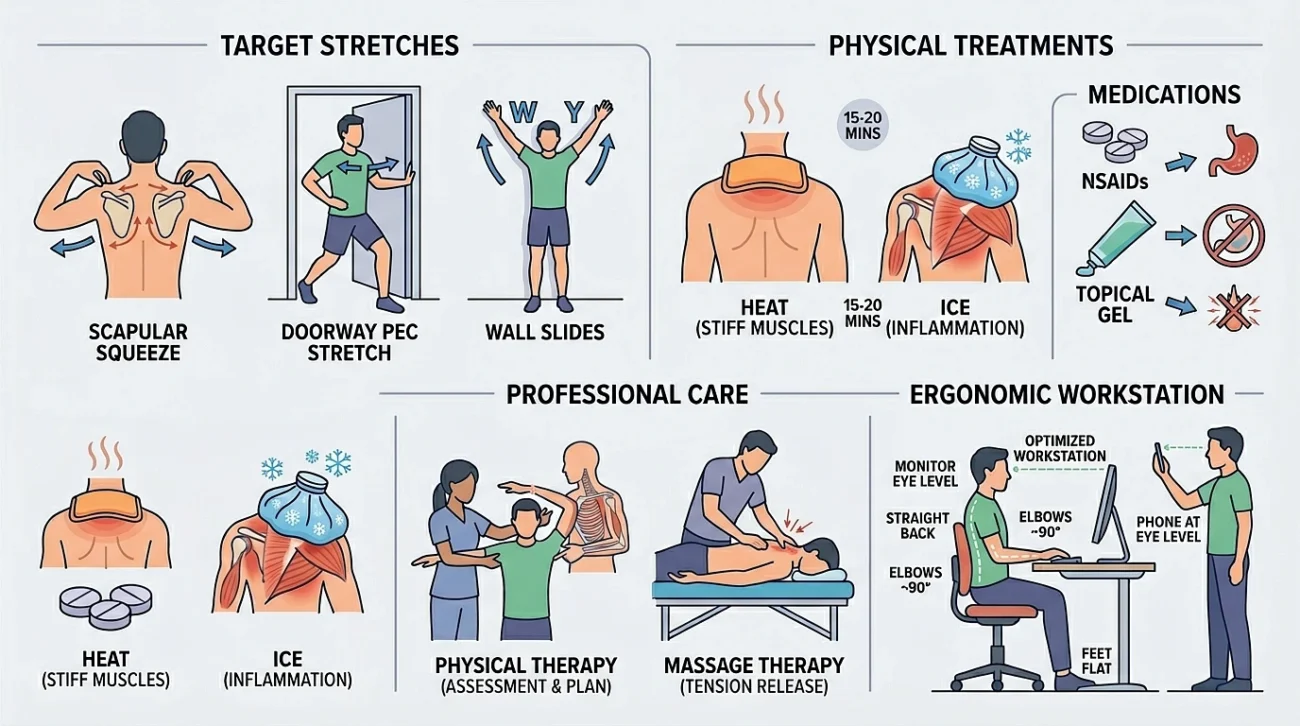
This is where most people see real improvement. A few simple moves for the rhomboids and upper trapezius can take the edge off, sometimes within minutes.
- Scapular squeezes: Pull your shoulder blades back and down, hold for five seconds, release. Ten reps.
- Doorway pec stretch: Forearms on the door frame, step one foot forward, feel the stretch across your chest. Thirty seconds each side.
- Wall slides: Back against a wall, arms in a “W,” slowly slide them up to a “Y” while keeping contact.
Boring? Yeah. Effective? Also yeah.
Heat or Ice
Heat for tight, achy muscles. Ice for fresh injuries or anything inflamed. Either way, 15 to 20 minutes at a time. Don’t fall asleep on a heating pad. People do, and it never ends well.
NSAIDs
Ibuprofen (Advil) or naproxen (Aleve) handle the pain and bring down inflammation at the same time. Topical diclofenac gel is a solid option if your stomach doesn’t love oral NSAIDs.
A Trip to PT or a Massage Therapist
If you’ve been hunched at a desk for years, you’ve trained your body into a posture that’s actively working against you. A physical therapist can spot which muscles are weak, which are overworked, and give you a plan to fix the imbalance. Massage therapists are great for releasing the immediate tension, even if they don’t fix the root cause.
Fix Your Workstation
Monitor at eye level. Feet flat on the floor. Elbows around 90 degrees when typing. Phone at eye level instead of chin-down on your chest. None of this is glamorous advice, but it’s what actually keeps the pain from coming back.
When You Need to See a Doctor
Some symptoms shouldn’t wait. Get checked, or in some cases call 911, if your shoulder blade pain comes with:
- Shortness of breath or trouble breathing.
- Sharp chest pain.
- Heavy or unusual sweating.
- Pain shooting down into the arm or hand.
- Severe pain that won’t budge with rest or OTC medication.
Especially in women, a heart attack can show up as upper back pain, jaw pain, or shoulder discomfort, sometimes without the classic “elephant on the chest” feeling. If something feels wrong, trust that instinct.
For everything else, the boring fixes work. Move more, slump less, stretch the front of your body, strengthen the back of it, and don’t ignore pain that’s been around for weeks. Your shoulder blade isn’t going to fix itself while you keep slumping at your laptop.