
Pinched Nerve in Hip: What Causes It, Symptoms and Natural Relief
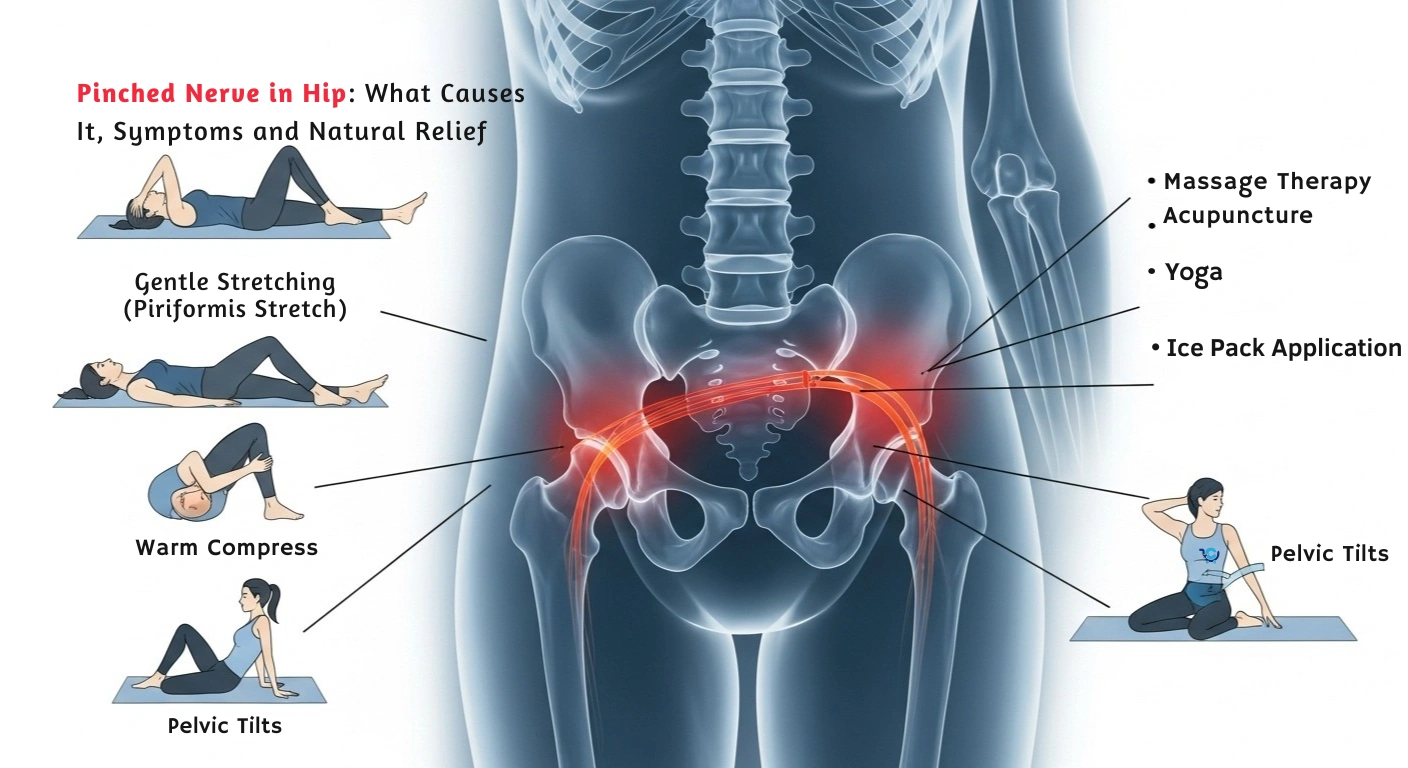
That sudden sharp pain shooting through your hip when you stand up from your desk chair. The weird tingling sensation traveling down your leg when you’re trying to sleep.
If you’ve ever experienced these frustrating sensations, you might be dealing with a pinched nerve in your hip. You’re definitely not alone in this research shows that approximately 85 out of every 100,000 adults experience a pinched nerve at some point in their lives, and hip pain affects roughly 10% of the general population. The good news? Most cases respond well to natural remedies and simple lifestyle changes.
Understand What a Pinched Nerve
A pinched nerve occurs when surrounding tissues things like muscles, tendons, bones, or cartilage apply too much pressure on a nerve. This compression disrupts the nerve’s ability to send and receive signals properly, kind of like stepping on a garden hose and blocking the water flow.
When this happens in or around your hip, several different nerves might be involved:
- Sciatic nerve – The largest nerve in your body, running from your lower back through your buttocks and down each leg
- Femoral nerve – Controls muscles in the front of your thigh
- Obturator nerve – Supplies sensation to your inner thigh
- Pudendal nerve – Located in your pelvic area
- Lateral femoral cutaneous nerve – Provides sensation to the outer thigh
Each of these nerves serves different parts of your hip and leg, which is why pinched nerve symptoms can vary so much from person to person.
The Main Causes of a Pinched Nerve in the Hip
Understanding what’s causing your nerve compression is the first step toward finding effective relief. Here are the most common culprits:
Herniated or Bulging Discs:
The discs between your spinal vertebrae act as cushiony shock absorbers, but they can develop problems over time. When a disc herniates or bulges, the soft inner material can protrude and press directly on nearby nerves. This is one of the most common causes of sciatic nerve compression, and the resulting pain can radiate from your lower back all the way down through your hip and leg.
Piriformis Syndrome:
The piriformis is a small, flat muscle located deep in your buttock, near the top of your hip joint. When this muscle becomes tight or goes into spasm often from too much sitting it can irritate or compress the sciatic nerve running beneath it. Piriformis syndrome has become increasingly common as more people spend their days hunched over computers.
Bone Spurs and Arthritis:
As we age, our bodies sometimes respond to joint wear and tear by growing extra bone tissue. These growths, called bone spurs, can narrow the space where nerves travel and create compression. Both osteoarthritis and rheumatoid arthritis can contribute to bone spur formation and general inflammation that puts pressure on surrounding nerves.
Additional Common Causes:
- Muscle imbalances and poor posture – Sitting with crossed legs, slouching, or sleeping in awkward positions
- Trauma and injuries – Falls, sports injuries, or car accidents causing direct impact or ongoing inflammation
- Pregnancy and weight gain – Extra pressure on hips and lower back, plus hormonal changes loosening ligaments
- Age-related changes – Spinal discs losing moisture and flattening over time, bringing vertebrae closer together
Recognizing the Symptoms: What Does a Pinched Hip Nerve Feel Like
Pinched nerve symptoms can show up in many different ways, and they often surprise people because the pain doesn’t always stay in one spot.
Common Symptoms Include:
- Radiating pain – Discomfort that travels from your hip through your buttock, thigh, and possibly into your calf or foot
- Sharp or burning sensations – Sudden shooting pain or persistent fiery discomfort
- Numbness and tingling – “Pins and needles” feeling or skin that feels like it’s gone to sleep
- Muscle weakness – Leg feeling weak or giving out unexpectedly
- Limited range of motion – Difficulty bending, twisting, or rotating your hip
- Pain that worsens with activity – Walking, standing, or sitting in certain positions intensifies discomfort
| Symptom Type | What You Might Experience | Where It Typically Occurs |
|---|---|---|
| Sharp Pain | Sudden, shooting sensations | Hip, groin, buttock, thigh |
| Burning Pain | Persistent, fiery discomfort | Along nerve pathway from hip to leg |
| Numbness | Loss of sensation or “dead” feeling | Buttock, thigh, calf, foot |
| Tingling | Pins and needles sensations | Anywhere along affected nerve |
| Muscle Weakness | Difficulty with leg strength | Thigh, calf, foot |
| Limited Mobility | Stiffness and reduced motion | Hip joint, lower back |
Natural Relief Methods That Actually Work
The good news is that most pinched nerves in the hip respond well to conservative treatment and natural remedies. Here’s your toolkit for finding relief.
Rest and Activity Modification:
Taking a break from activities that aggravate your symptoms gives your body time to heal. However, complete bed rest isn’t usually necessary—gentle movement is actually important for recovery. Find the balance between avoiding painful activities while staying active enough to prevent stiffness.
Heat and Cold Therapy:
- First 48-72 hours: Use cold therapy (ice pack wrapped in towel, 15-20 minutes) to reduce swelling
- After initial inflammation: Switch to heat therapy to relax tight muscles and improve blood flow
- For ongoing relief: Many people find alternating between heat and cold works best
Targeted Stretching Exercises:
Gentle stretching can work wonders for releasing pressure on a compressed nerve. Focus on:
- Piriformis stretch – Lie on your back, cross one ankle over the opposite knee, gently pull supporting leg toward chest
- Child’s pose – Lengthens spine and releases tension in lower back and hips
- Hip flexor stretches – Helps counteract tightness from prolonged sitting
- Hamstring stretches – Reduces tension along the back of your leg
Hold each stretch for 15-30 seconds and repeat several times throughout the day. Remember: gentle is key aggressive stretching will only make things worse.
Core Strengthening:
A weak core often contributes to pinched nerves because abdominal and back muscles support proper spinal alignment. Helpful exercises include:
- Planks
- Bird dogs
- Gentle bridges
- Side planks (as pain allows)
Start slowly and gradually increase intensity as your pain improves.
Anti-Inflammatory Foods and Supplements:
What you eat can either fuel inflammation or help fight it. Focus on:
- Fatty fish rich in omega-3s (salmon, mackerel, sardines)
- Leafy green vegetables
- Berries and nuts
- Olive oil
- Turmeric and ginger
Supplements like omega-3 fish oil, turmeric (curcumin), vitamin B12, and magnesium may also help. Always consult your healthcare provider before starting any new supplement.
Posture Correction and Ergonomic Adjustments:
- Ensure your chair supports the natural curve of your spine
- Keep feet flat on the floor when sitting
- Position computer monitor at eye level
- Take breaks every hour to stand, stretch, and walk
- Use a pillow between knees (side sleeping) or under knees (back sleeping)
Massage Therapy:
Professional massage therapy can effectively relax tight muscles contributing to nerve compression. Deep tissue massage targets deeper layers of muscle and fascia to release chronic tension. You can also try self-massage using foam rollers or massage balls at home.
Natural Relief Methods Comparison Chart
| Method | Best For | How Often | What to Expect |
|---|---|---|---|
| Cold Therapy | Acute inflammation (first 48-72 hours) | 15-20 min, several times daily | Reduced swelling, numbing of pain |
| Heat Therapy | Muscle tension, chronic pain | 15-20 min, as needed | Relaxed muscles, improved blood flow |
| Piriformis Stretches | Piriformis syndrome, buttock pain | 2-3 times daily | Gradual relief over days to weeks |
| Core Strengthening | Prevention, long-term management | 3-4 times weekly | Improved stability over weeks |
| Anti-Inflammatory Diet | Reducing systemic inflammation | Daily | Gradual improvement over weeks |
| Massage Therapy | Muscle tension, circulation | Weekly or bi-weekly | Immediate temporary relief |
| Posture Correction | Prevention, daily management | Continuous | Long-term improvement |
When Natural Remedies Aren’t Enough
While most pinched nerves respond to home treatment within four to six weeks, seek medical attention if:
- Pain is severe and doesn’t respond to home remedies
- Symptoms last more than a few weeks without improvement
- You experience progressive muscle weakness
- Numbness spreads or worsens
- You have any changes in bladder or bowel function (medical emergency)
Professional treatment options include physical therapy, chiropractic care, corticosteroid injections, and in rare cases, surgical procedures like microdiscectomy or laminectomy.
Prevention Keeping Your Nerves Happy Long-Term
Protect yourself from future episodes by:
- Maintaining a healthy weight – Reduces load on hips and spine
- Exercising regularly – Builds core strength and hip flexibility
- Practicing proper lifting techniques – Bend at knees, keep back straight, hold objects close
- Staying mindful of posture – Especially during sedentary work
- Taking regular movement breaks – Stand, stretch, and walk throughout the day
- Investing in ergonomic furniture – Supports healthy alignment
FAQs
How long does a pinched nerve in the hip take to heal?
Most cases resolve within four to six weeks with conservative treatment. Mild cases may improve within days, while severe cases can take several months.
Can I walk with a pinched nerve in my hip?
Gentle walking can be beneficial for circulation, but listen to your body. If walking significantly increases pain, scale back and focus on other gentle movements.
What is the fastest way to fix a pinched nerve in the hip?
Combine rest with ice therapy (first few days), gentle stretching, heat application, and anti-inflammatory measures. Consistency throughout the day works better than one lengthy treatment session.
Should I use heat or ice for a pinched nerve?
Use ice during the first 48-72 hours, then transition to heat. Many people find alternating between the two provides optimal relief.
Can a pinched nerve cause permanent damage?
Most pinched nerves heal completely with appropriate treatment. However, prolonged compression can potentially cause lasting damage, so seek medical attention if symptoms don’t improve.
What sleeping position is best for a pinched nerve in the hip?
Side sleeping with a pillow between your knees or back sleeping with a pillow under your knees works best. Avoid sleeping on your stomach.
Are there any foods that help with nerve pain?
Anti-inflammatory foods like fatty fish, leafy greens, berries, nuts, olive oil, turmeric, and ginger may help reduce inflammation contributing to nerve compression.
Final Thoughts
Dealing with a pinched nerve in your hip can feel incredibly frustrating, but the vast majority of people find significant relief through natural methods without needing surgery or long-term medication. Combine rest with gentle movement, use heat and cold strategically, commit to stretching and strengthening exercises, and make lifestyle changes that support long-term hip health. Be patient with the process, stay consistent with your self-care routine, and don’t hesitate to seek professional help if symptoms persist. With the right approach, you can get back to living an active, pain-free life.