
What is the Best Medicine for Diarrhea and Vomiting

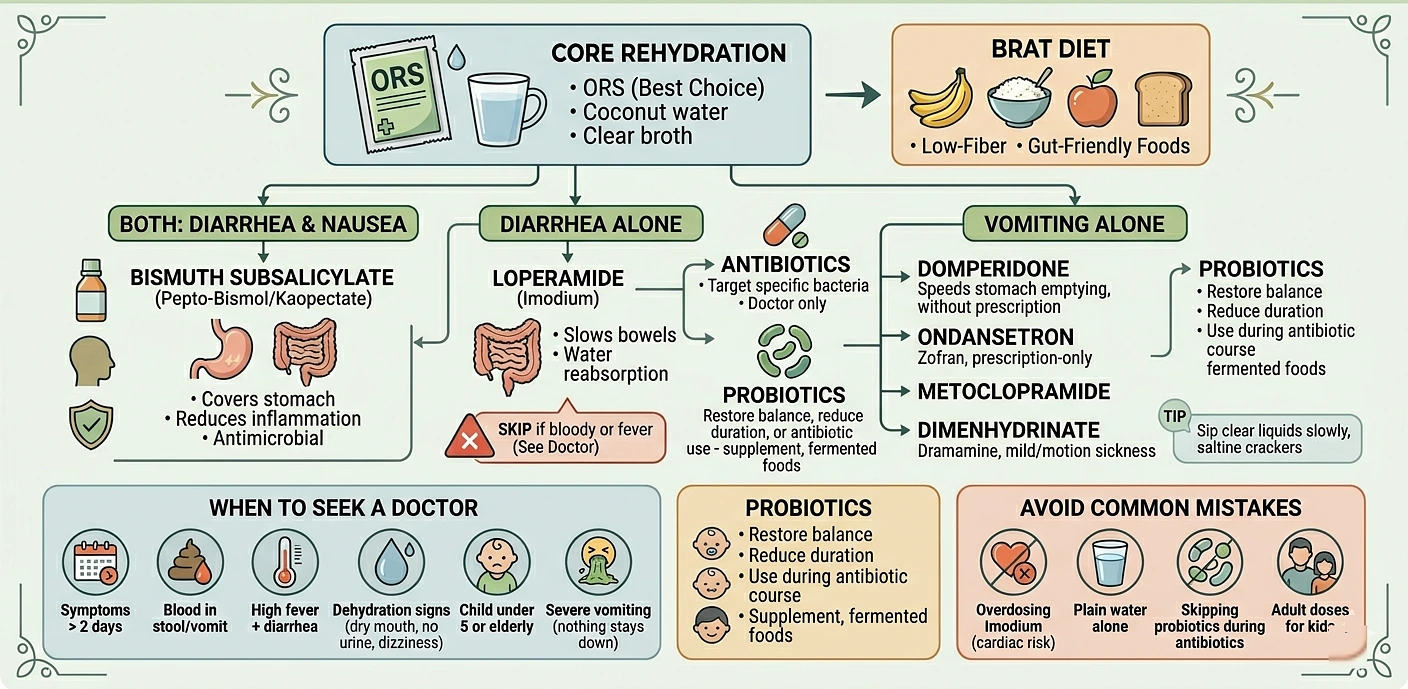
In a mixed case of nausea and diarrhea, over-the-counter (OTC) drug Bismuth subsalicylate (Pepto-Bismol, Kaopectate), that treats both conditions by covering the stomach, reducing inflammation, and attacking bacteria, is the best choice. In case of diarrhea alone, Loperamide (Imodium) works in slowing down the bowels.
ORS (Oral Rehydration Salts) is the fix. Cheap, effective, WHO-recommended. No fancy drink replaces it. Coconut water helps, clear broths help, but ORS is the real deal.
For children specifically, a doctor-directed oral rehydration solution is the recommended route. Products designed to replace both fluids and electrolytes properly. Infants should continue breast milk or formula as usual.
Can’t find sachets? Mix at home:
- 1 liter clean water.
- 6 teaspoons sugar.
- Half teaspoon salt.
Sip slowly. Don’t chug, that triggers more vomiting.
What to Eat While Recovering: The BRAT Diet
Most people skip this part and go straight to medicines. Worth knowing though. The BRAT diet, bananas, rice, applesauce, toast, is one of the most effective home approaches alongside staying hydrated with clear fluids. These foods are low-fiber, easy on the gut, and help firm things up naturally.
Research shows that following an overly restricted diet does not actually help treat viral gastroenteritis. When appetite returns, normal eating can resume even if diarrhea is still present. So no need to starve yourself. Just keep it bland early on.
For Diarrhea: The Types of Diarrhea
Loperamide (Imodium):
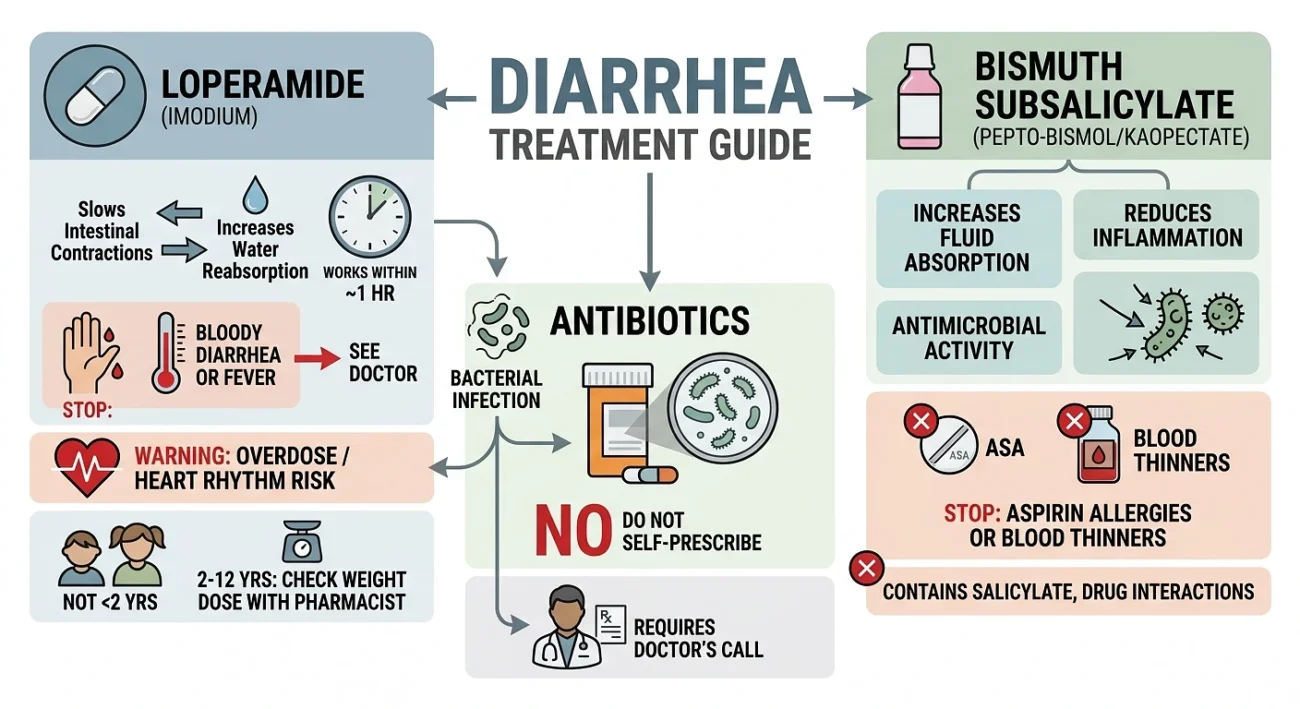
Most-used OTC anti-diarrheal. Works by slowing intestinal contractions, giving more time for water reabsorption, reducing both frequency and stool consistency. Can start working within about an hour of taking it.
One hard rule: if there’s bloody diarrhea or fever, signs of bacterial or parasitic infection, skip OTC anti-diarrheal medicines entirely and see a doctor.
Also worth knowing: taking more than the recommended dose can cause dangerous changes in heart rhythm. Pay close attention to the maximum daily dose on the package. Not something to push past.
Not recommended for children under age 2. For children between ages 2 and 12, dosing is based on body weight. Check with a pharmacist for the right amount.
Bismuth Subsalicylate (Pepto-Bismol / Kaopectate):
Handles diarrhea and nausea at the same time. Stays in the stomach, helps increase fluid absorption, reduces inflammation, and has antimicrobial activity against pathogens causing diarrhea.
People with aspirin allergies or those on blood-thinning medications should avoid this one. It contains salicylate and can interact with other drugs.
Which One to Pick?
Loperamide works slightly better for diarrhea alone. Pepto-Bismol or Kaopectate tend to work better when nausea and indigestion come along with diarrhea. Pick based on what’s most bothering you.
When Antibiotics Come In
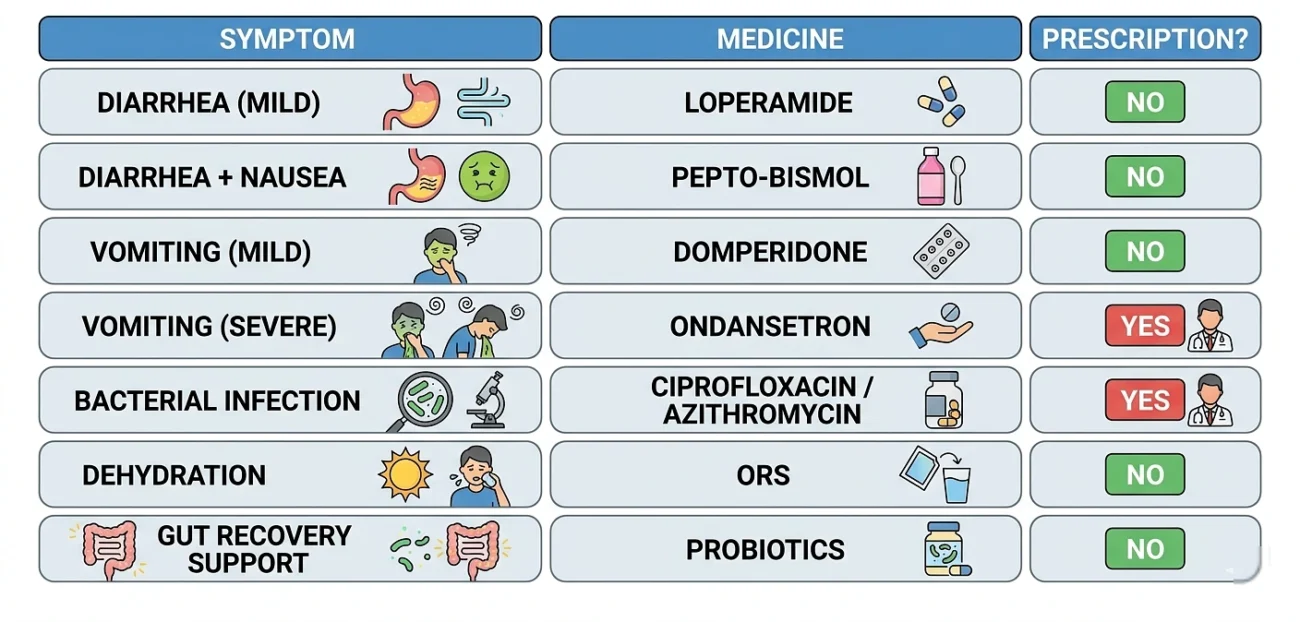
Bacterial diarrhea needs antibiotics to target the infection directly. Commonly prescribed options include ciprofloxacin, azithromycin, and rifaximin, depending on the pathogen involved. Doctor’s call only. Never self-prescribe.
Not a medicine exactly, but genuinely useful. Probiotics are beneficial bacteria that help restore the balance of intestinal flora disrupted by diarrhea. They’ve been shown to reduce the duration and severity of infectious diarrhea, particularly in children, and may also help prevent antibiotic-associated diarrhea.
Found in supplements or naturally in fermented foods like yogurt and kefir. If antibiotics are being taken alongside, probiotics help protect the gut from getting wiped out further. Most people forget this part entirely.
Types of Vomiting
Domperidone (Motilium):
Widely available in Pakistan without a prescription. Speeds up stomach emptying, reduces nausea and bloating. Solid first choice for most vomiting cases.
Ondansetron (Zofran):
Stronger. Prescription-only. Can begin working within about 30 minutes. Works well for severe or persistent vomiting, the kind where nothing stays down for hours.
Metoclopramide:
Another prescription option. Similar to Domperidone, helps move things along in the gut and calms nausea. Sometimes used when Domperidone isn’t cutting it.
Dimenhydrinate (Dramamine):
OTC antihistamine, more commonly known for motion sickness. Works by affecting the inner ear and brain to reduce nausea. Good for mild cases, easy to find.
One Tip for Vomiting Specifically:
Try sipping small amounts of clear liquids rather than drinking in large gulps. Saltine crackers can also help replace some electrolytes and settle the stomach a bit.
How to Know When to Stop Self Medicine
Most stomach bugs clear in 24 to 48 hours. Some situations need a doctor though:
- Symptoms lasting more than 2 days.
- Blood in stool or vomit.
- High fever alongside diarrhea.
- Signs of dehydration: dry mouth, no urination, dizziness.
- Child under 5 or elderly person affected.
- Vomiting so severe nothing stays down.
These aren’t things to wait out at home.
A Few Things People Get Wrong
Taking Loperamide for every type of diarrhea doesn’t work that way. Bacterial diarrhea needs to come out, not get stopped. And pushing past the recommended dose isn’t a shortcut, it carries real cardiac risk.
Skipping ORS because “I’m drinking water” is another common mistake. Plain water alone doesn’t replace electrolytes. In severe cases it can actually dilute sodium levels further.
Giving adult doses to children is different too. Always check age and weight guidelines or ask a pharmacist before giving anything to a kid.
Stopping probiotics during antibiotic treatment is exactly the wrong move. That’s when they’re most needed, to protect what’s left of the gut flora.