
When Do Babies Sleep Through the Night? A Gentle Guide for Tired Parents
Key Points:
- Most babies start sleeping through the night between 3 and 6 months old.
- “Sleeping through the night” means a 6 to 8 hour stretch, not a full 12 hours.
- Around 4 months, many babies can go 7 to 8 hours without a feed.
- By 6 months, most babies can self-soothe and fall back asleep on their own.
- Some babies take until 12 months to settle into longer stretches, and that’s completely normal.
- Expect setbacks from teething, growth spurts, and sleep regressions. They pass.
- Biggest tip: Put your baby down drowsy but still awake. It changes everything.
There’s a particular kind of tired that only new parents know. The kind where you’re rocking in the dark at 3 a.m., staring at the baby monitor, wondering if you’ll ever sleep a full night again. If that’s you right now, take a breath. You’re not alone in this, and it really does get better.
So when will your baby actually sleep through the night? The honest answer is somewhere between 3 and 6 months old for most babies. But before you celebrate or spiral, there’s something important to know. “Sleeping through the night” doesn’t mean what most people think it means. Pediatricians define it as a 6 to 8 hour stretch, not a full night from bedtime until sunrise. So if your baby goes down at 8 p.m. and wakes at 3 a.m., that technically counts. Take the win. You’ve earned it.
Some babies get there quickly and it feels like magic. Others take their sweet time and don't settle into longer stretches until closer to their first birthday. Neither path is wrong. Babies aren't projects with deadlines. They unfold at their own pace, and that pace almost never matches the timeline in your head. If you want to understand more about how infant sleep develops biologically, this guide on newborn sleep cycles and brain development is worth a quiet read.Around 4 months, many babies can go 7 to 8 hours without needing a feed. By 6 months, most have quietly picked up the real milestone: self-soothing. It's a small but beautiful shift. They stir, they shuffle, they breathe, and they drift back to sleep on their own. No rescue mission needed.How Long Will Babies Sleep?
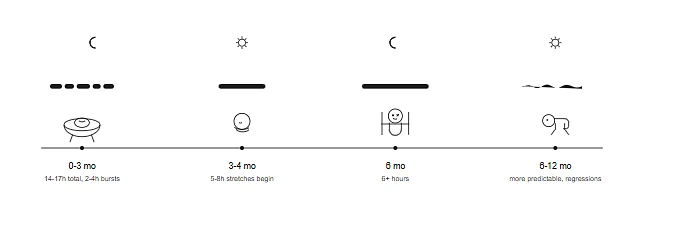
- 0 to 3 months. Newborns sleep 14 to 17 hours a day, but in short, unpredictable bursts. You’ll be up every 2 to 4 hours for feeds, and it’ll feel endless. There’s no shortcut here, only patience and a lot of coffee. This season is hard, but it’s short. If you’re worried about your baby’s feeding patterns during this stage, this breakdown of healthy life newborn feeding signs can help put your mind at ease.
- 3 to 4 months. Something finally starts to shift. Once your baby crosses 12 to 13 pounds, their stomach holds more, night feeds space out, and those first 5 to 8 hour stretches start appearing like little gifts.
- 6 months. Most babies are now sleeping 6 or more hours in a row. This is usually the moment you look in the mirror and recognize yourself again.
- 6 to 12 months. Sleep becomes more predictable, but it’s never a straight line. Teething, separation anxiety, and big developmental leaps will shake things up without warning. If you’re noticing sudden night wakings after weeks of smooth sleep, you might be dealing with a sleep regression. Our guide to sleep regressions and what to do about them explains exactly what’s going on and why it passes.
How Should Babies Sleep Over Time?
Quietly, almost invisibly, a few things are working in your favor.
Your baby’s stomach grows, so feeds begin to carry them longer. The Moro reflex, that dramatic startle where their arms fly outward and jolt them awake, softens between 3 and 6 months. And most importantly, they slowly learn how to fall back asleep without you. It’s uneven at first, but it comes. Researchers have found clear links between infant sleep consolidation and healthy brain growth, something this overview of sleep and early childhood brain development explains beautifully.
Three Gentle Shifts That Help Your Baby Sleep
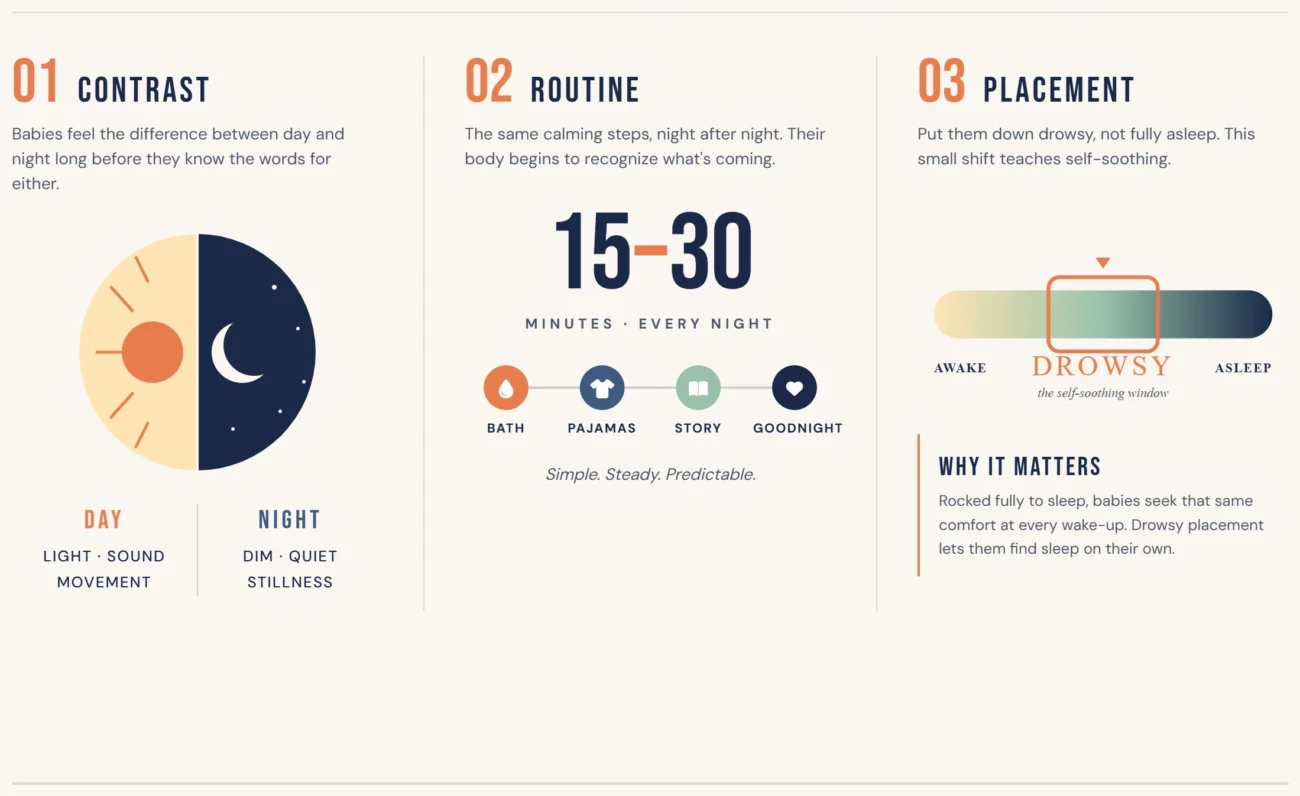
- Make day and night feel like two different worlds. Fill your days with light, sound, and movement. Soften the evenings, dim the lights, lower your voice, and let the house feel quieter. Babies understand that contrast long before they understand words.
- Keep bedtime simple and steady. It doesn’t need to be elaborate or Pinterest-worthy. A warm bath, soft pajamas, a short story, a kiss goodnight. Fifteen to thirty minutes of the same calming steps, night after night, and slowly their body starts to recognize what’s coming.
- Put them down drowsy, not fully asleep. This one small shift can change everything. If you always rock or feed them all the way to sleep, they’ll look for that exact comfort every time they wake. But if you lay them down sleepy yet still a little aware, they begin, night by night, to find sleep on their own. If you’re curious about the research behind this method, this deep dive into the science of infant self-soothing is an excellent starting point.
Important Reminders
Every baby is different, and these are gentle patterns, not strict rules. Some nights will feel like a breakthrough. Others will feel like you’ve gone back to square one. Both are part of the journey.
Trust your instincts. Trust your baby. And when something doesn’t feel right, whether it’s breathing, feeding, or sleep that feels unusually off, call your pediatrician. That’s exactly what they’re there for. For concerns that fall outside typical sleep patterns, this resource on when to talk to a pediatrician about infant sleep can help you decide whether a call is needed.