
GERD ICD-10: The K21.9 Documentation Rules That Changed and the Denials They Cause
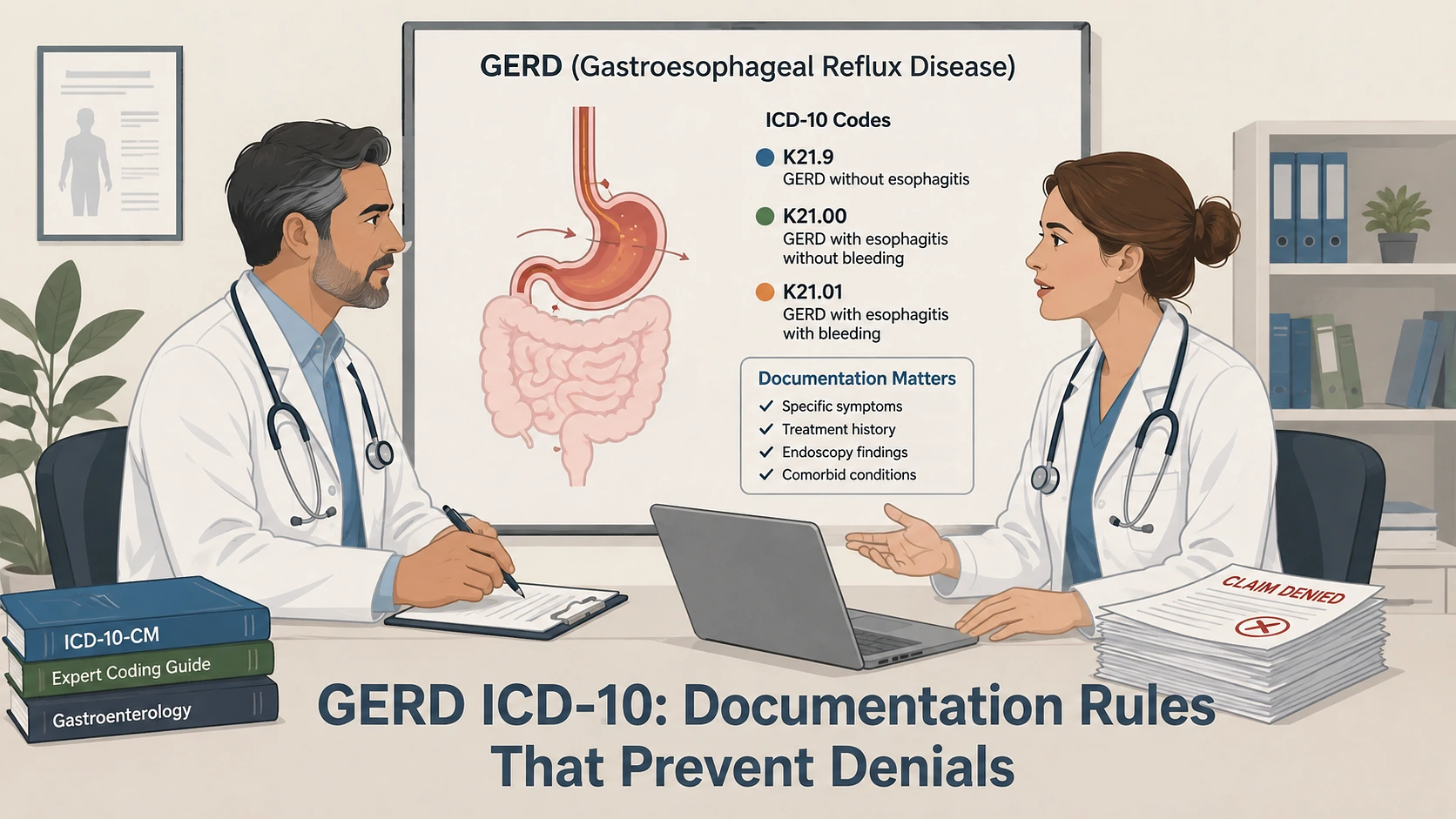
Selecting the wrong GERD ICD 10 code can lead to denials or audit risk. For GERD, it is K21.9. The note says reflux. Nobody mentions esophagitis. You bill it and move on. Then the EOB arrives, and that safe choice does not look so safe anymore.
What These Codes of GERD ICD-10
There are only three billable codes in the GERD family. The distinction is simpler than most people make it.
K21.9 means reflux without esophagitis. The patient burns. They regurgitate. Maybe they lose sleep. But the esophageal lining on scope or on clinical judgment has not been damaged.
K21.00 means inflammation is present, confirmed by someone who looked, and there is no bleeding.
K21.01 means inflammation plus active bleeding. Documented. Not guessed from symptoms.
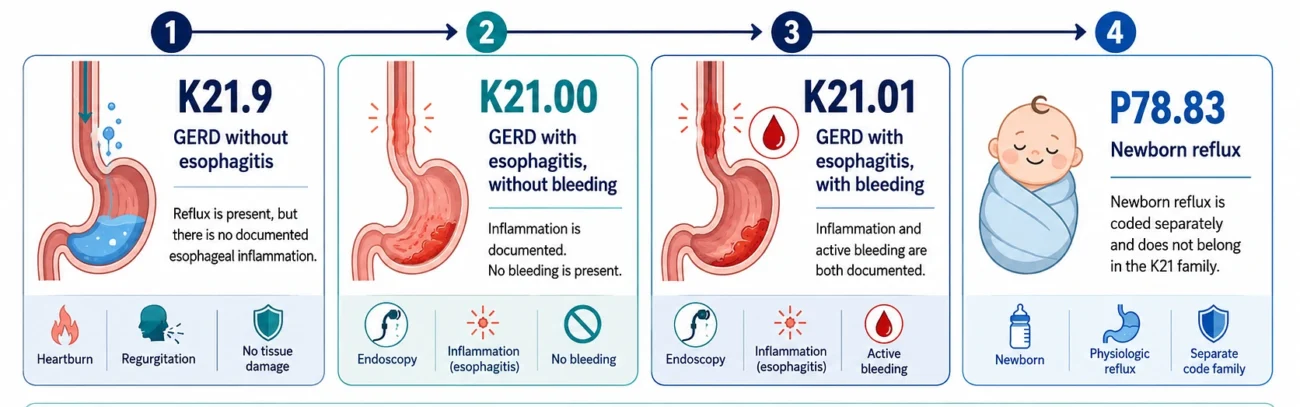
Severity does not drive the choice. Inflammation does. A patient with miserable nightly reflux and a pristine esophagus is K21.9. Another patient with mild heartburn but visible erosions on camera is K21.00. The symptoms do not decide. The tissue does.
Newborn reflux lives elsewhere entirely. That is P78.83.
The Ghost of K21.0
Dead codes never fully die.
Back in October 2020, CMS split K21.0 into K21.00 and K21.01. The old parent code became non-billable overnight. Five years later, I still see it on superbills. It hides in EHR favorites lists built before the change, sitting in dropdown menus, waiting for a busy provider to click it.
When a practice suddenly sees a cluster of GERD denials, check the template first. Not the documentation. Not the medical necessity. The template. One saved favorite from 2019 can write off a quarter of claims before anyone realizes what happened.
If your system still offers K21.0, kill it. It has not been billable for half a decade.
When Use GERD ICD-10 Code K21.9 Works
K21.9 is correct when the chart confirms GERD and either states the esophagus is clear or says nothing about inflammation at all. Silence is acceptable up to a point. If nobody has scoped the patient, and the diagnosis rests on symptoms plus PPI response, K21.9 is fine.
But once an endoscopy enters the record, its findings own the code. A negative scope must actually say no esophagitis or oesophageal mucosa normal. Blank space in the report is not a negative finding. And if the report mentions erosions or erythema while the claim carries K21.9, you have handed the auditor a documentation inconsistency. Those denials sting.
I have seen practices where the gastroenterologist scopes the patient, documents esophagitis, bills K21.00, and the primary care office keeps submitting K21.9 on follow-up visits. The chart now describes two different patients. That conflict draws scrutiny every single time.
What the Note Needs to Say
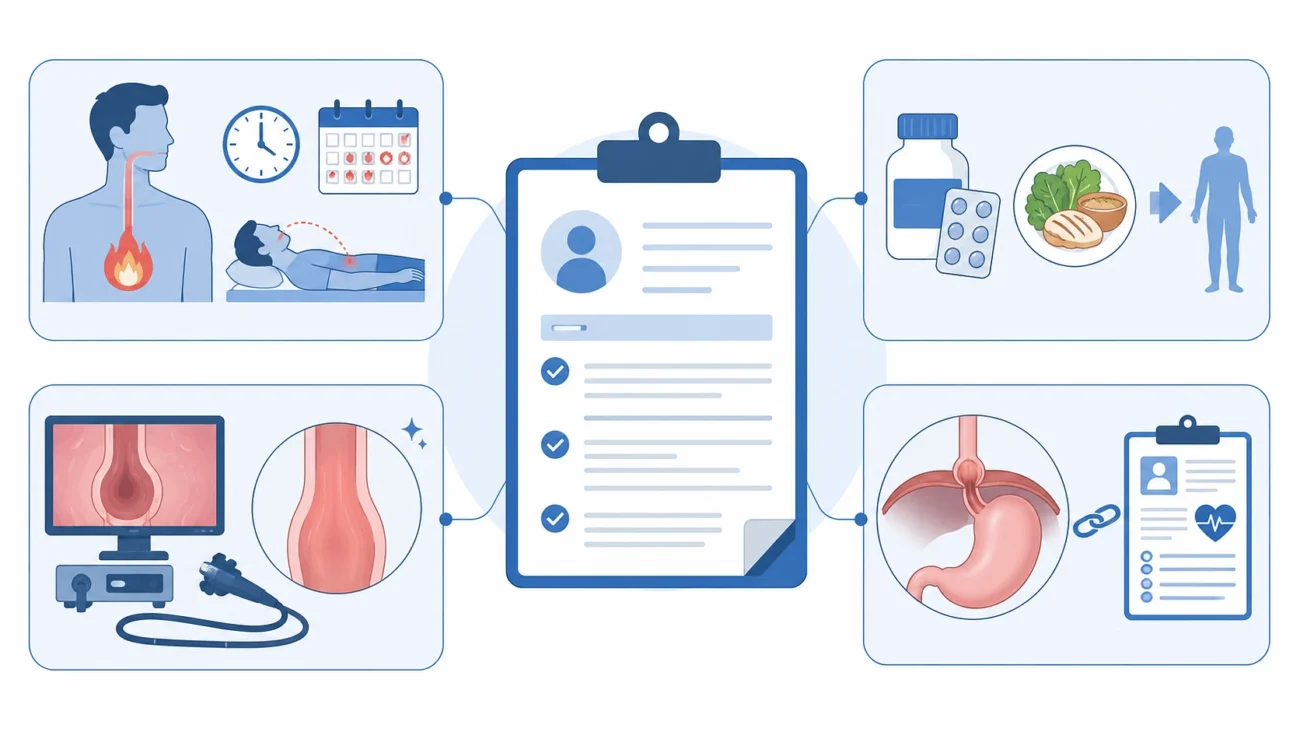
Auditors are not asking for novels. They want evidence that the diagnosis was active, considered, and consistent with the treatment.
The notes that survive have a few things in common:
- Specific symptoms with frequency and timing. Heartburn after meals. Regurgitation when lying flat. Symptoms more than twice weekly. Not just “GERD” on the assessment line.
- Conservative treatment that failed. A PPI trial. Dietary changes. Something that justifies moving to more aggressive workup.
- The scope result, even when normal. Especially when normal. “No esophagitis seen” is what locks K21.9 in place.
- Comorbidities that matter. A hiatal hernia should be captured with K44.9 when it is part of the picture. It strengthens the case for procedures, and it shows someone actually read the note instead of autopiloting to the diagnosis line.
The Outpatient Rule Everyone Forgets
This one is stricter than people expect. If the note says possible GERD, rule out GERD, or likely reflux, you cannot use K21.9. Not until the provider commits to the diagnosis in writing. Until then, the symptom code R12 carries the encounter.
Practices fail this constantly because they code from the front of the note instead of the assessment line. The HPI mentions reflux, the coder sees GERD, and K21.9 goes on the claim. But the assessment says “suspected.” That mismatch is a denial waiting to happen.
Once GERD is confirmed, do not stack R12 for heartburn next to K21.9. The symptom is inherent to the disease. Payers read that as padding, and the guidelines agree.
Procedures: What K21.9 Supports and What It Cannot Save
K21.9 will carry an upper endoscopy or pH monitoring when the indications are right. Routine workup is not the issue.
The trouble starts with newer endoscopic treatments. Fundoplasty. Radiofrequency. Bulking injections. Several carry investigational or excluded status with major payers, and that designation has nothing to do with your diagnosis coding. You can document K21.9 perfectly and still eat the denial because the payer never agreed to cover the procedure in the first place.
Always pull the specific payer’s coverage policy for the CPT code before scheduling these.
Check Your Annual Update Every Year
Code files change. The annual update drops every October, and the addendum releases in summer. The K21 family has been stable since 2020, but stability breeds complacency. Review your superbills and EHR favorites during the refresh. The same annual check that would have caught the K21.0 split five years ago is the one that will catch the next surprise before it hits your claims.
Roughly one in five adults carries a GERD diagnosis. At that volume, a dead code in a template is not a small error. It is a revenue leak.