
Sleep and Relapse: How to Fix Your Bedroom in Early Recovery

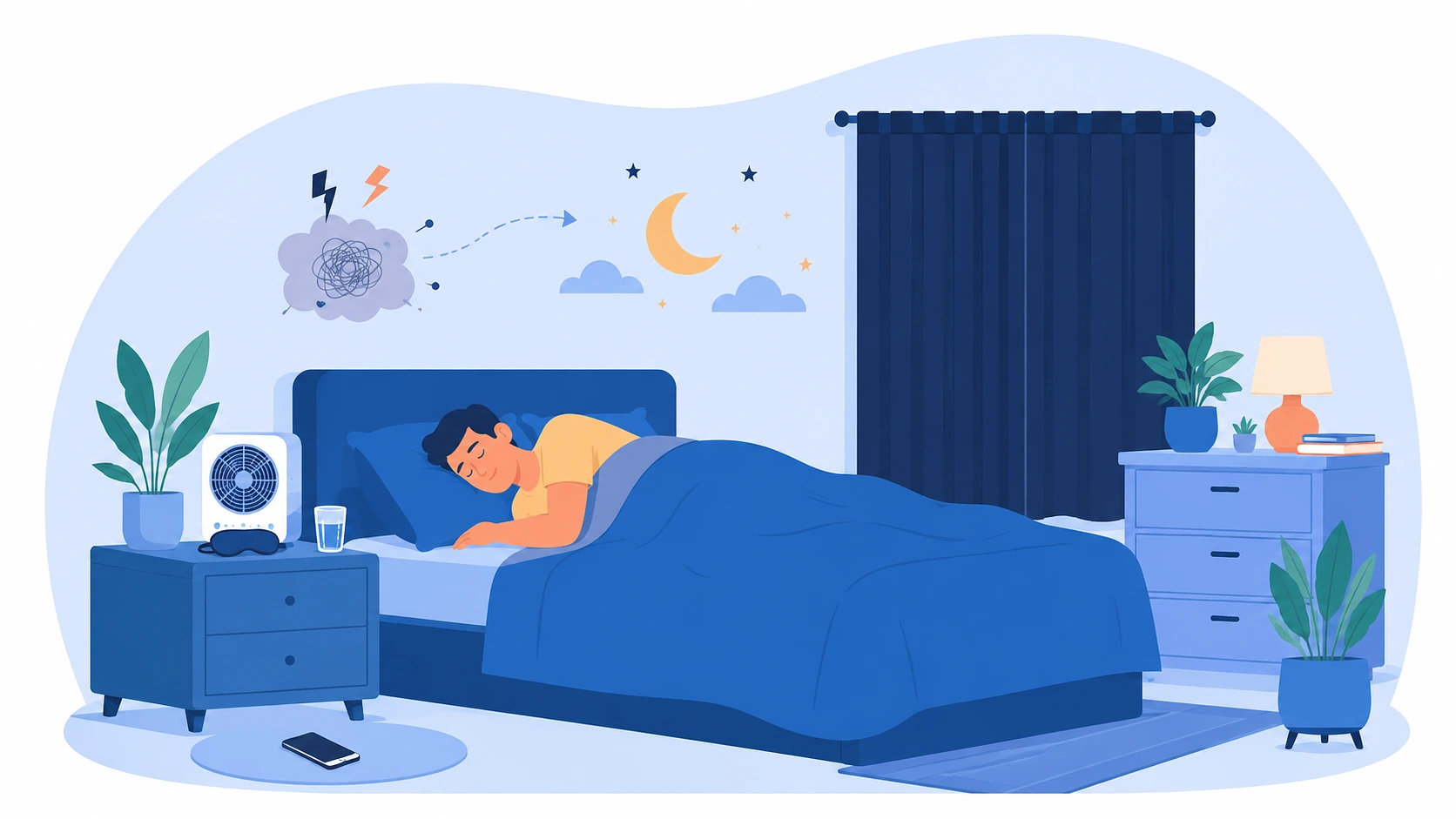
In a study of 74 alcohol-dependent patients followed for around five months after treatment, 60% of those who had insomnia going into treatment relapsed, against 30% of those who slept normally.
Same treatment, same follow-up period, double the relapse rate, and the dividing line was sleep. An earlier polysomnography study found measurable sleep abnormalities at admission predicted relapse within three months in 80% of subjects.
Fix Common Insomnia Is in Early Recovery
Far more common than most people going through it realise, which matters, because lying awake 3am feeling like the only one failing something as basic as sleep is its own kind of demoralising.
| Group measured | Sleep disturbance found |
|---|---|
| People with alcohol use disorder, treatment samples | 36% to 91% report insomnia |
| Early recovery, abstinent patients | 25% to 60% affected |
| One inpatient sample at baseline | 90%, with around half still affected at discharge |
Alcohol and most other substances flatten sleep architecture, and the brain spends early abstinence recalibrating, so sleep in the first weeks tends to run short, fragmented and shallow.
Some measurable abnormalities persist up to two years into abstinence in the research, though for most people it improves considerably sooner. Poor sleep in early recovery is the expected condition, not a personal failure, and it responds to being treated as the clinical issue it is.
Why Poor Sleep Drives Relapse
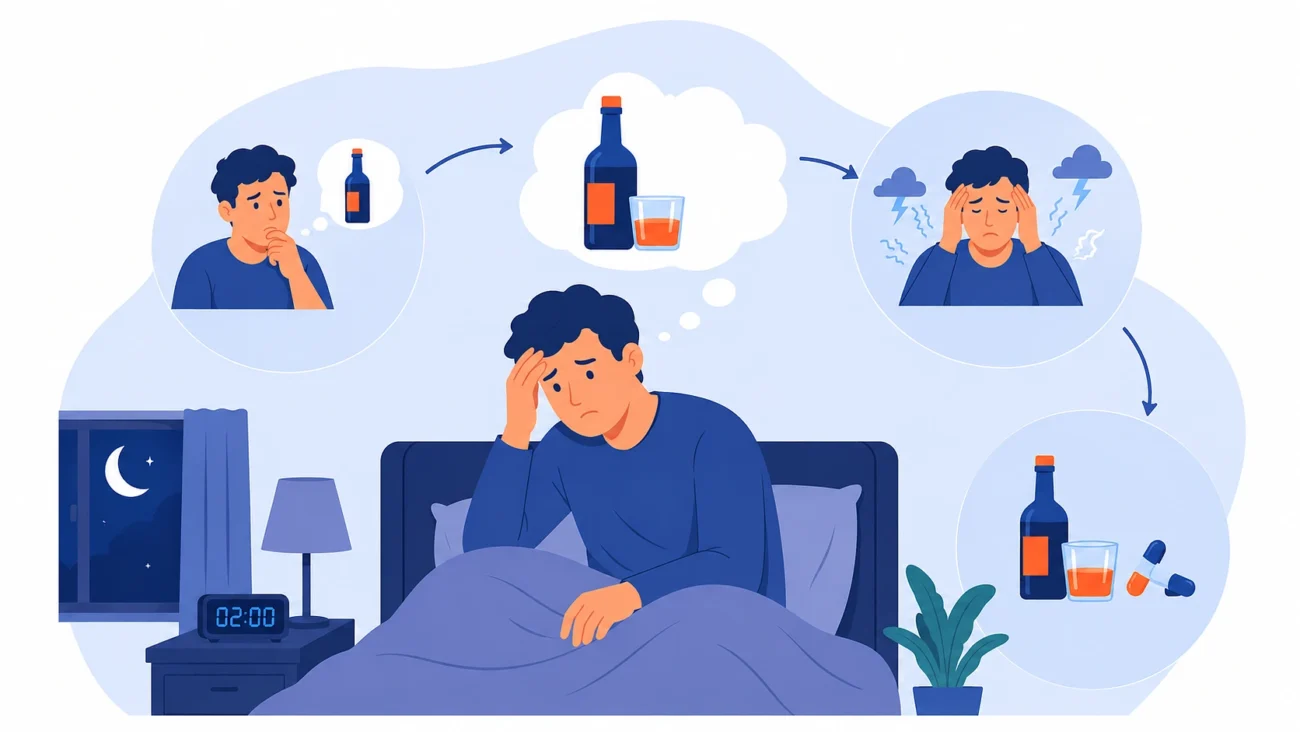
Three routes, and they compound.
Craving comes first. Studies of treatment-seeking patients found insomnia positively associated with alcohol craving, and the vulnerable window for relapse, the first few months, is exactly the period when sleep is its worst. AA worked this out decades before the polysomnography labs did, the T in the old HALT warning, do not get Hungry, Angry, Lonely or Tired, is this finding in folk form.
Emotion regulation goes next. Sleep better is when the brain consolidates change and processes difficult material, so the therapy session attended on four broken hours lands on soil that cannot hold it. Impulse control, distress tolerance, the capacity to sit with a hard feeling instead of acting on it, every one of these runs thinner after bad nights.
And then the self-medication trap, which deserves its own warning because it recruits sleep itself as the relapse argument. A person who spent years using a substance as their off-switch lies awake 2am with the brain offering its old solution, and the offer arrives dressed as common sense, just this once, just to sleep. Habitual use of alcohol as a sleep aid is a documented risk factor for developing dependence in the first place, and persistent insomnia in abstinence runs the film in reverse.
What to Change in the Bedroom Tonight
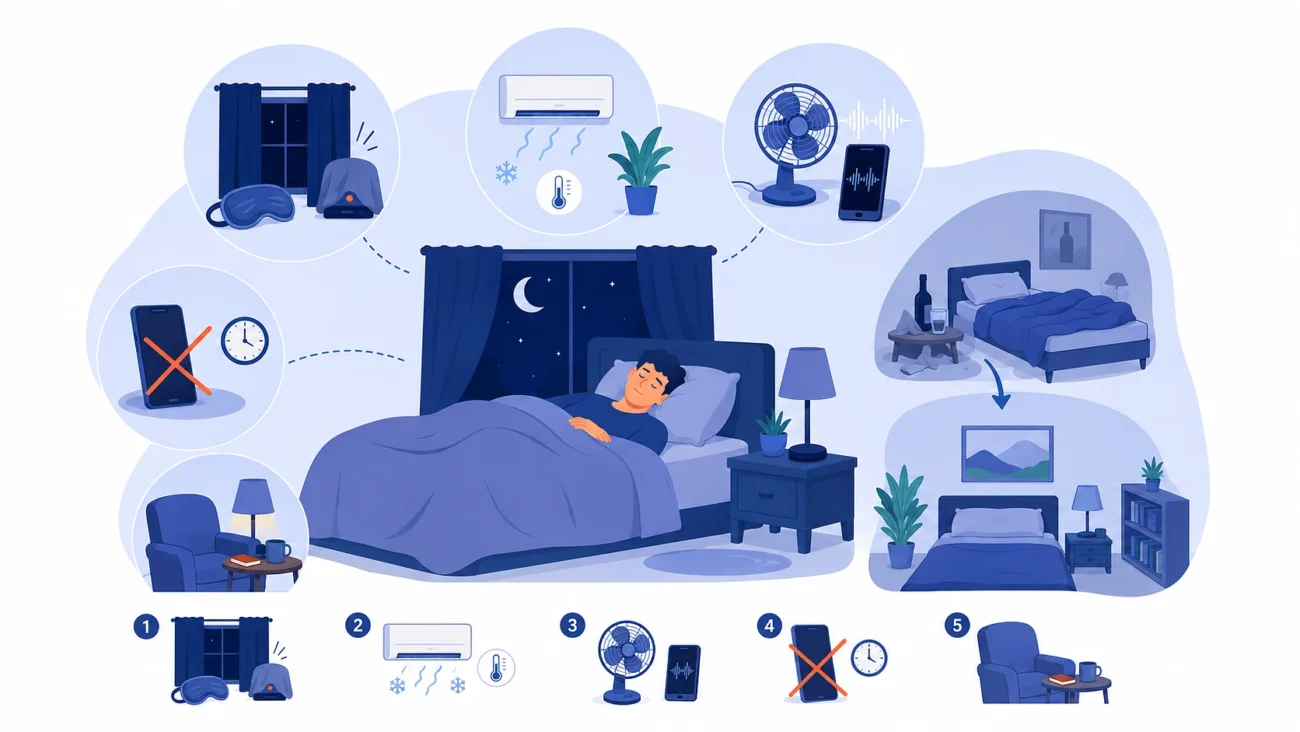
The environmental half of the fix costs little and starts working within days. Nothing here requires moving house.
- Make the room properly dark. Light leaking in during sleep is linked in the research to significantly raised depression risk, and depression and relapse feed each other. Blackout curtains or a cheap eye mask, and every standby LED covered or unplugged.
- Cool it down. A slightly cold room beats a warm one for falling and staying asleep, so drop the heating in that one room and add a blanket instead.
- Buffer the noise. A quiet fan, a white noise app or a steady soundscape masks the unpredictable sounds, the door, the traffic, the housemates, that keep a recovering nervous system on guard. Predictable sound reads as safe, sudden sound reads as threat.
- Push screens out of the last hour. Bright screens delay the biological clock that early recovery is trying to reset, and the feeds themselves are nobody’s idea of calming.
- Keep the bed for sleep. Lying in bed awake for an hour trains the brain to treat the mattress as the worrying spot. Twenty minutes without sleep, get up, sit somewhere dim and boring, come back sleepy.
One addition specific to recovery rather than general sleep advice. If the bedroom itself carries using associations, if it was where the drinking or the using happened, rearrange it. Move the bed to a different wall, change the bedding, shift what sits in eyeline from the pillow. Cue-triggered craving runs on environmental detail, and even small physical changes weaken the file the brain opens when it recognises the old scene.
Sleep Problems Need Treatment Rather Than a Darker Room
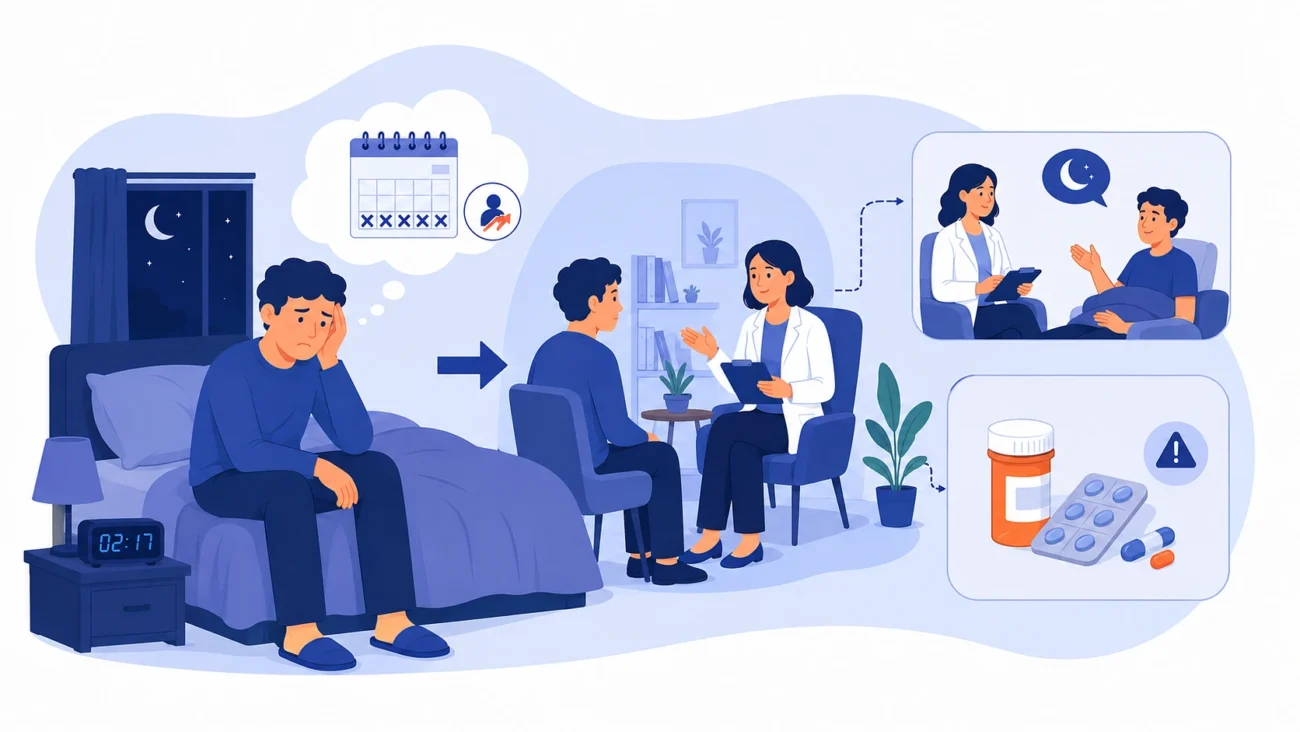
The bedroom changes handle the environmental share. Two situations need more than that.
Insomnia that persists after months of abstinence is a risk marker in its own right, with one study finding patients still experiencing insomnia at five months abstinent carried greater relapse risk fourteen months. Sleep problems still running strong past the early weeks belong in front of a professional rather than under another pillow spray.
The treatment with the best evidence in this population is CBT-I, cognitive behavioural therapy for insomnia, and it is the recommended first-line treatment, with trials showing consistent efficacy for people in recovery specifically. Medication results in this group have been inconsistent by comparison, and several sleep drugs carry their own dependence considerations, which is a conversation for a prescriber who knows your history. Ask for CBT-I by name, since plenty of services do not offer it unprompted.
How Structured Get Sleep
Residential programmes fix sleep partly through the obvious route, comfortable dark quiet bedrooms without the household chaos, and partly through one lever a home rarely manages, total predictability. Set mealtimes, set quiet hours, set lights-down, the same shape every day. A nervous system that knows what happens next stops burning energy on vigilance, and sleep is usually the first place the difference shows.
Calm the environment plays a key role in supporting those in a rehab facility. builds its programme around exactly this, with the sleep environment treated as clinical infrastructure rather than a hotel amenity, and the daily routine doing as much of the work as the blackout curtains. For someone whose home sleep situation cannot be stabilised, whether because of the household, the associations in the space, or insomnia that has not shifted, a structured setting is sometimes the honest answer, and asking a programme how it handles residents’ sleep is a fair test of how seriously it takes recovery generally.
For tonight though, the list above is enough to start. Pick the darkness one first, it is the cheapest and the evidence behind it is the strongest, and let the room begin arguing on your side.