
Dental Veneers in Pakistan: What They Cost, How They’re Done, and the Aftercare No One Quotes You For

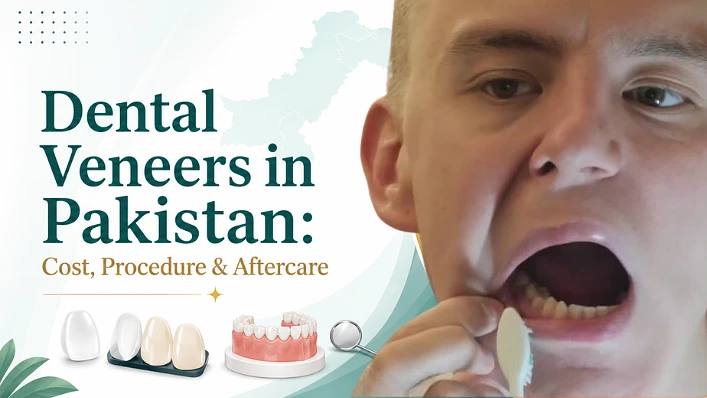
A dental veneers is a thin shell of porcelain or composite resin, glued onto the front of a tooth to change its colour, shape, or how straight it looks. It doesn’t repair the tooth from the inside the way a filling or a crown does. It just covers the bit you see when you smile or talk.
So why does that matter before you book anything? Because a veneer hides the problem, it doesn’t cure it. The tooth underneath can still rot, the gum around it can still get infected. You’ve now trapped it under a shell that cost you a fortune. That one fact runs through everything below the price, the order the work has to happen in, and how you keep the thing alive for years afterwards.
Porcelain or Composite – What’s the Actual Difference?
Composite is the resin built straight onto your tooth and shaped by the dentist in a single sitting. It’s cheaper, it’s done in one visit, and if it chips it can be patched. The downsides show up later: it stains, and it wears down faster than porcelain.
Porcelain is made in a lab from a mould of your prepped teeth, then bonded on a second visit. It holds its colour, throws light back the way real enamel does, and lasts a good deal longer. You pay for that in money, in the wait between appointments, and in a bit more enamel being shaved off to make room for it.
Then there’s zirconia the toughest of the three, which dentists lean on when a tooth takes heavy biting force.
Pick the material for how hard your teeth work, not for the cheapest quote on the list.
Will a Dentist Even Agree To Do It on You?
Not everyone is a candidate, and an honest dentist says so before taking a deposit. A few things have to be fixed first:
- Active gum disease – inflamed, bleeding, or receding gums won’t hold a clean bond, and the gap they leave lets bacteria in underneath.
- Untreated cavities – decay carries on rotting the tooth under the veneer once it’s sealed in.
- Thin or worn enamel – Stick to enamel, not the softer dentin beneath it. Too little enamel, or a tooth filed down too aggressively, and the bond is weak from day one.
And the one people forget to bring up do you grind your teeth at night? That’s bruxism. The force cracks porcelain and pops it off the tooth. One study comparing grinders to non-grinders found grinding dropped success by roughly 60%, with most of the fractures and debonding landing in the grinding group. It doesn’t automatically rule you out a custom night guard changes the picture, and one report put failure down near 1% once a guard was worn but it has to be planned for, not discovered when a snaps off into your dinner.
What Actually Happens in The Chair?
Most porcelain jobs run two to three visits over two to three weeks.
The first visit is the consultation the candidacy check above, plus colour and shape planning. At the prep visit, a sliver of enamel comes off the front of each tooth so the sits flush instead of bulging, a mould goes to the lab, and you usually wear temporary while the real ones are made. On the last visit the dentist checks the fit and shade, etches the surface, and bonds the veneer on with a curing light.
What Do You Actually Get Out of Them?
Veneers fix several cosmetic things at once staining that whitening can’t budge, chips, small gaps, slightly crooked front teeth and they do it fast, a new smile in a couple of appointments instead of the months braces take. Porcelain shrugs off the tea, coffee, and tobacco staining that’s so common here, and because each shell is matched to your other teeth, it doesn’t look fake.
They also take off less tooth than a crown does, since a crown caps the whole thing. For front-of-mouth looks, that’s a real plus.
The flip side, said plainly: the enamel removal is permanent, most need replacing somewhere around 10 to 15 years, and some people get cold and hot sensitivity for a while after prep. None of that is a reason to skip. It’s a reason to walk in knowing what you’re signing up for.
How Much Do Veneers Cost in Pakistan? (city-wise breakdown)
Price swings more than people expect, and it comes down to three things: the material, the lab technician’s skill, and the clinic’s rent. Posh corporate setups in expensive neighbourhoods sit at the top of the range mostly because of that last one.
| City / Tier | Composite resin (per tooth) | Porcelain / E-max (per tooth) | Zirconia / premium ceramic (per tooth) |
|---|---|---|---|
| Karachi DHA Phases 4–6, Clifton | PKR 12,000-25,000 | PKR 40,000-70,000 | PKR 60,000-110,000 (hand-layered) |
| Lahore Gulberg, New Muslim Town, DHA Raya | PKR 10,000-20,000 | PKR 25,000-40,000 (mid-tier) / 45,000–85,000 (premium) | – |
| Islamabad / Rawalpindi F-7, F-10, G-8, Satellite Town | PKR 15,000-25,000 | PKR 35,000-80,000 | PKR 55,000-90,000 |
A bit of context behind the numbers. Karachi’s high-end sectors carry the steepest overheads, which is why Clifton and DHA work lands in the upper national tier and top practices there often add a separate PKR 5,000 to 10,000 per tooth just for the temporary Provisionals you wear while the lab finishes the permanent set. Lahore has the widest spread, with veteran specialists and premium multi-branch groups sitting right next to ordinary neigh bour hood clinics. Islamabad and Pindi run flatter, on more of an expat-grade corporate rate.
Why does the bill come in so much higher than one tooth times the rate? Two reasons.
First, the smile-zone multiple. A single rarely blends in, because one shell sitting alone catches light differently from the natural teeth beside it. So the standard is to do the whole visible zone usually six to eight teeth, canine to canine, on the upper arch. At a premium PKR 45,000 a tooth, a six-tooth job is PKR 270,000 before you’ve paid for a single diagnostic.
Second, the foundation work, billed on top whenever your mouth needs prep first:
| Prerequisite | Typical fee |
|---|---|
| Consultation / smile design | PKR 1,500-3,000 |
| Scaling & polishing (deep clean) | PKR 3,000-8,000 |
| Root canal, if there’s deep decay | PKR 10,000-25,000 per tooth |
| In-office laser whitening | PKR 35,000-50,000 |
So ask the clinic straight: does the quote include consultation, follow-ups, and aftercare, or does each one land as its own line later? That’s the gap between a PKR 270,000 estimate and a PKR 350,000 invoice.
This is where a pharmacy sees it differently from a clinic. A sits right at the gum line, and how long it survives depends on the tooth underneath and the gum around it. The veneer can’t decay but the natural tooth behind and below it absolutely can, and most debonding actually traces back to the bond failing where there’s too little enamel, or to decay creeping in at the margin.
For the first while after prep, sensitivity to cold drinks and air is normal and usually fades. A sensitive-teeth toothpaste (the potassium nitrate or stannous fluoride kind) helps through that window it’s one of the oral-care lines we see moving when people are mid-treatment.
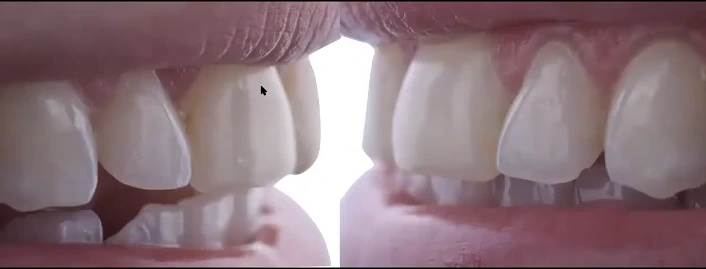
- a soft-bristled brush, so you’re not grinding away at the bonding margin.
- a non-abrasive toothpaste, so composite doesn’t get scratched dull over time.
- an alcohol-free mouth rinse, to keep the gum line dental health without drying it out.
- daily flossing or interdental brushing around the veneered teeth, which is what stops gum disease quietly wrecking the work from below.
- and if you grind, the night guard not optional, it’s the cheapest insurance on the whole investment.
Dental procedure, so the decision, the material, and the hands doing the work belong with a qualified dentist go to one for an assessment and a real quote for your case. What sits on our side of the counter is the boring, ongoing half: keeping the mouth those veneers are bonded into healthy, long before and long after the chair.